Kashmiri and Spanish saffron are both genuinely well-regarded, but they come from different growing conditions, different grading traditions, and different price points — and the honest comparison depends on what you're actually prioritizing. Here's how they actually compare, without declaring a one-size-fits-all winner.
- The Short Answer
- Growing Regions and Conditions
- Quality and Chemical Composition
- Grading Systems Compared
- Flavor, Aroma, and Colour Differences
- Price Comparison
- Culinary Traditions Built Around Each
- Which Is Better for Which Use
- Protected Status and Authenticity
- How to Verify Either One Before Buying
- What About Other Saffron Origins?
- The Bottom Line
The Short Answer
For pure potency, colour depth, and aroma intensity, Kashmiri saffron generally comes out ahead, reflected in its typically higher crocin content and premium pricing. Spanish saffron, particularly the La Mancha grade, offers strong, traditionally-processed quality at a somewhat more accessible price point, with wider global availability. Neither is objectively "bad" — they're both genuine, well-regarded origins with centuries of their own agricultural tradition behind them, and the right choice depends on your budget, how you plan to use it, and how much you prioritize origin-specific intensity.
Growing Regions and Conditions
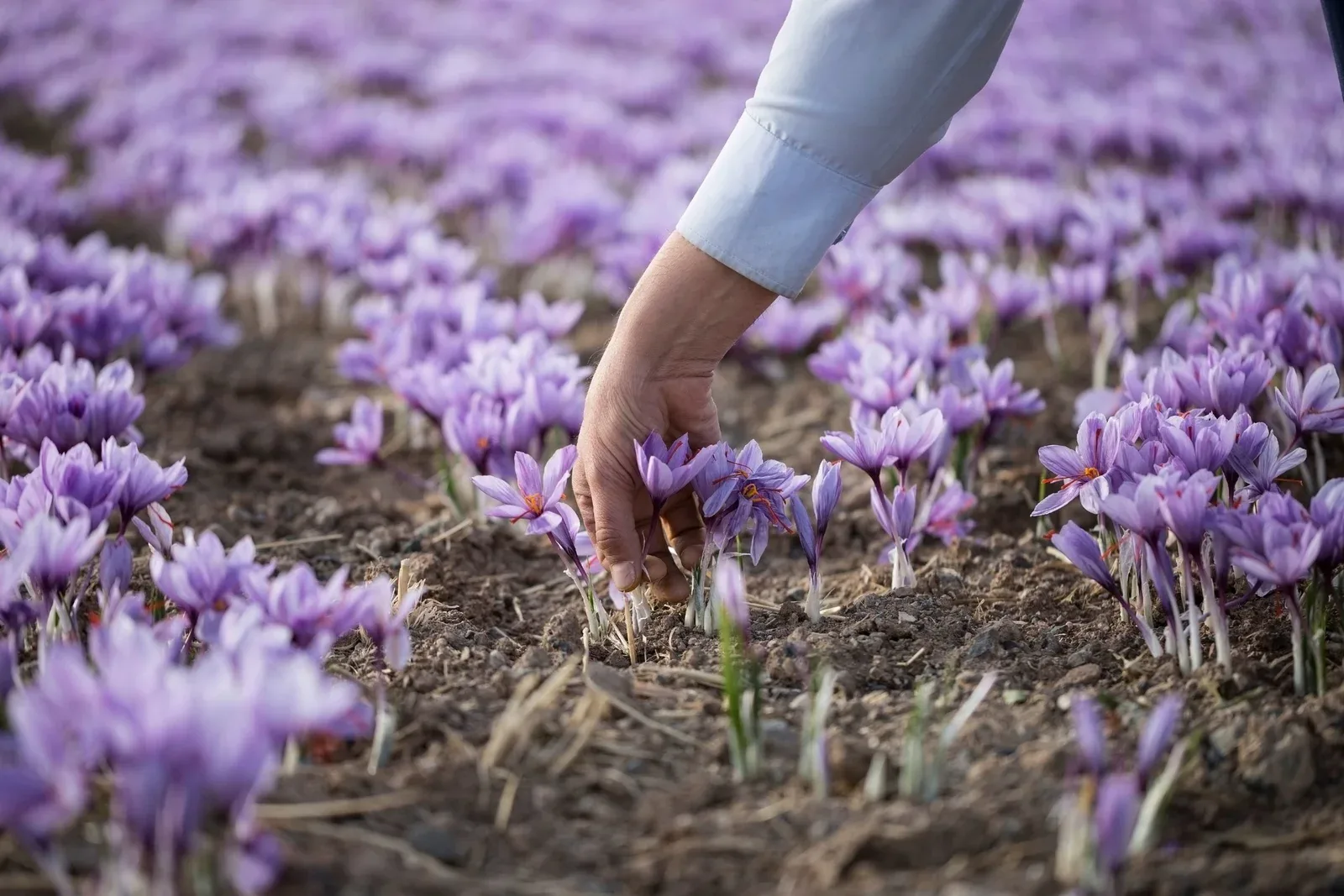
Kashmiri saffron is grown almost exclusively in the Pampore region of Kashmir, at altitudes of roughly 1,600 to 2,400 metres, with a short 2-to-3-week harvest window typically in October and November, using glacial meltwater and naturally mineral-rich soil. This high-altitude, specific microclimate is often cited as a key reason for Kashmiri saffron's distinctive intensity. Spanish saffron is primarily grown in the La Mancha region of central Spain, at considerably lower altitude, with a semi-arid continental climate, a longer-established, larger-scale agricultural tradition, and generally higher total production volume than Kashmir's limited growing area allows.
Quality and Chemical Composition
Crocin (responsible for colour), safranal (aroma), and picrocrocin (flavor/bitterness) are the three compounds used to assess saffron quality under the ISO 3632 international standard. Kashmiri saffron, particularly the Mogra grade, regularly tests toward the higher end of these ranges — commonly cited around 8 to 12% crocin content — reflecting its high-altitude growing conditions and fully hand-harvested, hand-separated processing. Spanish La Mancha saffron typically tests in a good-to-very-good range, commonly cited around 6 to 9% crocin content, reflecting strong but somewhat more mechanized or larger-scale traditional processing than Kashmir's smaller, more intensively hand-worked output.
Grading Systems Compared
Kashmir uses a three-tier grading system: Mogra (or Mongra) as the premium grade with the longest, most intact threads and deepest colour; Lacha as a good standard grade with mixed thread lengths; and Guchhi as a more basic grade. Spain's La Mancha PDO (Protected Designation of Origin) sets its own specific processing and quality requirements for that designation specifically, with other Spanish saffron sold outside the PDO system varying more in quality. Our guide to saffron grades covers the Kashmiri grading system in full detail if you'd like to understand exactly what you're buying by grade.
Flavor, Aroma, and Colour Differences
Both origins produce a recognizably "saffron" flavor and aroma profile — floral, slightly bitter, with honey and hay undertones — but experienced users and chefs often describe Kashmiri saffron as having a more intense, complex aroma and a deeper, almost purple-tinged red colour, while good Spanish saffron tends toward a slightly brighter, more uniform red with a somewhat milder aroma intensity. These differences are real but subtle for most home cooking uses; they matter more to professional chefs and connoisseurs working with saffron as a primary flavor note rather than a background ingredient.
Price Comparison
Kashmiri saffron commands a meaningful price premium over Spanish saffron, generally reflecting its lower yield, smaller growing area, labour-intensive fully hand-harvested process, and premium market positioning. Our Kashmiri saffron price guide breaks down current pricing by quantity in detail. Spanish La Mancha saffron typically sits at a more moderate price point while still representing genuine, quality-controlled saffron, which is part of why it remains popular for both home cooking and commercial food production where cost efficiency matters alongside quality. As with any premium agricultural product, prices for both origins can fluctuate year to year based on harvest conditions, so treat any specific figure as a general guide rather than a fixed number.
Culinary Traditions Built Around Each
Each origin is deeply tied to its own culinary tradition, which is worth knowing beyond the raw quality numbers. Kashmiri saffron is central to dishes like Kashmiri kahwa, Wazwan feast preparations, and saffron-infused rice and desserts within Kashmiri and broader South Asian cuisine. Spanish saffron is inseparable from paella, the iconic Spanish rice dish, as well as various Mediterranean stews and rice preparations where its slightly milder profile integrates well alongside seafood, chicken, and vegetables. Neither tradition is "more authentic" than the other — they reflect genuinely different culinary histories built around the saffron each region actually had access to.
Which Is Better for Which Use
For dishes where saffron is the star — a classic Kashmiri kahwa, a saffron-forward dessert, or a special-occasion dish where intensity and aroma matter most — the premium intensity of Kashmiri Mogra saffron tends to be most noticeable and worthwhile, since you'll genuinely taste and smell the difference a higher-potency origin makes. For everyday cooking, paella, risotto, and dishes where saffron plays a supporting flavor role alongside other strong ingredients like saffron, garlic, and seafood, good-quality Spanish saffron often delivers excellent results at a more moderate cost, since the subtler intensity difference matters less when it's one flavor among several. Neither choice is wrong; it's genuinely a question of use case and budget rather than one origin being universally superior for every purpose.
Protected Status and Authenticity
Both Kashmiri and Spanish (La Mancha) saffron benefit from protected geographical status — Kashmir's GI (Geographical Indication) tag and Spain's PDO (Protected Designation of Origin) — which exist specifically to protect the authenticity and traditional production standards of saffron genuinely grown and processed in each named region. These designations function similarly to how Champagne or Parmigiano-Reggiano protect their own regional names in Europe: they're legal safeguards against a product being labelled with a prestigious regional name when it wasn't actually produced there under that region's standards. Our guide to Kashmir's GI tag explains what that designation actually guarantees and why it matters for buyers on the Kashmiri side specifically.
How to Verify Either One Before Buying
Saffron is one of the most commonly adulterated spices globally regardless of origin claimed, so verification matters whichever you choose. Look for clear origin labelling, reputable sellers with transparent sourcing, and be appropriately skeptical of unusually low prices for either origin, since genuine saffron of either kind has real production costs behind it. Our guides on identifying authentic Kashmiri saffron and saffron quality red flags cover verification methods that apply broadly, not just to one origin. A seller unable or unwilling to clearly state the actual origin of their saffron, regardless of which one they claim, is itself worth treating as a warning sign.
What About Other Saffron Origins?
Kashmir and Spain aren't the only two serious saffron origins worth knowing about, even though they're two of the most prestigious. Iran produces by far the largest volume of the world's saffron and offers a genuinely competitive price-to-quality ratio, covered in depth in our separate Kashmiri vs Iranian comparison. Greece, Italy, Morocco, and Afghanistan all produce smaller quantities of saffron with their own regional characteristics and growing reputations. If you're building a genuine understanding of saffron as an ingredient rather than just picking one bag off a shelf, it's worth knowing this is a global crop with real regional diversity, not a simple two-origin choice.
The Bottom Line
Kashmiri and Spanish saffron are both legitimate, well-regarded origins rather than one being simply "better" in every respect — Kashmiri generally wins on raw potency, intensity, and prestige, while Spanish La Mancha offers strong quality at a more accessible price point. Choose based on how you'll actually use it and what you're willing to spend, and verify authenticity carefully regardless of which origin you choose.
For genuine, lab-verified, GI-tagged Kashmiri saffron, see our Kashmiri Mogra saffron, and see our Kashmiri vs Iranian saffron comparison for how Spanish saffron's characteristics stack up against a third major origin too.