Saffron grades Mogra Lacha Guchhi are terms that come up constantly in the Kashmiri saffron trade, but they are not interchangeable marketing labels — they represent real, distinct differences in how saffron is processed, and the difference in quality between grades is significant, both in price and in what you're actually getting. This guide breaks down the grading system in plain terms.
Why Saffron Is Graded at All
Every Crocus sativus flower produces exactly three stigmas — the thread-like red parts that become saffron — attached to a paler yellow "style" that connects them to the rest of the flower. Grading essentially comes down to how much of that pale style has been trimmed away, and how carefully the red stigma has been sorted and dried. More trimming and more careful sorting means a purer, more colour-intense, more aromatic product — but it also takes considerably more time and skill to process, which is directly reflected in price.
Mogra: The Premium Grade
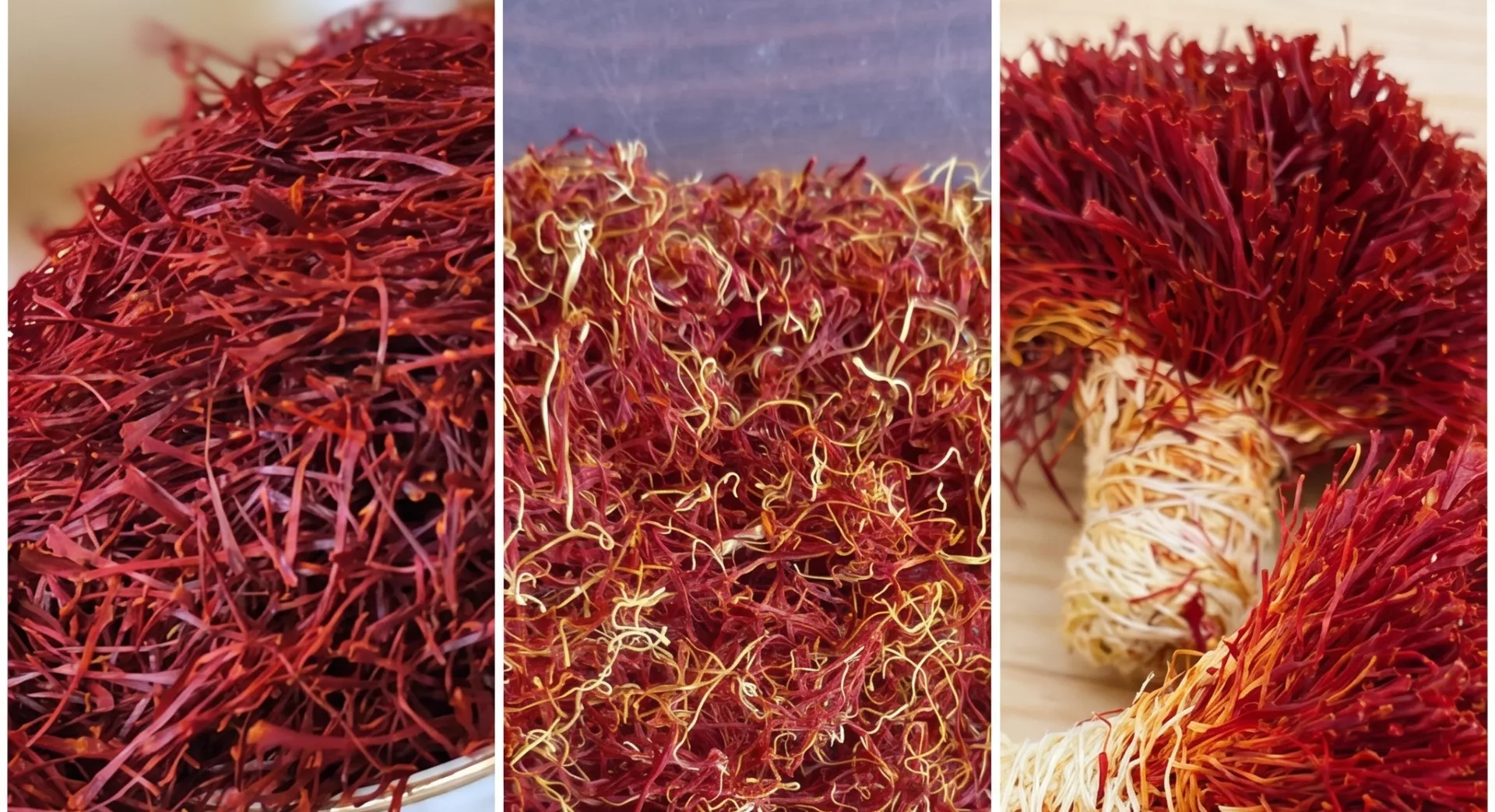
Mogra (also spelled Mongra or Mongara — all refer to the same grade) is widely considered the finest hand-picked grade of Kashmiri saffron. It consists of pure, deep red stigma with minimal to no yellow style attached, giving it the strongest colour, aroma, and flavour per gram of any commonly available grade. Because trimming stigma-by-stigma to remove nearly all of the yellow style is extremely labour-intensive, Mogra commands the highest price of the common Kashmiri grades. This is the grade we use across our own saffron products, including our standalone Kashmiri Mogra saffron pack.
Lacha: A Mid-Tier Grade
Lacha refers to saffron where the red stigma remains attached to a visible portion of the yellow style, rather than being separated. Because the yellow style itself has little colour or aroma value, saffron sold as Lacha delivers less colour strength and aroma per gram than an equivalent weight of Mogra — you're paying for some plant material that doesn't actually contribute much to your cooking. Lacha typically costs less than Mogra, which makes it attractive to price-sensitive buyers, but it's important to understand you're getting a genuinely different (lower) concentration, not simply a "cheaper deal" on the same product.
Guchhi and Other Regional Terms
Terminology in the saffron trade isn't perfectly standardized, and "Guchhi" is a term used somewhat inconsistently across different regions and traders — generally referring to a more bundled or less individually sorted form of processing, often associated with lower grades. Because grading terminology can vary by trader, the label alone isn't a reliable guarantee — this is exactly why lab certification for crocin (colour strength) and safranal (aroma) content matters more than the grade name printed on a package.
How to Actually Verify What Grade You're Buying
- Look at the strands: Deep, uniform red colour with little to no pale yellow is a strong visual indicator of a higher grade.
- Check for lab certification: A genuine lab test for crocin and safranal content is the most reliable objective measure of grade and purity, regardless of what name is printed on the pack.
- Check for GI tagging: While GI tagging confirms Kashmir origin rather than grade specifically, it rules out one major category of mislabeling — saffron grown elsewhere and sold as Kashmiri.
- Be sceptical of unusually low prices: A price far below the typical market rate for Kashmiri saffron of any stated grade is one of the clearest warning signs of adulteration or mislabeling.
For a deeper look at spotting fake or adulterated saffron specifically, see our guide on how to identify authentic Kashmiri saffron.
Why Grade Matters More Than Most Buyers Realise
Two packs both labelled "Kashmiri saffron" can deliver noticeably different results in your cooking purely based on grade — the same weight of Lacha will produce weaker colour and aroma than Mogra, which can lead buyers to wrongly conclude that "saffron isn't that strong" or that they received a fake product, when the real issue was simply a lower grade. Understanding grading helps you buy the right product for your needs and set realistic expectations for how much colour and aroma a given pack should deliver.
The Bottom Line
Mogra, Lacha, and Guchhi represent real, meaningful differences in how saffron is processed and how much aroma and colour concentration it delivers — not just marketing labels. Buying from a source that's transparent about grade and backs it with lab certification, like our own Kashmiri Mogra saffron, is the most reliable way to know exactly what you're getting.