How many saffron strands equal a gram is one of the most practical questions a home cook can ask, since saffron is almost always priced and sold by the gram, but used in tiny per-serving pinches — the two units can feel disconnected until you have real numbers in front of you. This guide gives you exact reference numbers and practical serving guidance.
- The Short Answer
- Why the Exact Count Varies
- Grade and Strand Weight
- Translating This to a Single Serving
- How Long Does a Gram Actually Last?
- Weight vs Counting: Which Is More Accurate?
- A Simple Reference Table
- Price-Per-Serving Math
- Measuring for Larger-Batch or Commercial Cooking
- How Grade Affects How Much You Actually Need
- A Note on International Measurement Conventions
- Why Precision Matters More for Saffron Than Most Spices
- Common Recipe Measurement Confusions
- The Bottom Line
The Short Answer
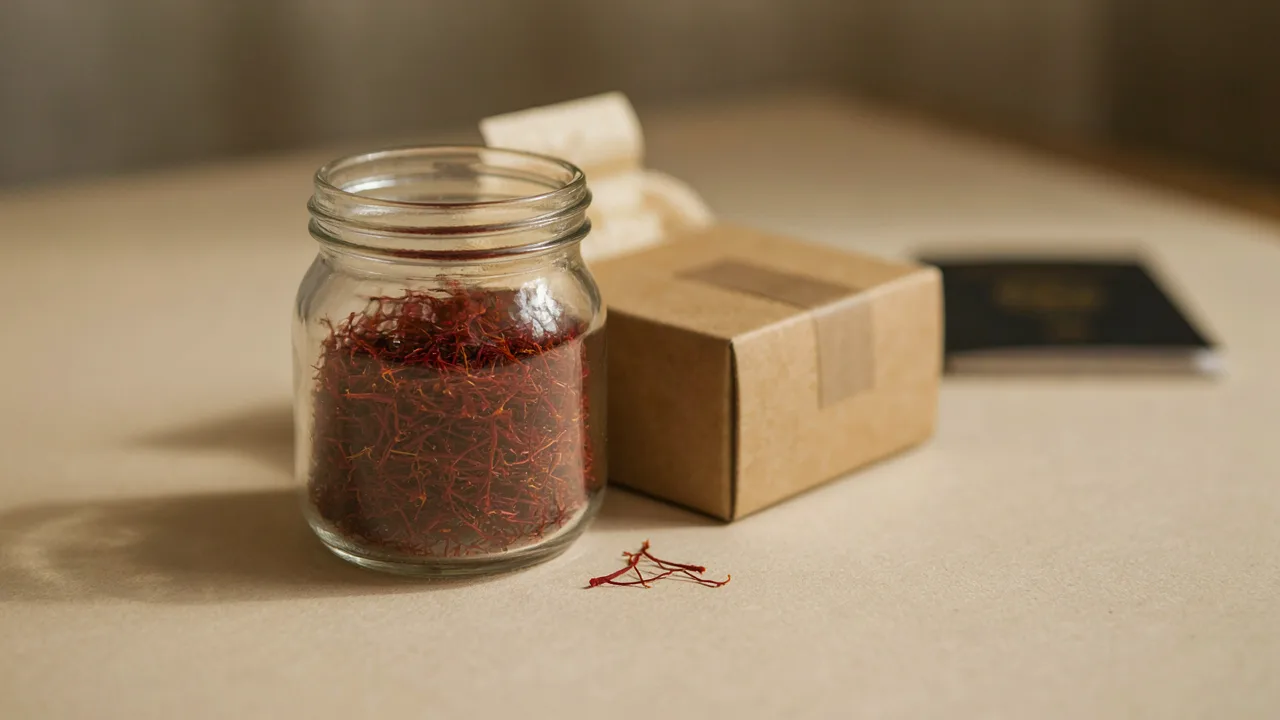
As a practical, commonly cited reference figure: roughly 400 to 500 individual saffron strands make up one gram. This isn't an exact scientific constant — it varies somewhat, as explained below — but it's a genuinely useful reference point for understanding what you're actually buying and using.
Why the Exact Count Varies
Saffron strands aren't perfectly uniform, so the exact number per gram shifts based on a few real factors: strand thickness (which varies by grade), how much of the pale yellow style is still attached versus trimmed away, and residual moisture content, since freshly dried strands weigh slightly differently than ones that have lost more moisture over time in storage. None of this variation affects how you should use saffron in cooking — it's simply why you'll see slightly different "strands per gram" figures cited in different places.
Grade and Strand Weight
Higher grades like Mogra — pure, trimmed red stigma with minimal to no attached yellow style, as explained in our saffron grading guide — tend to be slightly denser and more consistent per strand than lower grades that retain more of the lighter, less dense yellow style. This means a gram of genuine Mogra and a gram of a lower grade like Lacha won't necessarily contain the exact same strand count, even though they weigh the same, because the individual strand composition differs.
Translating This to a Single Serving
The standard culinary guideline of 4 to 6 strands per serving — a cup of milk, tea, or a portion of rice — works out to somewhere around 0.01 to 0.015 grams per serving, using the 250-350-strands-per-gram reference figure. This is why even a small 1-2 gram pack of saffron can genuinely last through dozens of individual servings when used correctly, despite feeling like a tiny quantity when you first open the pack.
How Long Does a Gram Actually Last?
Doing the maths from the serving guideline above: a single gram of saffron, used at roughly 4-6 strands per serving, can realistically stretch across 60 to 100+ individual servings for most households — far more than the "tiny amount" a gram might feel like when you first see it. This is worth keeping in mind if you've ever felt saffron seemed too expensive to be practical; understood per-serving rather than per-gram, the actual cost per use is considerably more modest than the upfront price tag suggests.
Weight vs Counting: Which Is More Accurate?
For genuinely precise measurement — useful for commercial kitchens, recipe development, or larger-batch cooking — weighing saffron on a small precision kitchen scale (ideally one that measures to 0.01g increments) is more accurate than counting strands, since strand-to-strand weight does vary somewhat. For everyday home cooking, though, counting out a small handful of 4-6 strands per serving is a perfectly practical, traditional approach that doesn't require any special equipment.
A Simple Reference Table
| Quantity | Approximate Strand Count | Approximate Servings |
|---|---|---|
| 1 gram | 250-350 strands | 60-100+ servings |
| 2 grams | 500-700 strands | 120-200+ servings |
| 5 grams | 1,250-1,850 strands | 300-500+ servings |
Price-Per-Serving Math
Understanding strand count per gram also helps put saffron's per-gram price into more useful perspective. If a gram of genuine Kashmiri Mogra saffron costs, for example, somewhere in the ₹300-500+ range depending on current pricing and quantity purchased, and that gram realistically delivers 60-100+ servings at the standard 4-6 strand guideline, the actual cost per serving works out to a few rupees at most — a very different picture than the headline per-gram price might suggest on its own. This kind of per-serving thinking is a genuinely useful way to evaluate whether a specific saffron purchase represents good value, rather than fixating purely on the upfront per-gram cost without accounting for how far that gram actually stretches in practice.
Measuring for Larger-Batch or Commercial Cooking
If you're cooking for a large gathering, catering an event, or running a small food business, the strand-counting approach that works fine for a single serving becomes impractical at scale — this is where switching to weight-based measurement genuinely matters. A small precision kitchen scale, ideally measuring in increments of 0.01g, lets you calculate the correct total weight for a large batch by scaling up the per-serving guideline (for example, roughly 0.015g per serving times the number of servings you're preparing), then weighing out that total amount in one go rather than counting out individual strand piles repeatedly. This is both more practical and more consistent than strand-counting once you're working beyond a handful of servings at a time.
How Grade Affects How Much You Actually Need
Grade affects not just strand weight (covered earlier) but also how many strands you actually need to use for a given effect, which is a distinct, practical consideration. Higher-grade Mogra saffron, with its minimal pale style and concentrated pigment, delivers stronger colour and aroma per strand than a lower grade like Lacha, which retains more of the less potent pale style. This means the standard 4-6 strand guideline genuinely assumes a reasonably high grade — with a lower grade, you may need to use noticeably more strands to achieve a comparable result, which is worth factoring in both when following a recipe written with a specific grade in mind, and when comparing the real value of a lower-priced, lower-grade saffron pack against a higher-priced, higher-grade one on a per-use basis rather than a simple per-gram basis.
A Note on International Measurement Conventions
If you're following recipes from different international sources, be aware that saffron measurement conventions can vary — some Western recipes specify saffron in "threads" as a count (matching the strand-counting approach used throughout this guide), while others use volume measurements like teaspoons, which as covered above can be inconsistent given how light and bulky whole threads are relative to their weight. When a recipe's origin isn't clear about which convention it's using, converting to the strand-count or gram-weight guidelines in this article, rather than guessing at a teaspoon conversion, will generally give you a more reliable and consistent result regardless of where the original recipe came from.
Why Precision Matters More for Saffron Than Most Spices
Precise measurement genuinely matters more for saffron than for most other spices, for a simple reason: saffron's flavour and colour compounds are potent enough that even a fairly small difference in quantity — going from 4 strands to 10, say — produces a noticeably different result, whereas doubling a pinch of a milder spice like ground coriander typically makes a much smaller relative difference to a dish. This is part of why understanding actual strand counts and weights, rather than vague "a pinch" instructions, genuinely improves consistency in saffron-based cooking specifically, in a way that's less critical for many other spices in a typical recipe.
Common Recipe Measurement Confusions
A few measurement mix-ups come up often enough to be worth addressing directly. "A pinch of saffron" is a genuinely imprecise traditional phrase, roughly corresponding to what you could pick up between two fingers — typically in the same rough ballpark as the 4-6 strand guideline, but not a precise measurement. Some older or translated recipes specify saffron in fractions of a teaspoon rather than strand count, which can be misleading, since whole threads are light and bulky relative to their actual weight — a loosely packed 1/4 teaspoon of whole threads could represent anywhere from a handful to well over a dozen strands depending on how they're packed. When in doubt, defaulting to the strand-count guideline (4-6 per serving) rather than a volume measurement tends to give more consistent results.
The Bottom Line
Roughly 250 to 350 strands per gram is a genuinely useful reference figure for understanding saffron measurement, even though the exact count varies with grade and moisture. More usefully for everyday cooking: a single gram, used correctly at 4-6 strands per serving, goes a lot further than it first appears — a helpful thing to know both for planning your cooking and for understanding the real value behind saffron's per-gram price.