Learning how to make saffron oil at home is simpler than most recipes make it sound, and it comes down to one of two methods: a slow cold infusion that takes one to two weeks, or a faster warm infusion that takes a few hours. Both start with the same two ingredients - genuine saffron threads and a neutral oil - and both work, depending on how patient you are.
What You Need Before You Start
Use a neutral, light oil that won't fight with saffron's own aroma. Sweet almond oil is the standard choice for cosmetic or hair use, since it's gentle and absorbs well, while sunflower or a mild sesame oil works better if you're planning to use the oil in cooking. You'll also need about 15-20 saffron threads per 100ml of oil, a small clean glass jar, and a dark cupboard or drawer to store it in while it infuses.
Method One: The Slow Cold Infusion
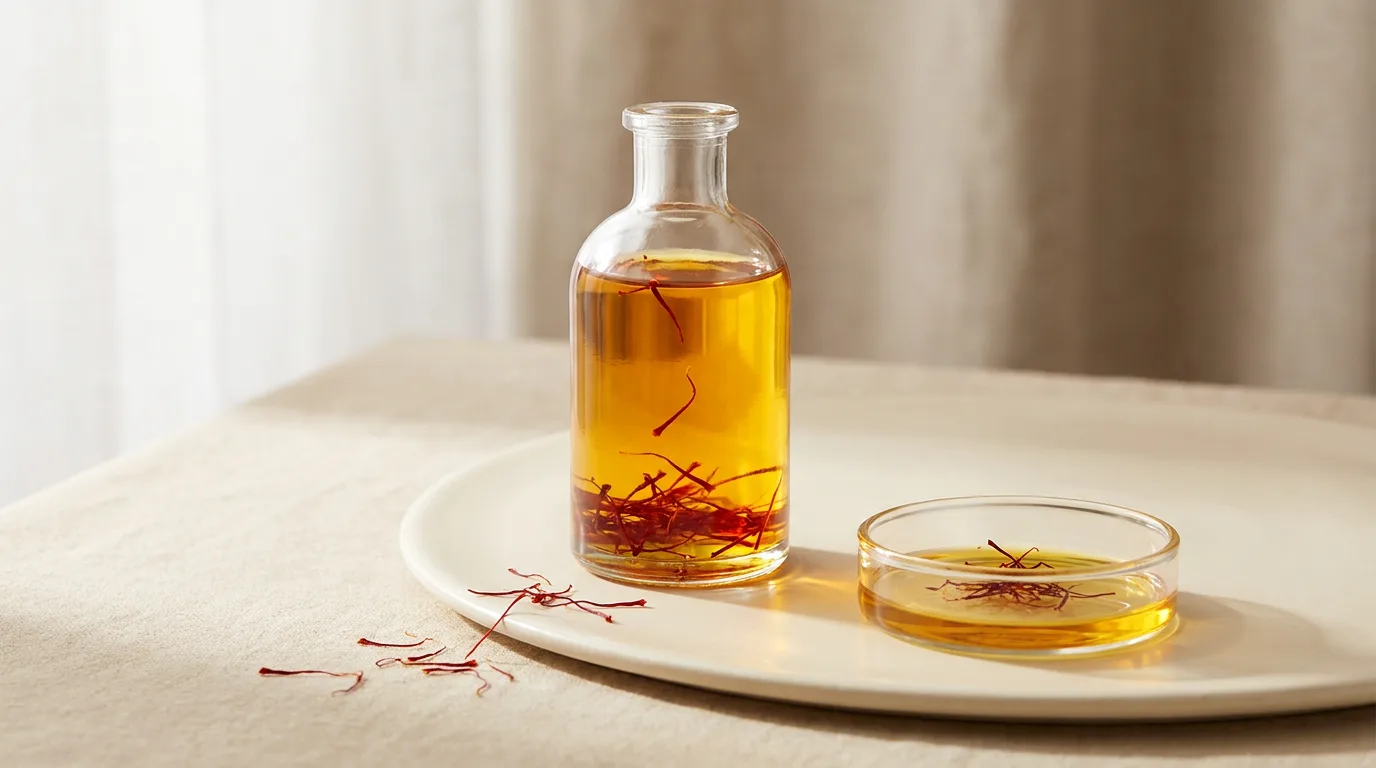
Lightly crush the saffron threads between your fingers to help them release their color and aroma faster, then drop them into the oil in your glass jar. Seal it and store it somewhere dark - a cupboard, not a windowsill - for one to two weeks, giving the jar a gentle shake every day or two. You'll see the oil slowly deepen from clear to a warm amber-gold. This method preserves saffron's aroma best, since nothing is heated.
Method Two: The Faster Warm Infusion
If you don't want to wait two weeks, warm the oil gently in a double boiler or a heatproof bowl set over simmering water, keeping it just warm to the touch, never hot enough to smoke or shimmer. Add the crushed threads and let the oil sit over this gentle heat for two to four hours, checking occasionally that it stays warm rather than hot. Turn off the heat and let it cool completely in the jar before straining. This method works faster but pulls out slightly less of the aroma than a long cold steep does.
Straining and Storing It
Once the infusion period is done, strain the oil through a fine mesh sieve or a piece of muslin cloth into a clean, dry bottle, pressing the threads gently to get the last of the oil out of them. Discard the spent threads - they've given up what they had. Store the finished oil in a dark glass bottle, away from direct light and heat, and it should keep well for several months. If the smell turns flat or faintly rancid before then, it's time to make a fresh batch.
What This Oil Is Actually Good For
Saffron oil made this way is used two main ways: massaged into the scalp and hair as a nourishing treatment, or used sparingly as a finishing oil in cooking, drizzled over a dish right before serving rather than used for frying, since heat breaks down a lot of what makes it worth making in the first place. A few drops go a long way in either use.
Common Mistakes That Ruin a Batch
The most common one is heating the oil too aggressively during the warm-infusion method - if it starts shimmering or you can smell it heating up from across the kitchen, it's too hot, and you'll cook off some of the aroma you're trying to capture rather than gently coax it out. The second is storing the finished oil somewhere bright, like on an open shelf near a window, which fades both the color and the scent over a few weeks even if the oil hasn't gone bad. The third is skipping the straining step and leaving threads sitting in the oil indefinitely - past a certain point they stop adding anything and can make the oil smell slightly musty instead of fragrant.
A Quick Note on What We Sell
We don't currently sell a ready-made, bottled saffron oil. This page is a genuine how-to for making it yourself at home, not a disguised product listing. What we do sell is the saffron itself - and the quality of your threads matters more to the final oil than almost anything else in this process, since a weak or adulterated saffron will give you a pale, barely-scented oil no matter how long you infuse it. Our Kashmiri Saffron Mogra is what we'd use ourselves for this.
Homemade saffron oil won't look as polished as something bought off a shelf, sitting in your own slightly imperfect bottle instead of factory packaging, but made with real threads and given its full infusion time, it does the job properly.