Saffron's reputation as the world's most expensive spice makes a lot more sense once you've seen what actually goes into making it — this isn't a crop that gets harvested by machine and bagged up. Here's the real, step-by-step journey from flower to the threads you'd find in a jar.
- The Saffron Flower and Its Brief Bloom
- The Harvest Window: A Race Against Time
- Hand-Picking the Flowers
- Separating the Stigmas
- Drying the Threads
- Grading and Sorting
- Storage Immediately After Processing
- Why This Process Makes Saffron So Valuable
- How Kashmiri Processing Compares to Other Regions
- Quality Control Before It Reaches You
- Why Saffron Can't Really Be Mass-Automated
- The Bottom Line
The Saffron Flower and Its Brief Bloom
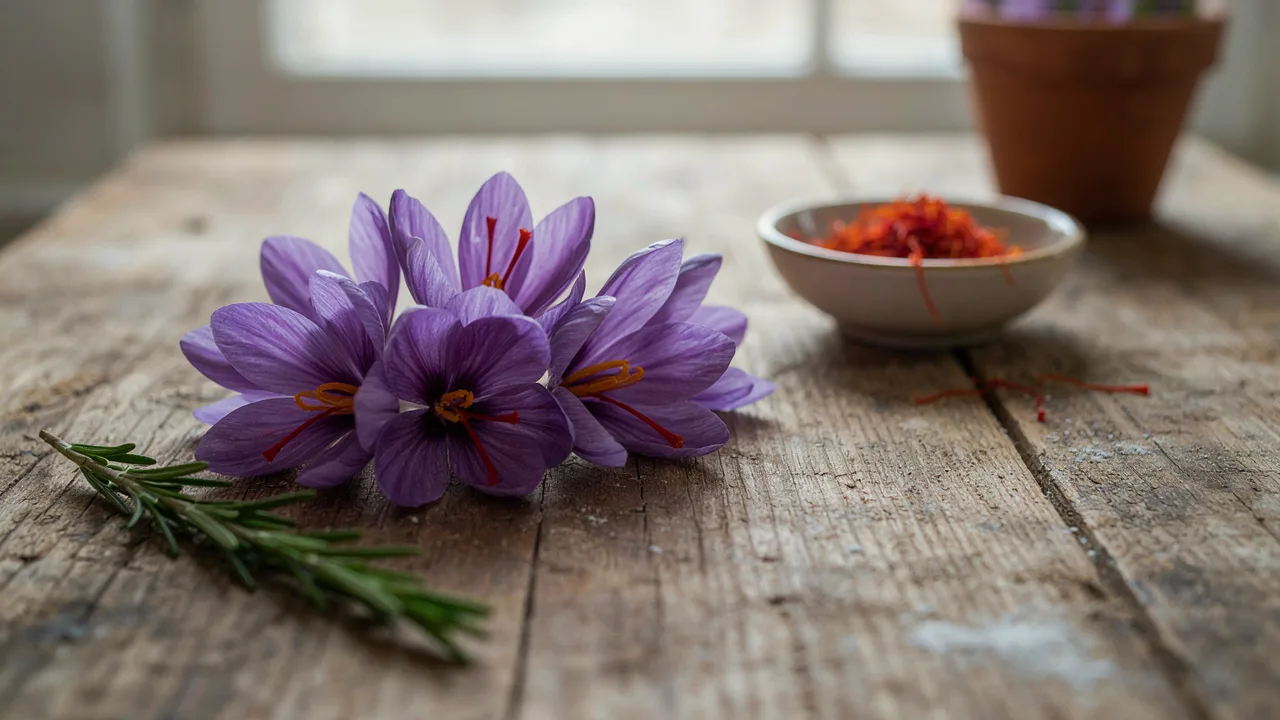
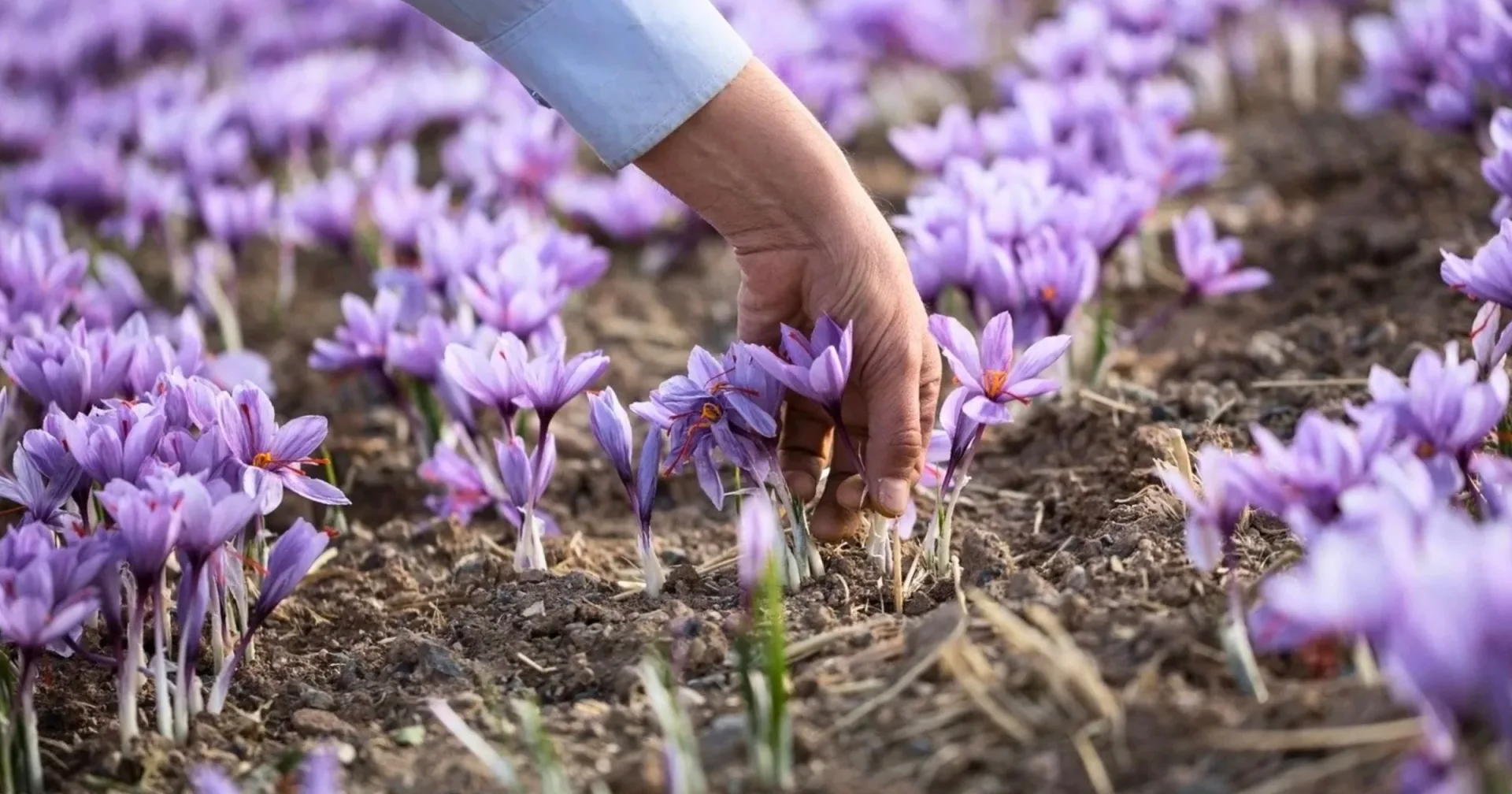
Saffron comes from Crocus sativus, a purple-petaled flower that blooms for only a few weeks each year. Inside each flower are exactly three thread-like stigmas — the part of the flower that eventually becomes the saffron you cook with — attached to a single style inside the bloom. The flower itself produces no seeds and is propagated entirely through corms (underground bulb-like structures) replanted by farmers each cycle, which is part of why established saffron fields represent years of accumulated agricultural investment, not a crop you simply plant from seed one season and harvest the next. Everything about saffron's cost and rarity traces back to this basic biological fact: each flower gives up only three thin stigmas, nothing more, regardless of how the plant is grown or cared for.
The Harvest Window: A Race Against Time
The Crocus sativus flower typically blooms for just 2 to 3 weeks, usually in October or November depending on the growing region's climate, and each individual flower only remains open and harvestable for a day or two before wilting. This means the entire year's saffron harvest for a given field has to happen within this narrow, unforgiving window, which is why saffron harvest season involves intense, concentrated labor rather than a spread-out picking season like many other crops.
Hand-Picking the Flowers
Flowers are traditionally picked by hand in the early morning, while they're still closed or just beginning to open, before the day's heat and sun can affect the delicate stigmas inside. In Kashmir's Pampore fields, this means farming families and workers moving through the fields at dawn, picking each flower individually by hand into baskets — a physically demanding, time-pressured task repeated daily throughout the short harvest window. Entire families, including multiple generations, are often involved during this period, since the harvest window is too short and too urgent to rely on a small crew alone.
Separating the Stigmas
Once picked, the flowers are brought to a processing area, usually the same day, where each flower is opened by hand and its three stigmas are carefully separated from the petals and the rest of the flower using fingers or small tools. This is painstaking, detail-focused work — rushing it or using mechanical methods risks damaging the delicate stigmas or including unwanted plant material, which would lower the final quality grade. A skilled, experienced processor can separate stigmas from a meaningful number of flowers in an hour, but it remains fundamentally a hand-skill, not something efficiently automated at premium quality levels.
Drying the Threads
The freshly separated stigmas, still moist, are then dried to remove most of their water content, which concentrates their flavor, aroma, and colour while making them shelf-stable. Traditional drying methods vary by region but generally involve low, gentle heat — sometimes over a mesh screen above a controlled heat source, or in carefully managed ambient conditions — since excessive heat can scorch the delicate threads and damage the very aromatic compounds that make saffron valuable in the first place. This step significantly affects final quality: properly dried saffron retains its deep colour and complex aroma, while poorly dried saffron can end up dull, inconsistent, or lacking the characteristic fragrance.
Grading and Sorting
Once dried, the threads are sorted and graded based on colour, length, and purity — in Kashmir's system, this is where Mogra, Lacha, and Guchhi grades get separated out, as covered in detail in our saffron grades guide. Any remaining plant debris, broken threads, or inconsistently coloured pieces get removed during this stage, which is another labor-intensive quality-control step that mechanized, lower-cost saffron production often skips or does less thoroughly. Experienced graders can assess quality largely by sight and touch, developed over years of handling the product — a skill passed down within farming families much like winemaking or tea-tasting expertise in other agricultural traditions.
Storage Immediately After Processing
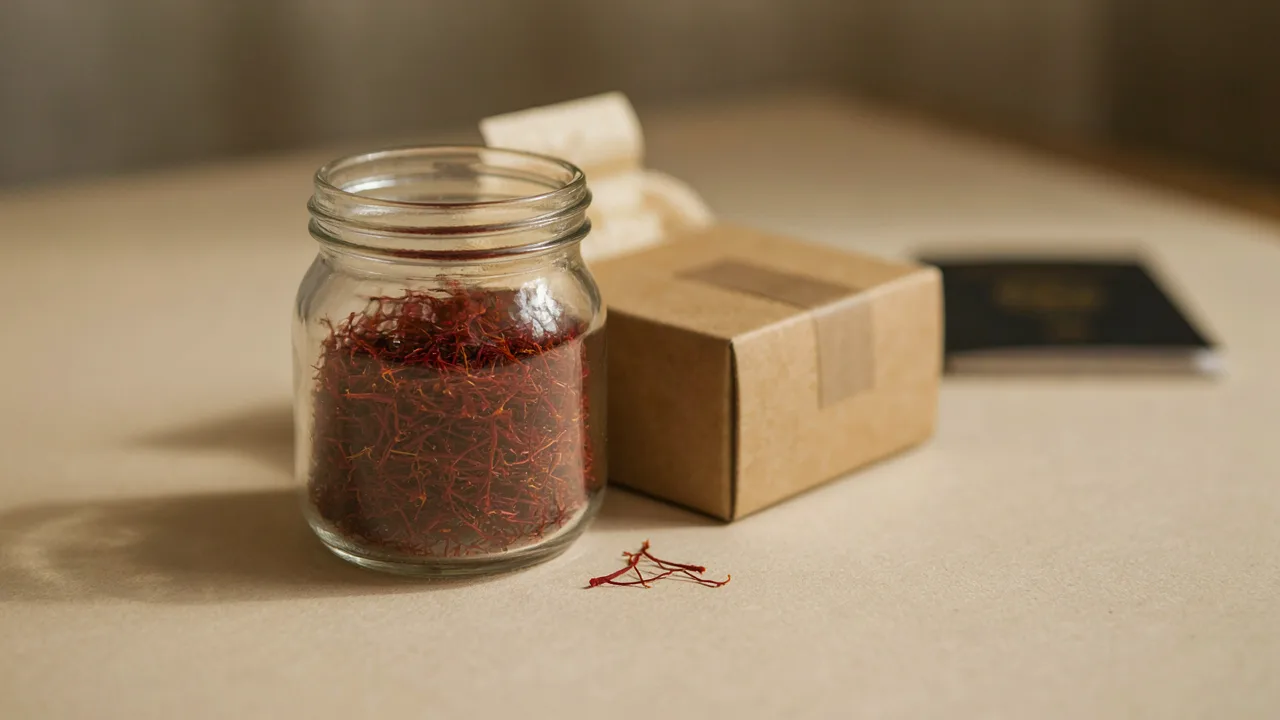
Once dried and graded, saffron needs to be protected from light, moisture, and air to preserve its colour, aroma, and potency until it's packaged and sold. Traditional storage uses airtight containers kept in cool, dark conditions — the same basic principles covered in our saffron storage guide for consumers, just applied at a larger scale immediately after processing. Saffron that sits improperly stored even for a few weeks after drying can lose a noticeable amount of its aromatic intensity, which is why reputable producers move quickly from drying to proper sealed storage rather than leaving processed threads exposed.
Why This Process Makes Saffron So Valuable
Putting the numbers together: it takes roughly 150,000 individual flowers, each hand-picked and hand-processed within a brief window, to produce just one kilogram of dried saffron threads. To put that in perspective, a single acre of saffron fields might yield only a few kilograms of dried threads in an entire season, compared to the far higher per-acre yields of most other agricultural crops. Every stage — picking, separating, drying, grading — is still done substantially by hand even in modern saffron production, because the alternative (mechanization) tends to damage the delicate stigmas or reduce quality below what premium markets require. This is the real, concrete reason behind saffron's price, well before any discussion of marketing or brand premium: genuine, labor-intensive scarcity.
How Kashmiri Processing Compares to Other Regions
Kashmiri saffron processing remains almost entirely traditional and hand-done, reflecting both the smaller scale of Kashmir's saffron fields and a deliberate commitment to traditional methods that preserve quality. Some larger-scale saffron-producing regions use a degree of mechanical assistance in certain processing steps to handle greater production volumes, which can be perfectly legitimate for good-quality saffron but generally doesn't match the consistency of fully hand-processed premium grades. Our pieces on a day in the life of a saffron farmer and the saffron fields of Kashmir go deeper into what this traditional process actually looks like on the ground, season to season.
Quality Control Before It Reaches You
Beyond the farm-level grading described above, reputable sellers typically conduct further quality checks — visual inspection, sometimes lab testing for crocin, safranal, and picrocrocin content — before saffron reaches a retail buyer. This is worth knowing when you're choosing where to buy: a seller who can speak specifically to their sourcing and testing process is a meaningfully different proposition than one who can't explain where their saffron actually came from or how it was processed.
Why Saffron Can't Really Be Mass-Automated
It's worth addressing directly why, in an age of automated agriculture, saffron hasn't followed the same path as crops like wheat or corn. The core obstacle is the flower itself: each stigma is thin, delicate, and attached in a way that requires fine motor control and visual judgment to remove cleanly without damage or including unwanted plant material. Machines that could reliably replicate this at the quality level premium markets demand don't really exist at commercial scale yet, and the extremely short, time-pressured harvest window makes developing and deploying specialized machinery for such a brief annual use case economically difficult to justify for most producers. This is a large part of why saffron has remained a genuinely artisanal crop even as most agriculture has industrialized around it.
The Bottom Line
Saffron's price makes a lot more sense once you understand what genuinely goes into it: roughly 150,000 flowers, each hand-picked in a narrow window, hand-separated, carefully dried, and hand-graded, all to produce a single kilogram of threads. It's one of the few spices where the "artisanal, labor-intensive" story isn't marketing spin — it's simply how the crop has to be made to reach a premium quality standard.
To try genuine, traditionally hand-processed Kashmiri saffron for yourself, see our Kashmiri Mogra saffron, harvested and processed using exactly the methods described above.