Saffron quality red flags are worth learning before you buy, not after — saffron is one of the most commonly adulterated food products in the world, and a large share of what's sold online, even with confident marketing claims, doesn't hold up to scrutiny. This guide focuses specifically on the red flags to watch for before you buy, complementing our broader guide on how to identify authentic Kashmiri saffron once you already have a product in hand.
Red Flag 1: A Price That Seems Too Good to Be True
This is the single biggest warning sign. Genuine saffron requires each of the three stigmas from a Crocus sativus flower to be hand-picked during a narrow autumn window — there is no way to produce it cheaply at scale. If a listing offers saffron at a fraction of typical market rates for the claimed grade and origin, treat that as a serious red flag rather than a genuine bargain.
Red Flag 2: Vague or Unverifiable Origin Claims
"Kashmiri saffron" is a specific, legally meaningful claim backed by GI (Geographical Indication) status since 2020 — as covered in our guide on Kashmir's GI tag for saffron. A seller who uses the term loosely without any ability to speak to or document genuine Kashmir origin is a warning sign, especially combined with unusually low pricing.
Red Flag 3: No Mention of Lab Testing or Certification
Genuine saffron sellers confident in their product's purity typically reference lab testing for compounds like crocin (colour strength) and safranal (aroma) — this is an objective, verifiable claim, unlike vague marketing language. The complete absence of any certification claim, especially from a seller charging premium prices, is worth questioning directly before buying.
Red Flag 4: Suspiciously Uniform, Bright Orange-Red Strands
Genuine saffron threads show some natural variation in colour and thickness. Strands that look unnaturally uniform, unusually thick, or an odd shade of orange rather than deep red can indicate dyed corn silk, safflower petals, or other plant material being passed off as saffron.
Red Flag 5: Colour Bleeds Instantly and Completely in Water
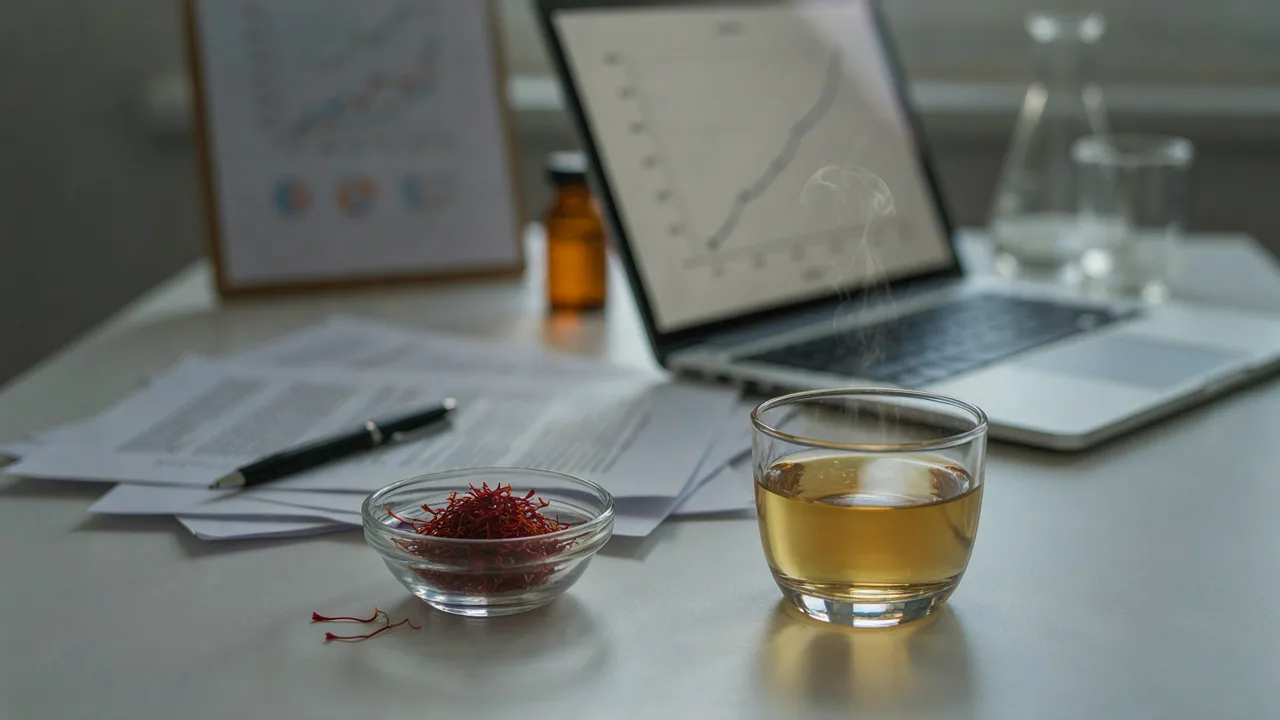
When genuine saffron strands are placed in water, colour releases gradually over several minutes, and the strands themselves generally retain some of their shape and structure. Material that turns water an intense colour almost instantly, or dissolves/disintegrates rapidly, is a common sign of dyed non-saffron material rather than genuine stigma.
Red Flag 6: No Real Customer History or Verifiable Business Presence
A seller with no verifiable business history, no clear contact information, and only very recent or suspiciously uniform reviews is a general e-commerce red flag that applies especially strongly to a high-value, easily counterfeited product like saffron.
Red Flag 7: Overstated Health Claims
Be cautious of sellers making sweeping, unqualified medical claims — "cures depression," "guaranteed weight loss," "treats diabetes" — rather than measured, appropriately hedged language about traditional use or preliminary research. Overstated health claims are often a sign of a seller more focused on marketing than on the honest quality of the product itself, as discussed throughout our own coverage of topics like saffron and blood sugar and saffron and mental health.
What Genuine Sellers Should Be Able to Offer
- Clear, specific origin claims (not vague "Kashmiri-style" language)
- Reference to lab testing or certification for purity
- Reasonable, market-consistent pricing for the claimed grade
- Appropriately hedged health claims, not sweeping medical promises
- A genuine, verifiable business presence
These are exactly the standards we hold our own Kashmiri Mogra saffron to — GI-tagged, lab-certified, and honestly marketed.
The Bottom Line
Most fake or heavily adulterated saffron can be avoided simply by paying attention to price, the specificity of origin and certification claims, and the tone of health claims made by the seller. When several of these red flags appear together, treat that as a strong signal to look elsewhere.