How to tell if saffron has gone bad is a genuinely useful question, because the honest answer is more nuanced than a simple expiry date — saffron doesn't spoil the way fresh food does, but it does gradually weaken, and there's a real difference between "weaker" and "actually bad." This guide explains exactly what to look, smell, and taste for.
- Saffron Doesn't "Spoil" the Way Food Does
- The Real Issue: Gradual Potency Loss
- Signs of Normal Ageing — Not a Problem
- Genuine Warning Signs to Discard It
- The Smell Test
- The Colour Test
- The Water Test
- What to Do With Weakened (But Not Bad) Saffron
- Preventing Degradation in the First Place
- What If You Suspect Fake, Not Just Old, Saffron?
- How Commercial Saffron Is Actually Tested for Freshness
- A Quick Reference Checklist
- Common Mistaken Beliefs About Saffron "Expiry"
- The Bottom Line
Saffron Doesn't "Spoil" the Way Food Does
Unlike fresh produce, dairy, or meat, dried saffron threads don't "spoil" in the sense of becoming actively unsafe to eat purely from age, when stored under normal dry conditions. Saffron's very low moisture content after proper drying makes it inhospitable to the kind of bacterial growth that causes conventional food spoilage. This means the usual question isn't really "has my saffron gone off" in a food-safety sense — it's "has my saffron weakened to the point it's not worth using, or has something actually gone wrong with it."
The Real Issue: Gradual Potency Loss
What genuinely happens to saffron over time is gradual loss of its aroma compound, safranal, along with some reduction in colour-strength compounds like crocin. This is a slow, natural process that accelerates with exposure to light, air, humidity, and heat — which is exactly why proper storage (sealed, cool, dark, dry) matters so much, as covered in more detail in our guide on cooking with saffron and avoiding common mistakes at https://buykashmirisaffron.com/cooking-with-saffron-common-mistakes.
Signs of Normal Ageing — Not a Problem
- Slightly less vivid aroma than when first opened
- Slightly less intense colour release when soaked, compared to a fresh pack
- Threads that feel a little more brittle than when new
None of these signs mean your saffron has "gone bad" — they're simply signs of natural, gradual ageing, and saffron in this state is still perfectly fine to use, just with somewhat reduced potency.
Genuine Warning Signs to Discard It
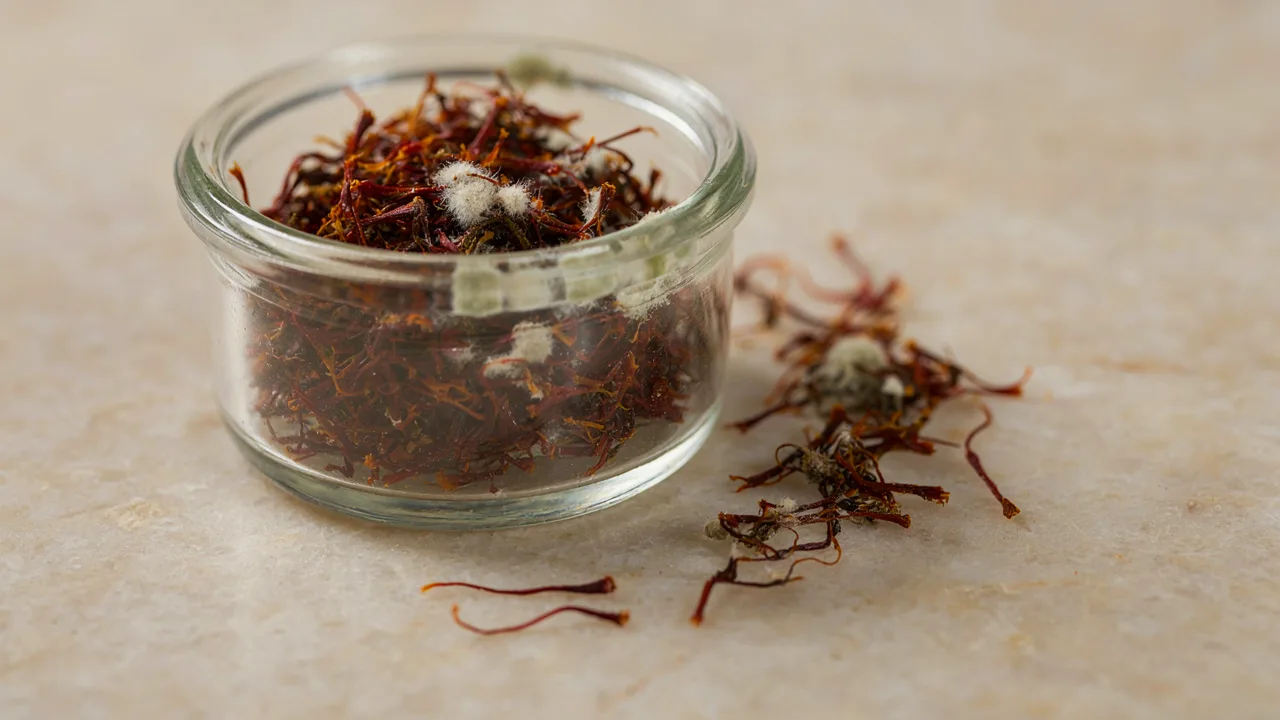
- Visible mould — any fuzzy growth or unusual spotting, almost always a sign moisture got into the container
- A musty, damp, or otherwise "off" smell — distinct from simply "less fragrant," this is a smell that wasn't there when the saffron was fresh
- Clumping or stickiness — a sign moisture has gotten in, which can lead to mould even if none is visible yet
Any of these are genuine reasons to discard saffron, the same way you would with any other food item showing signs of moisture damage or mould.
The Smell Test
Fresh, good-quality saffron has a distinctive aroma — often described as slightly sweet, hay-like, and faintly metallic or medicinal. Aged-but-fine saffron will have a fainter version of this same aroma. Bad saffron, if it's actually gone wrong due to moisture exposure, will smell musty or damp rather than simply faint — a genuinely different smell, not just a weaker version of the good one.
The Colour Test
Soak a few strands in a small amount of warm water. Fresh, potent saffron releases a rich golden-orange colour within a few minutes. Aged saffron will still release colour, just more slowly and less intensely. If strands release no colour at all even after several minutes of soaking in warm water, that's a sign the saffron has degraded very significantly, or isn't genuine saffron to begin with.
The Water Test
What to Do With Weakened (But Not Bad) Saffron
If your saffron shows only normal ageing signs — fainter aroma and colour, but no mould or musty smell — it's still perfectly usable. Simply use more strands than the standard 4-6 per serving guideline (perhaps 8-10) to compensate for the reduced potency, rather than discarding saffron that's still genuinely fine to cook with.
Preventing Degradation in the First Place
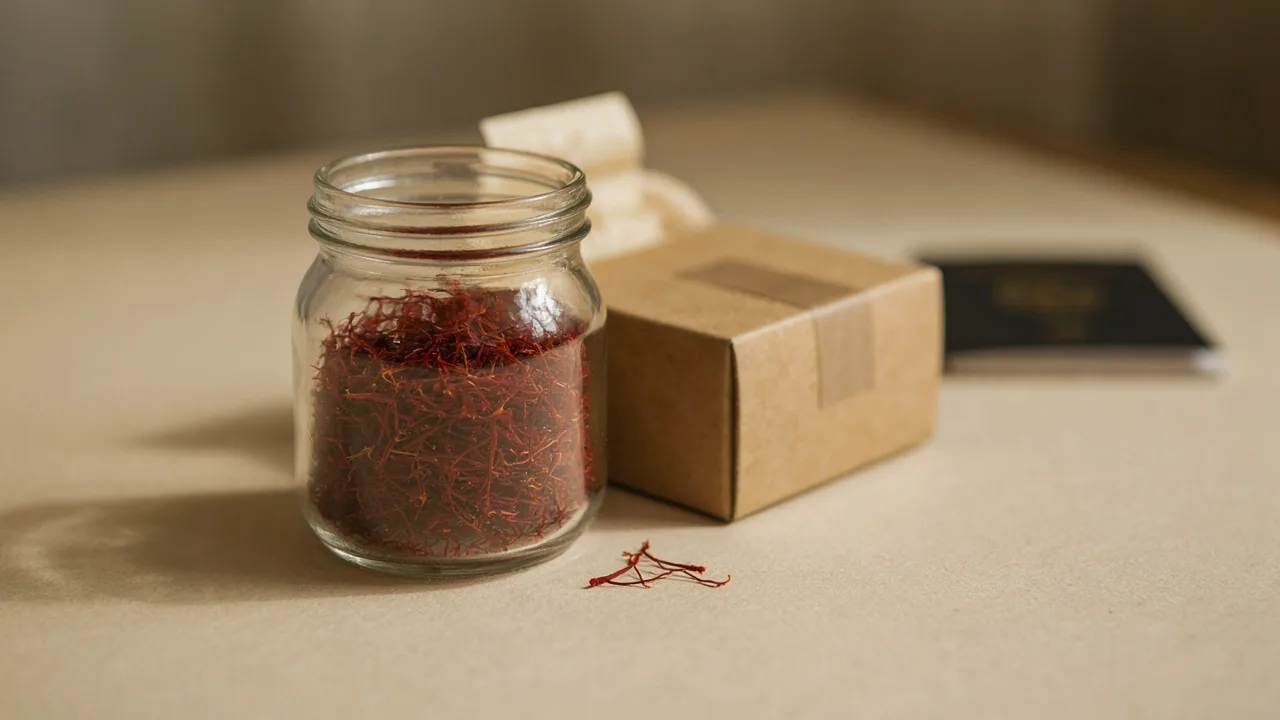
The best way to deal with degraded saffron is to avoid needing to in the first place, through correct storage from day one. Keep saffron in its original sealed pack, or transfer to a small opaque or dark glass airtight container, stored in a cool, dry cupboard away from the stove, direct sunlight, and any source of heat or humidity — never near a window, and never in a spot exposed to steam or moisture from cooking. Buying saffron in a quantity that roughly matches how much you'll genuinely use within a year or two, rather than a much larger amount that will sit opened and gradually degrading for years, is also a practical way to keep what you're using consistently fresh and potent.
What If You Suspect Fake, Not Just Old, Saffron?
It's worth clearly distinguishing "my saffron has aged and weakened" from "I think this might not be genuine saffron at all" — these are different problems with different solutions. If saffron shows the genuine warning signs described above (mould, musty smell, clumping), that's a storage/ageing issue with product you can reasonably assume started out as real saffron. If, on the other hand, saffron never showed much colour or aroma even when brand new, released colour instantly and unnaturally when soaked, or simply doesn't match the visual and behavioural characteristics of genuine saffron described throughout this article, that's a different concern entirely — possible adulteration or an entirely fake product, not ageing. Our guide on saffron quality red flags covers this distinct issue in detail, since the solution there is about sourcing, not storage.
How Commercial Saffron Is Actually Tested for Freshness
For context, commercial and laboratory saffron quality testing typically measures specific chemical markers rather than relying on subjective smell or colour assessment alone — crocin content for colour strength, picrocrocin for the compound behind saffron's characteristic taste, and safranal for aroma, usually via spectrophotometric analysis referenced against international standards like ISO 3632, which defines saffron quality categories based on these exact measurements. While home cooks obviously don't have access to this kind of laboratory testing, understanding that these are the actual, measurable compounds behind what you're informally assessing through smell and colour helps explain why the practical tests described in this article (smell, colour release, water test) are reasonable proxies for the same underlying chemistry a lab would measure directly.
A Quick Reference Checklist
- Still good, just fainter: weaker aroma, weaker colour release, slightly more brittle threads — use more strands to compensate, no need to discard
- Discard immediately: visible mould, a musty or damp smell, clumping or stickiness
- Possibly never genuine to begin with: little to no colour or aroma even when freshly opened, or colour that releases instantly and unnaturally in water — this is a sourcing issue, not an ageing one
- To prevent the first category from becoming a bigger concern: store sealed, cool, dark, and dry from day one, and buy quantities that match your realistic usage timeline
Common Mistaken Beliefs About Saffron "Expiry"
A few beliefs about saffron "expiry" are worth correcting. First, there's no single hard cutoff date after which saffron suddenly becomes unusable — degradation is gradual, not a cliff edge, which is why "is it still good" is better answered by the smell, colour, and water tests described above than by counting months since purchase. Second, refrigerating or freezing saffron is not necessary and, if not done correctly (risking moisture condensation when moved in and out of temperature), can actually introduce the exact humidity risk that leads to real spoilage — a cool room-temperature cupboard is generally the better choice for most households. Third, a printed "best before" date on commercial packaging is a conservative guideline, not a strict safety cutoff, given everything explained above about how saffron actually degrades.
The Bottom Line
How to tell if saffron has gone bad comes down to a simple distinction: normal, gradual weakening (fainter aroma and colour) is not a problem and doesn't mean discarding it — actual signs of moisture damage (mould, a musty smell, clumping) are. Store your saffron correctly from the start, and you'll rarely need to worry about the difference in the first place.