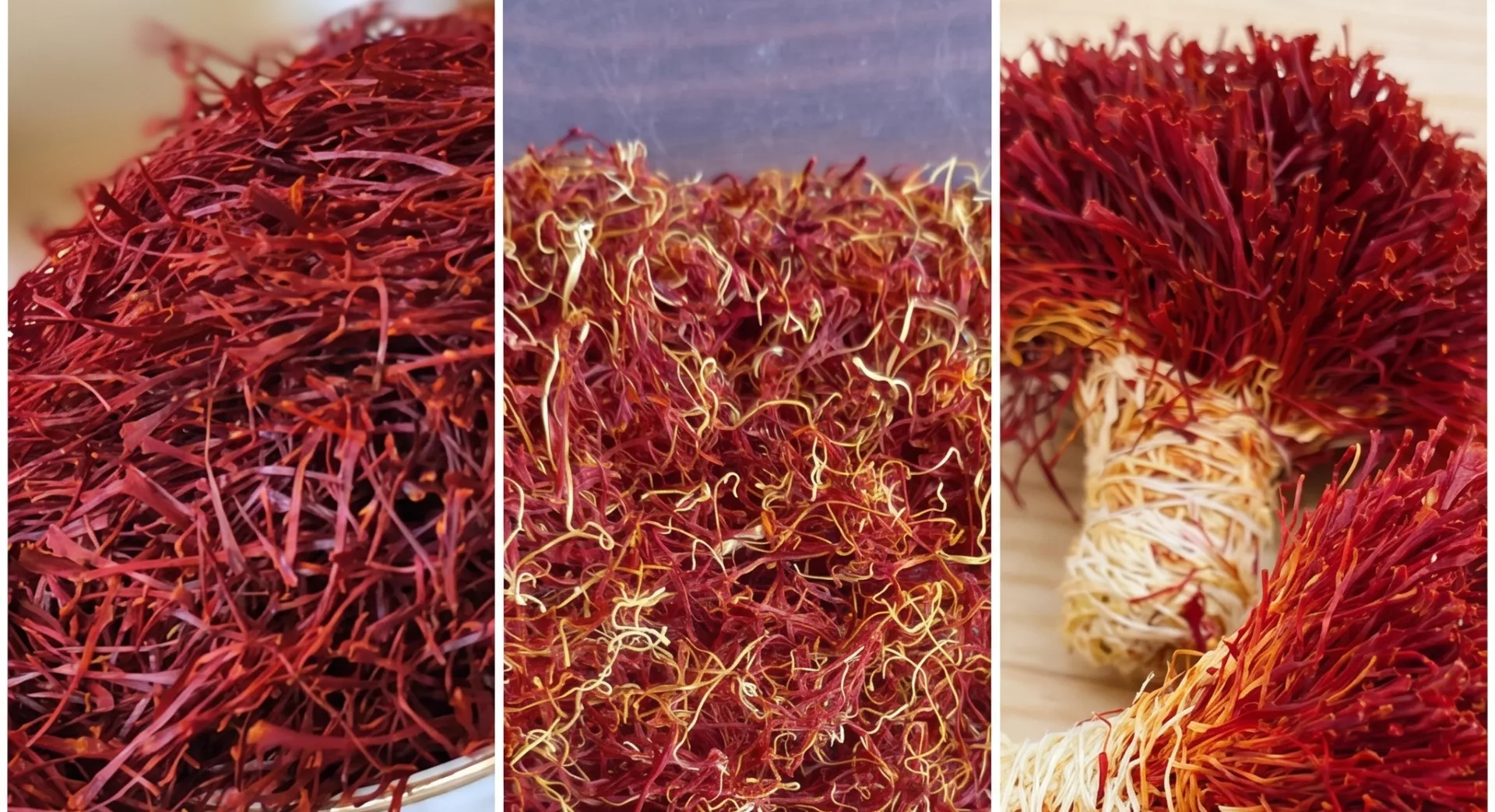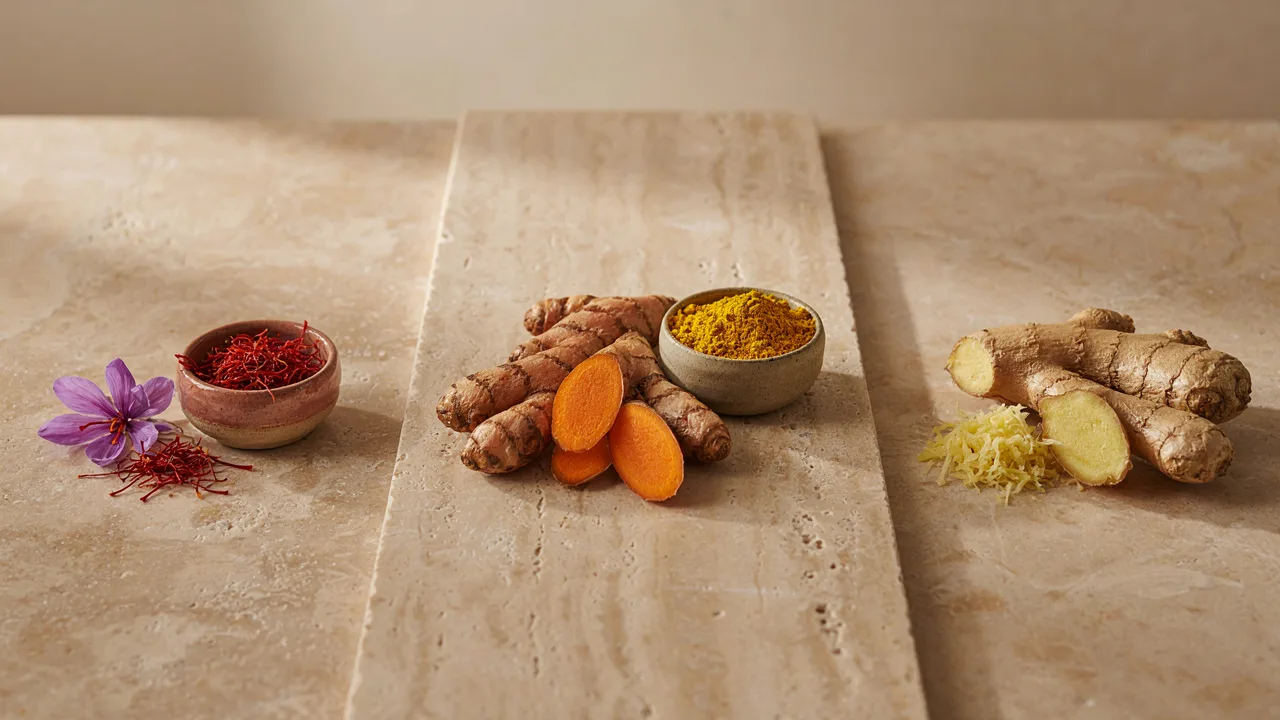
Saffron vs turmeric vs ginger is a comparison worth making carefully — these are three of the most recognisable spices associated with Indian cuisine and traditional wellness, yet they could hardly be more different from each other in origin, cost, and everyday use. This guide compares all three side by side, so you understand what each one genuinely offers rather than treating them as interchangeable "healthy spices."
Origin and How Each Is Harvested
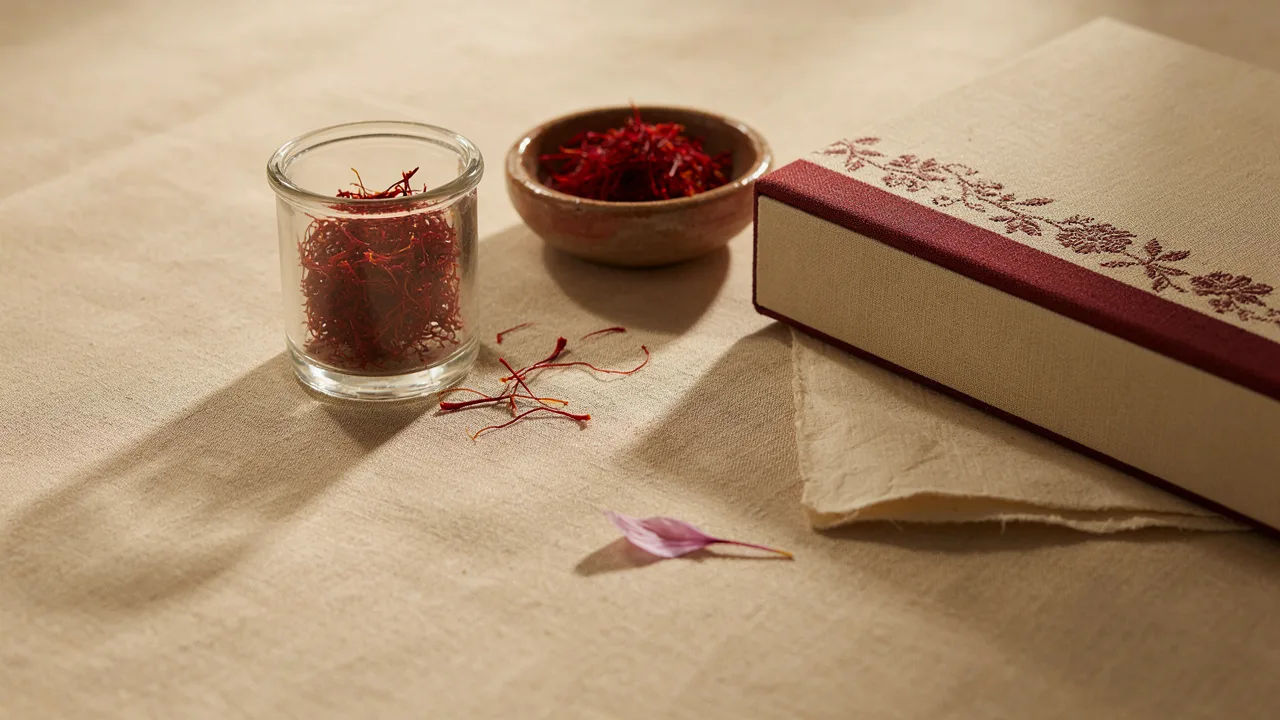
Saffron comes from the stigmas of the Crocus sativus flower, hand-picked during a narrow autumn flowering window, predominantly in Iran globally and in Kashmir within India. Each flower yields only three stigmas, making it one of the most labour-intensive spices in the world to produce.
Turmeric is the dried, ground rhizome (underground stem) of the Curcuma longa plant, grown widely across India, with states like Telangana and Maharashtra among the largest producers. It's harvested in much larger volumes per plant than saffron and requires comparatively less manual labour per kilogram produced.
Ginger is the rhizome of Zingiber officinale, grown across tropical and subtropical India, similarly harvested at a much larger scale than saffron with mechanised or semi-mechanised methods widely used.
Cost Comparison
The price difference between these three spices is enormous. Genuine Kashmiri saffron typically costs anywhere from ₹300 to over ₹1,000 per gram depending on grade, while turmeric and ginger are commonly priced in rupees per kilogram, not per gram. This isn't a marketing distinction — it reflects a genuine difference of several orders of magnitude in the labour required to produce each one. For a detailed breakdown of current saffron pricing, see our Kashmiri saffron price guide.
Flavour and Culinary Role
| Spice | Flavour | Typical Use |
|---|---|---|
| Saffron | Delicate, floral, honey-like, slightly bitter | Biryani, kheer, saffron milk, desserts |
| Turmeric | Earthy, mildly bitter, warm | Curries, dals, golden milk, pickling |
| Ginger | Sharp, peppery, citrusy heat | Tea, curries, stir-fries, baking |
None of the three can properly substitute for another — they occupy entirely different roles in a dish. Saffron is used sparingly for colour and aroma; turmeric is used for base flavour and colour in savoury cooking; ginger is used for heat and brightness.
Traditional and Researched Health Reputation
Turmeric, largely because of its curcumin content, has the largest body of published research among the three, with studies exploring anti-inflammatory and antioxidant properties. Ginger has a long history of traditional use for digestion and nausea, with a reasonable body of supporting research, particularly for nausea relief. Saffron's research base is smaller and more recent by comparison, with growing interest in areas like mood and metabolic health, though much of it remains preliminary — as covered in our piece on saffron and blood sugar research.
It's worth being cautious about sweeping claims for any of these three spices. None of them are a substitute for medical treatment, and traditional use — however longstanding — is not the same as clinical proof.
Which One Should You Actually Buy?
This isn't really a competition — most Indian kitchens benefit from having all three, used for their distinct purposes rather than as competing "superfoods." If you're specifically looking for genuine, high-grade saffron rather than a diluted or mislabeled product, our Kashmiri Mogra saffron is GI-tagged and lab-certified for authenticity — the single biggest factor in whether saffron is actually worth its price at all.
Storage: Another Point of Difference
Storage requirements differ across the three as well. Saffron should be kept sealed, in a cool, dark place, away from humidity, to preserve its aroma compounds over time. Ground turmeric and dried ginger powder both keep reasonably well in an airtight container away from moisture, though both gradually lose potency over many months. Fresh ginger root, unlike the other two, needs refrigeration and is best used within a couple of weeks — a reminder that these three "spices" aren't even always in the same processed state when compared.
The Bottom Line
Saffron, turmeric, and ginger each earned their reputation for different reasons — saffron for its rarity and delicate flavour, turmeric for its everyday versatility and research base, and ginger for its sharp flavour and digestive tradition. Understanding what makes each one distinct is more useful than ranking them against each other.