"Saffron for weight loss" shows up often in supplement marketing, usually citing a small set of real clinical trials — but those trials studied something more specific than most marketing claims let on. If you've seen saffron extract capsules marketed alongside bold before-and-after claims, it's worth knowing exactly what was tested before spending money on it. This article looks at what was actually tested, what the results mean, and where the evidence stops short of a weight-loss guarantee.
- Why Saffron Got Linked to Weight Management
- The Appetite and Snacking Research
- How These Studies Were Designed
- The Metabolism and Blood Sugar Connection
- How Saffron Compares to Other Weight-Marketed Ingredients
- What the Evidence Does Not Show
- Saffron Water and Weight Loss, Specifically
- Who Should Be Cautious
- Habits With Far Stronger Evidence for Weight Management
- A Realistic Way to Think About Saffron and Weight
- Questions Worth Asking Before Trying Extract Supplements
- The Bottom Line
Why Saffron Got Linked to Weight Management
The research interest here traces back partly to saffron's studied effect on mood and serotonin pathways, covered in more depth in our piece on saffron and mental health. Serotonin is involved in regulating satiety and mood-related eating — the kind of snacking or overeating linked to stress and low mood, sometimes called emotional eating. This gave researchers a specific, plausible reason to test whether saffron might reduce snacking behavior, rather than any claim about directly burning fat or speeding up metabolism.
The Appetite and Snacking Research
A small number of randomized controlled trials have tested standardized saffron extract, generally around 90mg daily split into two doses, against a placebo in adults, measuring snacking frequency and subjective appetite ratings over several weeks. Some of these trials reported a meaningful reduction in snacking frequency in the saffron group, along with modest reductions in body weight over the study period compared to placebo — in some cases a few kilograms over roughly two months, which is a real but modest effect size in the context of overall weight management. These are genuine, published findings worth taking seriously as a research direction — the honest caveat is that this remains a small evidence base from a limited number of trials, mostly from a small number of research teams.
How These Studies Were Designed
- Small sample sizes: Most trials enrolled several dozen participants, informative but not large enough for high-confidence conclusions on their own
- Short duration: Most ran 8 to 12 weeks — useful for an initial signal, not for understanding long-term weight management
- Standardized extract only: The ~90mg daily doses studied are measured extract, not culinary saffron
- Self-reported snacking: Several trials relied on participant-reported snacking behavior, which carries some inherent measurement limitations compared to objectively tracked intake
The Metabolism and Blood Sugar Connection
Separate from the appetite research, saffron has also been studied for possible effects on blood sugar regulation, which is a related but distinct topic from weight management directly — our saffron and blood sugar article covers that research in full. Blood sugar stability and appetite regulation are physiologically connected (blood sugar crashes can drive hunger and snacking), so there's a plausible overlap between the two research areas, though the specific trials on snacking and the specific trials on blood sugar markers are largely separate bodies of research, not a single unified finding. It's also worth noting that none of this research measured resting metabolic rate directly — the actual rate at which your body burns calories at rest, which is what "metabolism boosting" claims typically imply. That specific measurement simply hasn't been part of the saffron research design so far.
How Saffron Compares to Other Weight-Marketed Ingredients
Saffron is far from the only spice or supplement marketed for weight management, and it's useful to see where it sits relative to better-known options. Green tea extract and caffeine both have a considerably larger research base specifically around modest metabolic rate increases, with effects that are small but more consistently replicated across studies than saffron's appetite findings. Glucomannan, a soluble fiber, has stronger evidence specifically for appetite and fullness through a well-understood mechanism (it physically expands in the stomach). Saffron's niche in this landscape is narrower and newer — a small number of trials on snacking behavior specifically — rather than a broad, well-established weight-management ingredient on the level of these more extensively studied options.
What the Evidence Does Not Show
This research does not show that saffron burns fat, boosts metabolic rate, or works as a standalone weight-loss solution. The studied effect, where found, relates specifically to reduced snacking and modest appetite changes — a behavioral and appetite-related finding, not a direct metabolic one. Marketing claims describing saffron as a "fat burner" or "metabolism booster" go beyond what any of the actual snacking-and-appetite trials tested or found, and are worth treating with real skepticism, particularly from any product combining saffron with a dozen other "proprietary blend" ingredients and a bold before-and-after photo.
Saffron Water and Weight Loss, Specifically
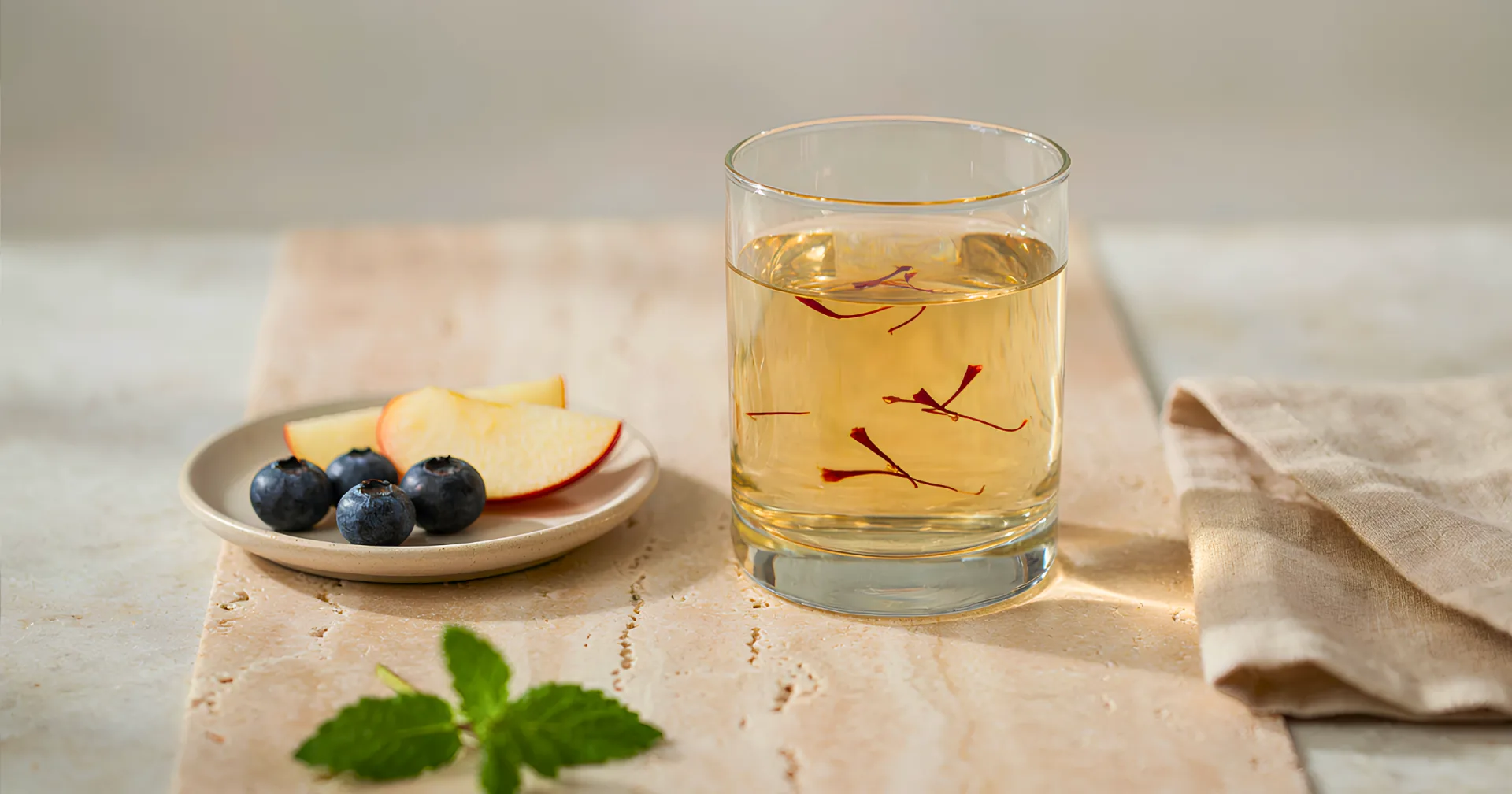
Saffron-infused water is a popular, pleasant, low-calorie drink, and our saffron water guide covers how to make it — but it's worth being clear that this isn't the same form or dose studied in the appetite trials discussed above, which used standardized extract capsules at a measured daily amount. Drinking saffron water is a reasonable, low-risk addition to a generally healthy routine, but it shouldn't be expected to replicate the specific, modest findings from the extract-based clinical research.
Who Should Be Cautious
Standardized saffron extract at the ~90mg doses studied is a meaningfully higher amount than typical culinary use, and anyone pregnant, breastfeeding, managing diabetes or taking blood-sugar-affecting medication, or managing any other health condition should check with their doctor before trying a measured extract supplement specifically for this purpose, rather than assuming general culinary safety information applies the same way at supplement doses.
Habits With Far Stronger Evidence for Weight Management
If weight management is a genuine priority, it's worth being clear-eyed that diet quality and composition, regular physical activity, adequate sleep, and consistent, sustainable habits over time all have dramatically more research behind them than any single supplement, saffron included. Poor sleep specifically is repeatedly linked in research to increased hunger hormones and harder appetite control the following day, which is a more robustly evidenced appetite-related lever than anything saffron research has shown so far. A calorie deficit achieved through a sustainable, balanced diet remains the fundamental driver of weight loss according to the overwhelming weight of nutrition science, and no spice changes that underlying reality, however promising a specific small trial finding might sound in isolation.
A Realistic Way to Think About Saffron and Weight
- Some real clinical trials found reduced snacking with standardized saffron extract — that part is genuine
- This is a modest, appetite-related effect, not a proven fat-burning or metabolism-boosting one
- The evidence base is still small and needs replication at a larger scale
- Culinary saffron and saffron water are enjoyable additions to a diet, not a substitute for the fundamentals of sustainable weight management
Questions Worth Asking Before Trying Extract Supplements
If you're considering a standardized saffron extract supplement specifically for appetite support, reasonable questions to think through first include: whether you have any condition or medication where a serotonin-affecting supplement warrants caution (worth a quick check with a pharmacist or doctor); whether you're looking at a reputable, third-party-tested product given how unregulated much of the supplement market is; and whether your expectations are calibrated to "possibly somewhat less snacking" rather than "significant weight loss," since that's what the actual trials measured. Setting expectations accurately from the start avoids the disappointment-then-distrust cycle that overhyped supplement marketing often creates.
The Bottom Line
Saffron and weight management is a real, if narrow, research area — some genuine trials suggest standardized extract may modestly reduce snacking behavior, which is a meaningfully different and more limited claim than "saffron burns fat." That distinction matters: one is a grounded, worth-watching research direction, and the other is the kind of overreach that erodes trust once a product doesn't live up to the marketing. Enjoy saffron as part of a balanced diet, but build your actual weight management approach on the fundamentals that have decades of stronger evidence behind them.
For further reading, see the PubMed database of saffron and appetite research. For genuine, lab-verified Kashmiri saffron, see our Kashmiri Mogra saffron, and our dosage guide for sensible culinary amounts.