Saffron threads vs saffron powder is a choice that matters more than it might seem — while both are marketed as genuine saffron, they carry very different levels of purchasing risk, and understanding why is essential before you buy either. This guide explains the real differences and which format makes sense for your needs.
- What Whole Saffron Threads Are
- What Saffron Powder Is
- The Core Problem: Verification
- Shelf Life Differences
- When Powder Genuinely Makes Sense
- How to Buy Saffron Powder More Safely, If You Must
- Common Myths About Saffron Powder
- A Practical Buying Checklist for Either Format
- Price Comparison Considerations Between Formats
- How Professional Kitchens Typically Choose Between the Two
- What the Water Test Reveals About Either Format
- Our Recommendation
- The Bottom Line
What Whole Saffron Threads Are
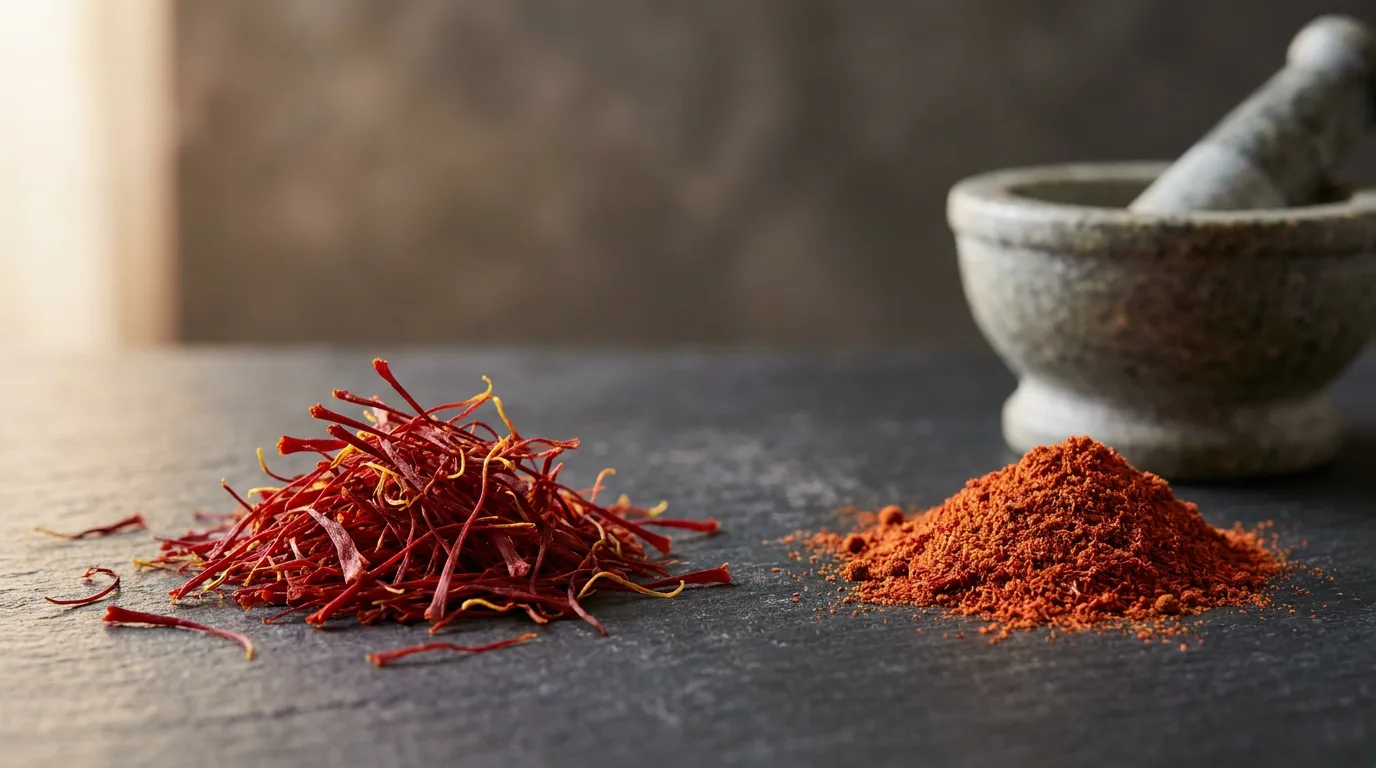
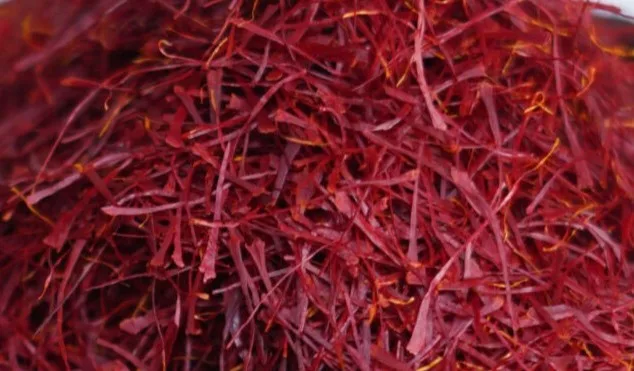
Whole saffron threads are the dried stigmas of the Crocus sativus flower in their natural, recognisable form — thin, deep red thread-like strands, sometimes with a small amount of paler yellow style still attached depending on grade (see our guide on saffron grades for more on this). This is the traditional form saffron has been sold and used in for centuries, and the form most commonly associated with genuine, verifiable Kashmiri saffron.
What Saffron Powder Is
Saffron powder is whole threads ground down into a fine powder, sold either as a pure ground product or, in some commercial contexts, blended with other ingredients as part of spice mixes or food colouring products. Some genuine saffron powder does exist on the market, ground from real, high-quality threads specifically for convenience in certain preparations.
The Core Problem: Verification
Here's the central issue: once saffron is ground into powder, you lose almost every visual and tactile way of checking its authenticity. With whole threads, you can look for deep red colour, minimal pale yellow style, consistent thread thickness, and observe how they behave when soaked in water — all genuine, if imperfect, indicators of quality covered in our guide on saffron quality red flags. None of that is possible with powder. A fine red or orange powder could be genuine ground saffron, or it could be dyed turmeric, paprika, or another cheap colourant blended to mimic saffron's colour — visually, there's often no way to tell the difference without laboratory testing.
This is exactly why powder is disproportionately more common in adulterated or entirely fake "saffron" products sold online and in general markets. It's simply much easier to pass off a fake product as powder than as convincing whole threads, which take more effort and skill to fake convincingly.
Shelf Life Differences
Beyond the verification problem, ground saffron also loses its aroma compounds faster than whole threads. Grinding dramatically increases the surface area exposed to air, light, and humidity — all factors that degrade saffron's volatile aroma compound, safranal, over time. Whole threads stored correctly (sealed, cool, dark) retain their potency considerably longer than an equivalent amount of powder stored under the same conditions.
When Powder Genuinely Makes Sense
There are legitimate culinary reasons to want saffron in powder form — certain dry preparations, like some bread or pastry doughs, can benefit from powder's more even initial dispersion compared to whole threads, which typically need a soaking step to release their colour and aroma properly. If a specific traditional recipe calls for saffron powder, that's a genuine culinary reason to want it in that form.
How to Buy Saffron Powder More Safely, If You Must
If you do want saffron powder, the safest approach by far is the one described in the FAQ above: buy genuine, verifiable whole threads from a trusted, lab-certified source, and grind a small amount yourself just before you need it — using a clean, dry mortar and pestle, or simply crushing threads between clean, dry fingers. This gives you the powder format for that specific recipe while still starting from a product you (or your supplier) could actually verify in its original whole form.
Common Myths About Saffron Powder
A few misconceptions are worth clearing up. First, powder isn't inherently "more concentrated" or "stronger" than an equivalent weight of whole threads — grinding doesn't add potency, it just changes physical form, and as covered above, actually accelerates potency loss over time rather than preserving it. Second, a fine, bright red or orange colour isn't proof of purity in powder form — that's precisely the visual cue that's easiest to fake with non-saffron colourants, which is the whole reason powder carries more purchasing risk in the first place. Third, some products marketed as "saffron powder" are actually blends including other ingredients like cornstarch as a bulking agent — always check whether a powder product is labelled as 100% pure saffron or as a blend, since the two are priced and used very differently.
A Practical Buying Checklist for Either Format
- Buying threads: Look for deep red colour with minimal pale yellow style, GI-tagged Kashmir origin claims, and lab certification for purity — all covered in more depth in our guide on saffron quality red flags
- Buying powder, if you must: Look specifically for a 100%-pure label (not a blend), a seller who can speak confidently about sourcing from genuine whole threads, and be more sceptical of unusually vivid colour than you would be with threads
- Either format: Be wary of pricing that seems too good to be true relative to typical market rates for the claimed grade and quantity
Price Comparison Considerations Between Formats
Powder is sometimes priced slightly lower than an equivalent weight of whole threads, which can make it tempting as a "better value" option — but this price difference doesn't reflect any genuine cost saving in production (grinding threads costs relatively little), and more often reflects either a lower starting grade of saffron used, or simply pricing calibrated to what a less-informed buyer expects to pay for a less recognisable format. Comparing pure whole-thread pricing against pure powder pricing from the same trustworthy source, rather than assuming powder is automatically the economical choice, is the more reliable way to evaluate genuine value between the two formats.
How Professional Kitchens Typically Choose Between the Two
Professional kitchens and experienced chefs overwhelmingly favour whole threads over powder for essentially the same reasons covered throughout this article — verifiability, better shelf life, and generally more precise control over how and when the saffron's colour and aroma get released into a dish. Where a professional kitchen does use powder, it's typically ground in-house, close to time of use, from verified whole threads already in their inventory — the same self-grinding approach recommended earlier in this guide for home cooks — rather than purchased as pre-ground powder from an external supplier. This professional preference is a reasonably strong practical signal for home cooks too: if the people cooking with saffron most seriously and most often default to whole threads, that's a meaningful endorsement of threads as the safer, more reliable default choice.
What the Water Test Reveals About Either Format
The simple water test — soaking a small amount in warm water and observing how colour releases — works somewhat differently across the two formats and is worth understanding for each. With whole threads, colour should release gradually over several minutes, with the strands themselves retaining some visible structure. With powder, colour will typically dissolve and release far more quickly given the much greater surface area exposed to the water — genuine powder still shouldn't turn the water an unnaturally intense colour almost instantly, which remains a warning sign of a non-saffron colourant regardless of format. This test is simply less definitive for powder than for threads, which is really the core of this whole article's argument: threads give you more ways to verify what you're actually buying, and powder gives you fewer, regardless of which specific test you're relying on.
Our Recommendation
For the vast majority of home cooking — biryani, kheer, saffron milk, most traditional preparations — whole threads are both the safer purchase and the more traditional, flexible format. We sell our Kashmiri Mogra saffron exclusively as whole threads for exactly this reason: it lets you see what you're getting, rather than asking you to trust a powder you have no practical way to verify yourself.
The Bottom Line
Saffron threads vs saffron powder isn't really a matter of personal preference so much as a matter of verifiable trust — whole threads let you and your supplier confirm genuine quality in a way powder simply doesn't allow. Buy whole threads as your default, and grind your own powder on the rare occasion a specific recipe genuinely calls for it.