Saffron in Mughal cuisine wasn't just a flavouring — it was a defining feature of royal kitchen culture, woven into dishes designed to reflect the wealth, refinement, and reach of one of history's great empires. This article looks at saffron's central role in Mughal-era cooking and its lasting legacy in the food we eat today.
- The Mughal Empire and Its Culinary Ambitions
- Why Saffron Fit the Royal Kitchen So Well
- Saffron in Mughal-Era Biryani
- Kormas and Other Savoury Dishes
- Mughal Desserts and Saffron
- The Kashmir Connection
- Mughal-Era Beverages and Saffron
- How Mughal-Era Technique Differs From Modern Shortcuts
- Regional Variations Across the Empire
- What Historical Mughal Cookbooks and Records Tell Us
- Presentation and Visual Artistry in Mughal Dining
- Trying This Heritage in Your Own Kitchen
- The Legacy in Modern Indian Cooking
- The Bottom Line
The Mughal Empire and Its Culinary Ambitions
The Mughal Empire, which ruled over large parts of the Indian subcontinent from the early 16th to mid-19th centuries, is remembered for many things — architecture, art, administration — and also for a distinctive, refined culinary tradition that blended Central Asian, Persian, and South Asian influences into what's broadly recognised today as Mughlai cuisine. Royal kitchens under Mughal emperors were elaborate operations, and the food served reflected imperial ambitions as much as any building or artwork did — rich, layered, and built around expensive, carefully sourced ingredients.
Why Saffron Fit the Royal Kitchen So Well
Saffron in Mughal-Era Biryani
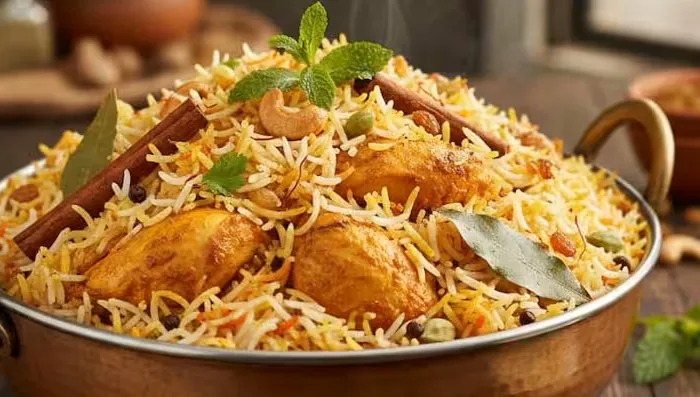
Biryani, likely developed through the blending of Persian pilaf traditions with South Asian rice and spice techniques during the Mughal period, became one of the most iconic vehicles for saffron in the royal kitchen tradition. Layering saffron-infused milk or saffron-soaked rice into a biryani during the final stages of cooking — a technique called "dum" cooking, where the pot is sealed and cooked slowly over low heat — created the distinctive streaked golden rice still associated with high-quality biryani today. This technique, essentially unchanged, remains the standard method in traditional biryani preparation across the subcontinent.
Kormas and Other Savoury Dishes
Beyond biryani, saffron featured prominently in various Mughal-era korma preparations — rich, slow-cooked dishes typically built around a base of yogurt, nuts, and aromatic spices, with saffron added to deepen both colour and aroma. These dishes were often further enriched with almonds, another ingredient prized in Mughal royal cooking, creating the rich, layered flavour profiles still associated with Mughlai-style cooking today, whether in a restaurant or a home kitchen attempting a traditional-style korma.
Mughal Desserts and Saffron
Mughal royal kitchens also established saffron's enduring place in South Asian dessert traditions. Preparations like kesar-flavoured kheer (a rice pudding), sheer khurma (a vermicelli and milk dessert particularly associated with festive occasions), and various saffron-infused sweets all have roots traceable to this era's royal kitchen culture. The pairing of saffron with milk, nuts, and sugar in dessert form has remained a consistent thread in South Asian festive cooking for centuries, essentially unchanged in its core technique even as specific recipes have evolved regionally.
The Kashmir Connection
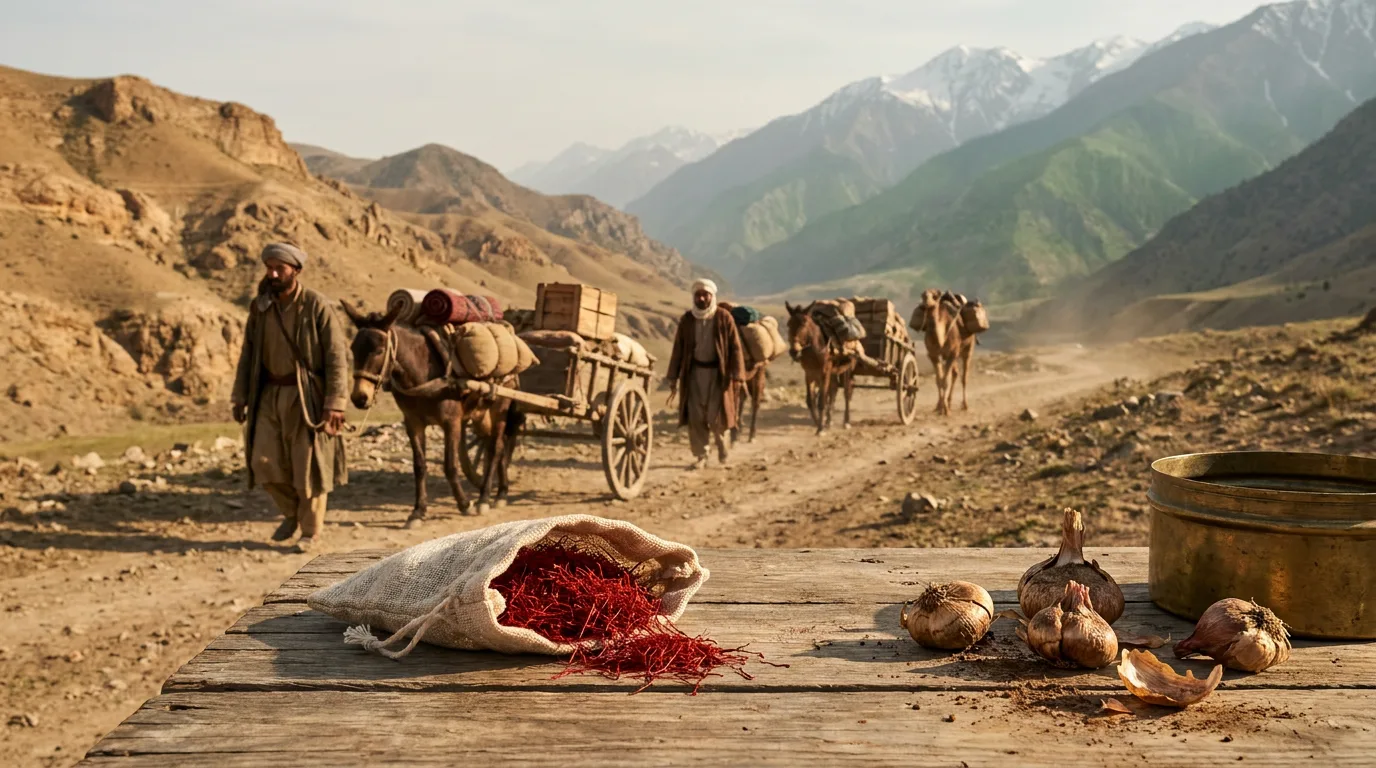
For significant periods, the Mughal Empire controlled territory including Kashmir, giving the royal court direct access to Kashmiri saffron specifically, alongside saffron obtained through wider regional trade networks. Mughal emperors, notably Jahangir, are historically documented as having a particular fondness for Kashmir, visiting the region and writing about its beauty in period accounts — a connection that likely reinforced Kashmiri saffron's status within royal kitchen culture specifically, beyond saffron sourced from other regions.
Mughal-Era Beverages and Saffron
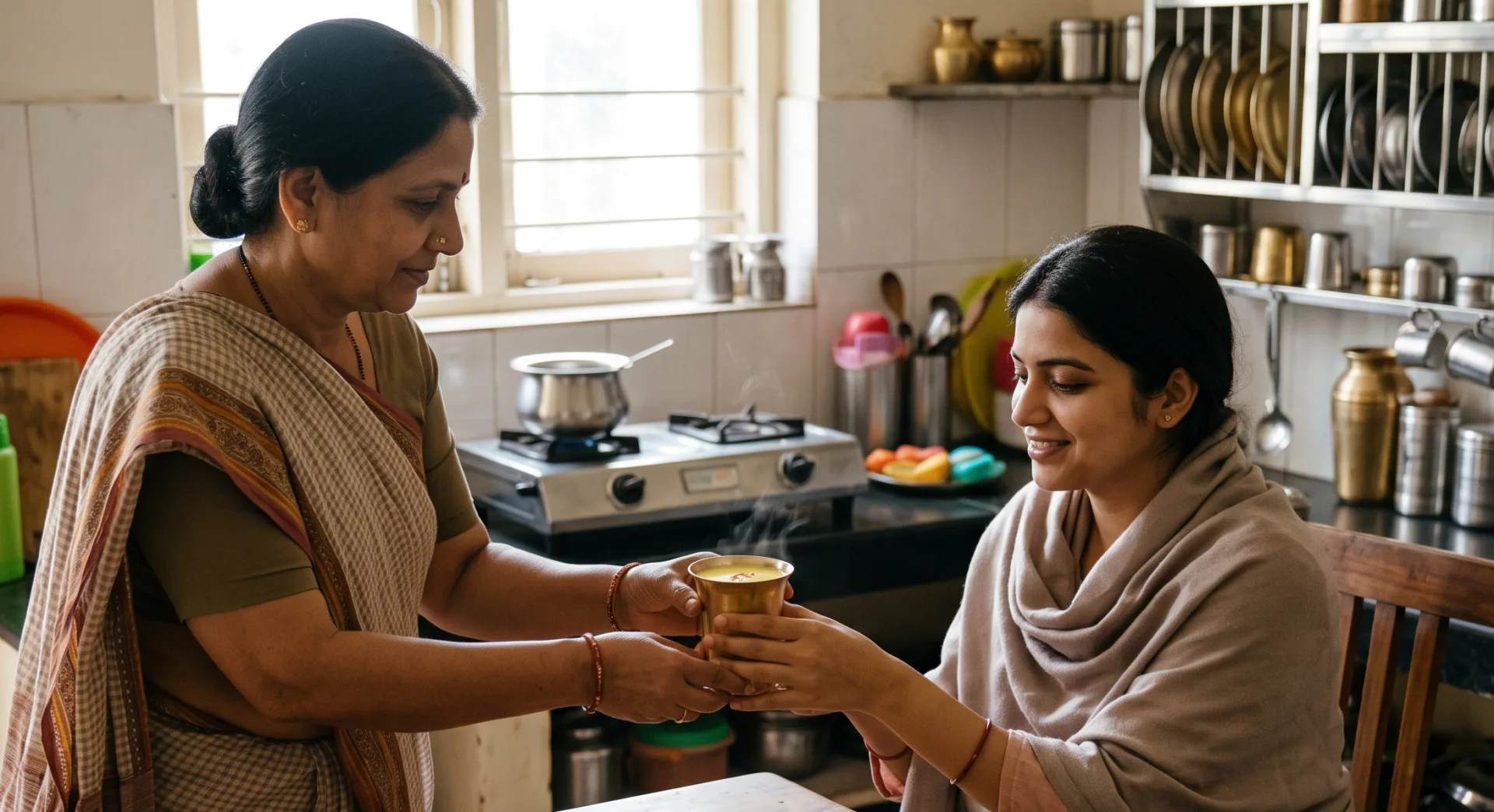
Beyond solid food, Mughal court culture also had a documented tradition of saffron-infused beverages — warm milk preparations flavoured with saffron, sometimes alongside other spices like cardamom, served as part of royal hospitality and daily routine. This tradition of saffron milk as a warming, prestigious drink has an unbroken thread running from these royal-era practices through to the saffron milk still prepared in households across the subcontinent today, essentially the same basic preparation — warm milk, a few soaked saffron strands, sometimes sweetened — that's been passed down for centuries with remarkably little change to the core method.
How Mughal-Era Technique Differs From Modern Shortcuts
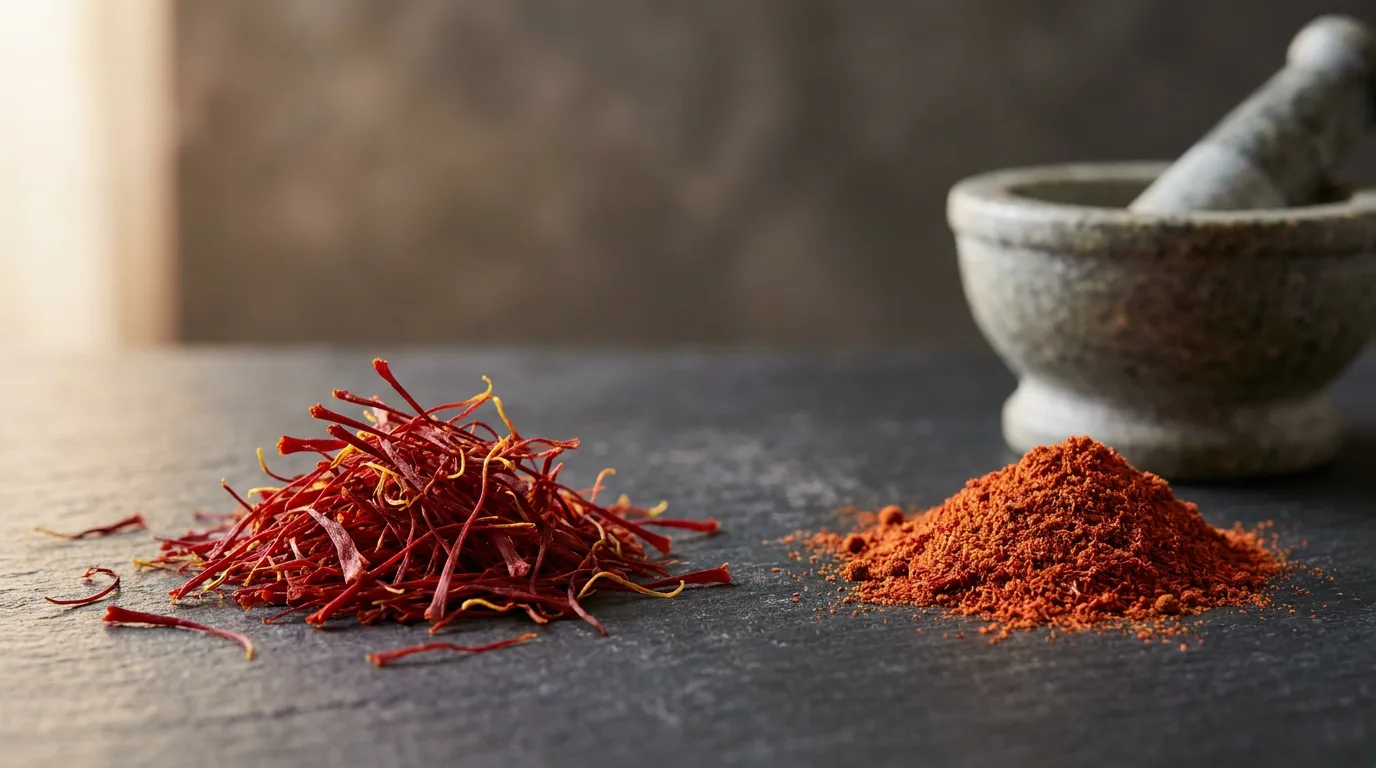
One genuinely interesting contrast between traditional Mughal-era technique and some modern shortcuts is the emphasis on properly blooming saffron — soaking strands in warm liquid before incorporating them into a dish — rather than simply sprinkling dry strands into a finished dish for visual effect, a shortcut that delivers much less of saffron's actual colour and aroma. Traditional royal kitchen technique, by necessity of using genuinely high-value ingredients, tended toward methods that extracted maximum value and flavour from those expensive ingredients, a lesson that's still directly relevant to getting good results from saffron in home cooking today, covered in more practical detail in our guide on cooking with saffron and common mistakes.
Regional Variations Across the Empire
The Mughal Empire spanned a vast, culturally diverse territory, and its royal kitchen tradition absorbed and blended regional influences rather than imposing one single uniform style everywhere. This is part of why "Mughlai cuisine" today shows genuine regional variation across different parts of the former empire's territory — Lucknow's Awadhi cooking tradition, for instance, developed its own distinct refinements on Mughal-influenced cooking, with a particular reputation for delicate, aromatic dum-style dishes, while other regions developed their own local interpretations. Saffron's use as a marker of refinement and quality remained a consistent thread across these regional variations, even as specific dishes and techniques diverged.
What Historical Mughal Cookbooks and Records Tell Us
Some historical documentation of Mughal court cuisine survives directly, most notably in texts like the Ain-i-Akbari, a detailed administrative record from Emperor Akbar's reign that includes descriptions of the royal kitchen's operations, ingredients, and even some recipe-like descriptions of court dishes. These historical sources give genuine insight into how seriously the royal kitchen was run as an institution — with dedicated staff, careful sourcing of ingredients including prized spices like saffron, and meticulous attention to presentation — rather than being purely a matter of legend or later romanticised retelling. This kind of historical documentation is part of why food historians treat Mughal cuisine's saffron-centred royal kitchen tradition as a genuinely well-evidenced piece of culinary history, not simply an assumed or embellished later narrative.
Presentation and Visual Artistry in Mughal Dining
Mughal court dining was as much about visual presentation as flavour, reflecting the broader emphasis on artistry and refinement that characterised Mughal culture generally, visible equally in the era's architecture and miniature painting traditions. Saffron played a direct role here — the streaked golden colour it created in rice dishes, or the warm golden hue in a dessert or drink, was a deliberate visual statement, not an incidental byproduct of flavouring. Elaborate garnishing with silver or gold leaf (varak), nuts, and dried fruits alongside saffron-coloured elements further reinforced this presentation-focused approach to royal dining, a tradition whose echoes are still visible in how celebratory biryanis and desserts are garnished and presented in many Indian kitchens and restaurants today, even generations removed from the original royal context.
Trying This Heritage in Your Own Kitchen
Recreating something of this royal kitchen tradition at home doesn't require professional training — it comes down mainly to using genuine saffron and applying it with the same care historically given to a high-value ingredient. A proper dum-style biryani, layering saffron-infused milk into partially cooked rice before a final slow, sealed cook; a rich korma finished with saffron and ground nuts; or simply a well-made cup of saffron milk are all accessible, genuine ways to connect with this centuries-old tradition in an ordinary home kitchen. Starting with genuine Kashmiri Mogra saffron, the same grade that would have been prized in exactly this kind of royal-legacy cooking, is really the only ingredient-specific requirement — the rest is technique, patience, and the same attention to detail that made these dishes special centuries ago.
The Legacy in Modern Indian Cooking
Many techniques with direct roots in this royal kitchen tradition remain essentially unchanged in home cooking today — soaking saffron strands in warm milk before adding to a dish, using saffron specifically in celebratory or festive-occasion cooking rather than everyday meals, and pairing it with nuts and dairy in dessert preparations. If you're interested in getting this technique right yourself, our guide on cooking with saffron: common mistakes covers exactly how to properly bloom and use saffron for the best results, whether in a modern biryani or a traditional Mughal-style korma.
The Bottom Line
Saffron's role in Mughal cuisine wasn't incidental — it was a deliberate, central element of a royal culinary tradition designed to project wealth, refinement, and sophistication. That legacy lives on directly in the biryanis, kormas, and desserts still cooked across South Asian kitchens today, connecting a modern home-cooked meal to a genuinely centuries-old royal tradition.