Saffron has a traditional reputation in women's wellness practices across South Asia and the Middle East, and more recently has drawn some genuine clinical research interest around PMS-related mood symptoms specifically. This article separates what's actually been studied from broader, less-supported claims about saffron and hormonal balance.
- Traditional Context for Saffron and Women's Health
- What Research Has Specifically Studied: PMS and Mood
- What the Research Does NOT Show
- Saffron and Conditions Like PCOS
- Safety Considerations for Women
- The Broader Nutrition and Lifestyle Picture
- How the PMS Studies Were Actually Designed
- Menopause and Saffron: What Is and Isn't Known
- Lifestyle Factors That Genuinely Affect PMS Severity
- Talking to a Doctor Before Trying Saffron for This
- Saffron in Traditional Women's Wellness Preparations
- A Grounded Way to Think About Saffron and Hormonal Health
- The Bottom Line
Traditional Context for Saffron and Women's Health
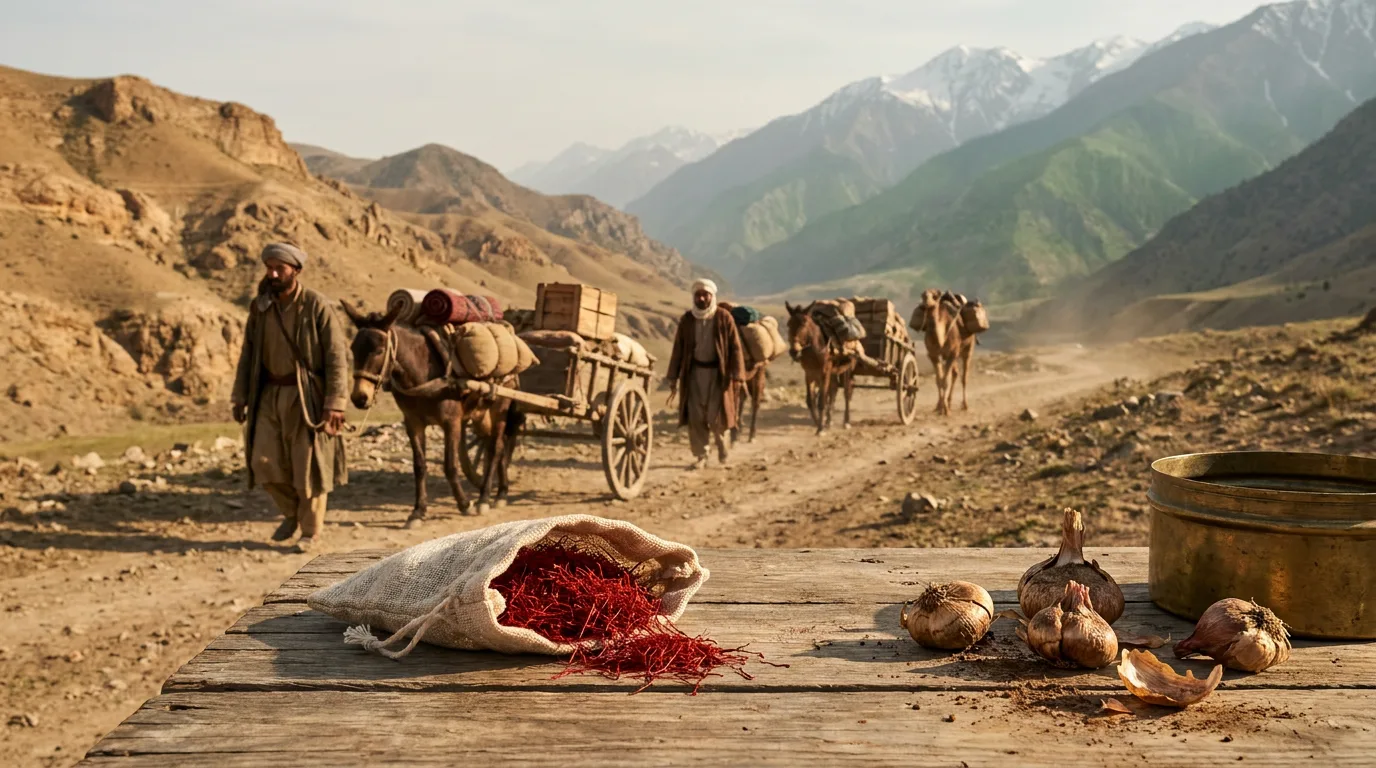
Across various South Asian, Middle Eastern, and Persian traditional practices, saffron has long held a place specifically in women's wellness contexts — including postpartum recovery (see our guide on saffron during pregnancy) and general reproductive-life-stage wellness routines. This traditional reputation predates modern clinical research by centuries and reflects generations of practical, community-level observation rather than controlled trials.
What Research Has Specifically Studied: PMS and Mood
Where modern clinical research has specifically and meaningfully engaged with saffron and women's hormonal health is around premenstrual syndrome (PMS), particularly PMS-related mood symptoms. A number of small randomized controlled trials have tested standardized saffron extract (commonly around 30mg daily) against a placebo over one or more menstrual cycles, with several reporting improvements in PMS-related mood symptoms — irritability, low mood, anxiety — in the saffron group. This overlaps with the broader saffron-and-mood research covered in our article on saffron and mental health, since PMS mood symptoms and general mood research share some of the same underlying mechanisms being studied.
What the Research Does NOT Show
It's important to be precise about the boundaries of this research. These studies focus specifically on PMS-related mood symptoms — not physical PMS symptoms like bloating or cramping specifically, not menstrual cycle regulation, and not broader hormonal conditions. Broader claims sometimes seen in marketing — that saffron "balances hormones" generally, or regulates cycles — go well beyond what this specific body of research actually demonstrates.
Saffron and Conditions Like PCOS
Polycystic ovary syndrome (PCOS) and other hormonal disorders are complex medical conditions requiring proper diagnosis and, typically, a combination of lifestyle and medical management tailored to the individual. There is no strong clinical evidence that saffron treats or meaningfully manages PCOS or similar conditions. If you have or suspect a hormonal condition, the appropriate path is a doctor or gynaecologist, not self-directed supplementation based on general saffron research that wasn't conducted with that specific condition in mind.
Safety Considerations for Women
Typical culinary use of genuine saffron is generally not associated with specific safety concerns for most women, including during menstruation. As with any supplement-adjacent question, if you're pregnant, breastfeeding, on hormonal medication (including birth control), or managing a diagnosed hormonal condition, it's worth raising saffron use with your doctor specifically, rather than assuming general safety information applies uniformly to your situation.
The Broader Nutrition and Lifestyle Picture
Hormonal health, including menstrual health specifically, is influenced by a wide range of factors well beyond any single dietary ingredient — sleep quality and consistency, stress levels, overall nutritional adequacy, body weight and composition, physical activity, and underlying medical conditions all play meaningfully larger roles than any single spice could. If you're experiencing persistent or severe symptoms — significantly disruptive PMS, irregular cycles, or other signs of a possible hormonal imbalance — these deserve proper medical evaluation rather than being addressed solely through diet or a single supplement. A gynaecologist or your regular doctor can help identify whether there's an underlying condition worth investigating, which saffron research (focused narrowly on PMS mood symptoms in otherwise healthy cycles) simply isn't positioned to address.
How the PMS Studies Were Actually Designed
It's worth understanding the actual design of the PMS-related saffron studies a bit more specifically, since this affects how much weight to reasonably give the findings. These trials typically enrolled women with regular menstrual cycles and self-reported PMS symptoms, randomly assigning them to either standardized saffron extract or a placebo, then tracking validated PMS symptom scales across one or more full cycles without either participants or researchers knowing who received which (a "double-blind" design, generally considered a stronger study design than an open-label one). Several of these trials were relatively short — often just one or two menstrual cycles — which is a real limitation for understanding whether any benefit holds up over many months or years of use, a question the current research genuinely doesn't answer yet.
Menopause and Saffron: What Is and Isn't Known
Menopause is a distinct hormonal life stage from the menstrual-cycle-related PMS research discussed above, and it's worth being clear that the PMS studies don't tell us anything specific about saffron and menopausal symptoms like hot flashes or mood changes during that transition. There is some separate, even more limited preliminary research exploring saffron in a menopausal context specifically, but it's considerably less developed than the PMS research, and shouldn't be assumed to carry the same (already fairly early-stage) level of evidence. If you're navigating menopause and considering any supplement, including saffron, bringing it up with your doctor as part of your overall menopause management plan is the sensible approach, rather than assuming general saffron research applies directly to this different life stage.
Lifestyle Factors That Genuinely Affect PMS Severity
Independent of any supplement discussion, a range of well-established lifestyle factors genuinely influence PMS severity and are worth prioritising alongside or instead of supplement-based approaches: regular physical activity is consistently associated with reduced PMS symptom severity across research; adequate, consistent sleep affects mood regulation broadly, including across the menstrual cycle; reducing caffeine and alcohol intake in the days before menstruation is a commonly recommended, reasonably well-supported approach for some symptom types; and stress management more generally interacts with how PMS symptoms are experienced and reported. None of this diminishes the specific saffron-and-PMS-mood research discussed above — it simply places it within a fuller picture of what actually helps most people manage PMS, most of which doesn't involve any supplement at all.
Talking to a Doctor Before Trying Saffron for This
If you're specifically interested in trying standardized saffron extract for PMS mood symptoms based on the research discussed in this article, that's a reasonable conversation to have with your doctor or gynaecologist rather than simply purchasing a supplement and starting on your own. Useful things to raise: whether saffron supplementation could interact with any medication you're taking, including hormonal contraception; whether your specific symptom pattern is consistent with what these studies actually measured, or whether it might warrant investigation for something else; and what a reasonable trial period and dose would look like if you do decide to try it, given that most studies ran for a limited number of cycles. A good doctor would rather have this specific conversation than have you guess based on general online information, including this article.
Saffron in Traditional Women's Wellness Preparations
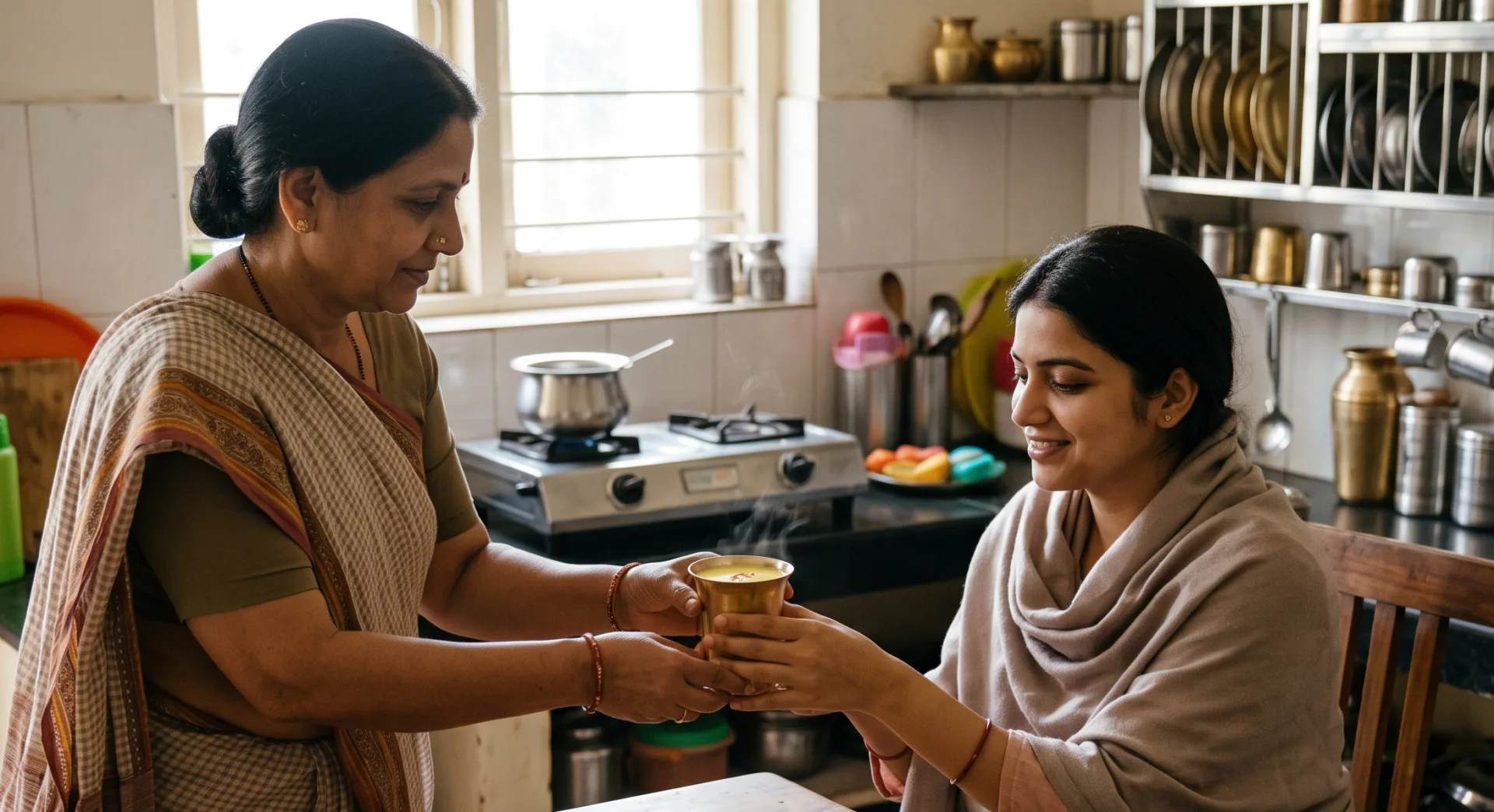
Beyond the specific clinical research discussed above, traditional preparations combining saffron with warm milk have long been part of women's wellness routines across South Asian households during specific life stages — not exclusively tied to PMS or any single clinical claim, but as a broader, generational practice of self-care during menstruation, postpartum recovery, or simply as part of a regular wellness routine. Understanding this traditional context alongside the narrower clinical research helps give a fuller, more honest picture: both the traditional practice and the modern research exist, are related but distinct, and neither fully substitutes for the other in understanding saffron's actual, real place in women's wellness historically and today.
A Grounded Way to Think About Saffron and Hormonal Health
- PMS-related mood symptom research is the most specific, genuine clinical research area connecting saffron to women's hormonal health
- Broader claims about "hormone balancing" or treating conditions like PCOS are not well supported by current evidence
- Traditional use in postpartum and women's wellness contexts is real and long-standing, but distinct from modern clinical proof
- Any diagnosed hormonal condition needs proper medical care, not supplement-based self-treatment
The Bottom Line
Saffron and hormonal health is a real but narrow area of research — mainly PMS-related mood symptoms — sitting alongside a much older, broader traditional reputation in women's wellness practice. Understanding exactly what's been studied, and what hasn't, helps you engage with this topic honestly rather than through the lens of overstated marketing claims.
For further reading, see the PubMed database of saffron and PMS research.