Saffron's reputation is built mostly around the kitchen, but this prized spice has a genuine, if smaller, history and presence in perfumery and cosmetics too — used for both its distinctive fragrance and its traditional reputation in skin-focused beauty practices. This article looks at saffron's role beyond food, and what's genuinely behind its use in these industries.
- Saffron's Fragrance Profile
- Saffron in Perfumery
- Genuine Saffron Extract vs Synthetic Alternatives
- Why Saffron Perfumery Ingredients Cost So Much
- Saffron in Cosmetics and Skincare
- Traditional Beauty Use vs Modern Commercial Products
- How to Spot Genuine vs Synthetic Saffron Fragrance
- How Saffron Absolute Is Actually Extracted
- Saffron Alongside Other Precious Perfumery Ingredients
- Historical Use of Saffron in Fragrance
- Niche vs Mainstream Perfumery: Where Saffron Fits
- Saffron in Non-Fragrance Cosmetic Applications
- DIY Fragrance and Beauty Preparations at Home
- What to Know If You're Curious About Trying It
- The Bottom Line
Saffron's Fragrance Profile
In perfumery terms, saffron's aroma is typically described as warm, slightly sweet, leathery, and hay-like, with a distinctive spiced quality that's genuinely difficult to replicate or substitute with other natural ingredients. This fragrance comes primarily from safranal, the volatile aroma compound also responsible for saffron's characteristic smell in culinary use — the same compound, put to a different application.
Saffron in Perfumery
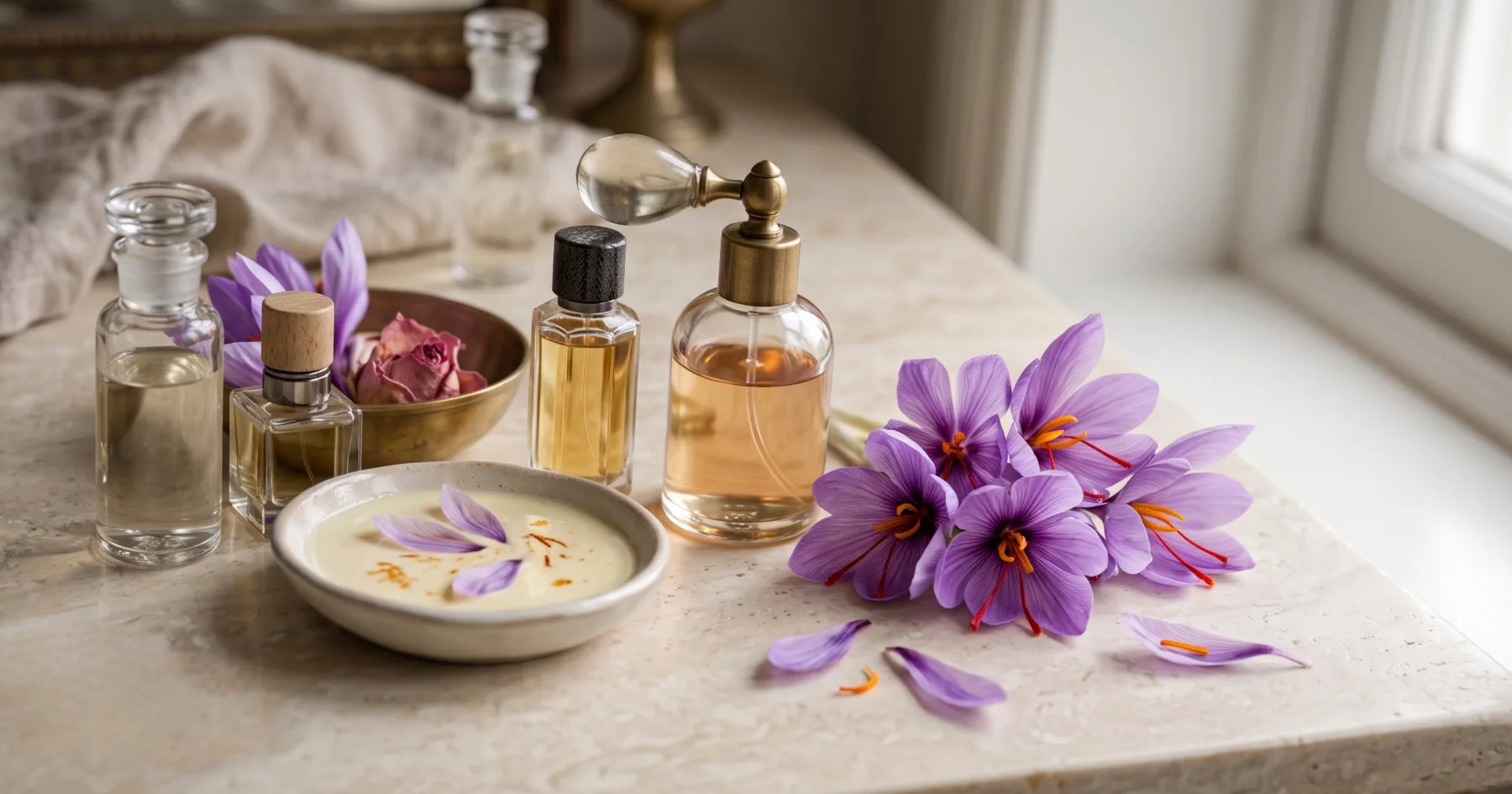
Saffron shows up as a "note" in perfumery — a component contributing to a fragrance's overall character — most often in warmer, spicier, or more "oriental"-styled fragrance compositions, sometimes paired with other warm spice or woody notes. It's found more commonly in higher-end or niche perfumery than in mass-market fragrances, partly reflecting its cost as a genuine natural ingredient, discussed further below.
Genuine Saffron Extract vs Synthetic Alternatives
As with several other saffron-adjacent products, both genuine and synthetic versions exist in the fragrance industry. Some perfumes use real saffron extract or "absolute" (a concentrated aromatic extract used in perfumery), particularly in premium or artisan fragrances marketed specifically on using genuine natural ingredients. Others use synthetic aroma compounds engineered to approximate saffron's scent profile at a fraction of the cost — a common and accepted practice across the fragrance industry generally, not unique to saffron, though it does mean "saffron" listed as a fragrance note doesn't automatically guarantee the genuine natural ingredient was used.
Why Saffron Perfumery Ingredients Cost So Much
The same fundamental economics that make culinary saffron expensive apply directly to saffron used in perfumery — genuine saffron absolute requires the same hand-harvested raw material, with the added cost of the extraction process itself. This makes real saffron one of the more expensive natural ingredients used in high-end perfumery, on top of its already well-established cost as a culinary spice.
Saffron in Cosmetics and Skincare
Saffron extract appears in some commercial skincare and cosmetics formulations, drawing partly on saffron's traditional reputation in various South Asian and Middle Eastern beauty practices, and partly on interest in its antioxidant compounds. As with any specific commercial skincare product making claims about saffron content or benefits, those claims are worth evaluating individually — the presence of "saffron" on an ingredient list doesn't automatically validate every claim made about a specific product, and formulation, concentration, and the rest of the product's ingredients all matter.
Traditional Beauty Use vs Modern Commercial Products
Traditional use of saffron in beauty and skin-focused practices — often as part of homemade pastes or masks combining saffron with other natural ingredients like milk or besan (gram flour) — has a long history across various South Asian traditions, distinct from and predating modern commercial cosmetics formulations. This traditional context is worth understanding on its own terms, similar to how we've approached saffron's traditional role in Ayurvedic practice — genuine cultural practice, not the same thing as a clinically validated modern cosmetic claim.
How to Spot Genuine vs Synthetic Saffron Fragrance
Distinguishing genuine saffron fragrance from a synthetic approximation by smell alone is genuinely difficult even for experienced noses, since modern synthetic aroma chemistry has become quite sophisticated at approximating complex natural scents. The more reliable approach as a consumer is checking how a fragrance brand describes its ingredients — brands using genuine natural saffron extract or absolute, given the ingredient's high cost, typically make a point of stating this explicitly in their marketing, since it's a genuine selling point worth highlighting. A saffron-named fragrance note with no such explicit sourcing claim is reasonably likely to be a synthetic approximation, which isn't necessarily a quality problem for the fragrance itself, but is worth knowing if genuine natural ingredients specifically matter to you as a buyer.
How Saffron Absolute Is Actually Extracted
Saffron Alongside Other Precious Perfumery Ingredients
Saffron sits within a broader category of naturally rare, expensive perfumery ingredients that includes things like genuine oud (agarwood), certain rose absolutes, and ambergris — all ingredients whose high cost in perfumery reflects genuine scarcity or labour-intensive production, similar to saffron's own economics. Fragrances built around or featuring these genuinely precious natural ingredients tend to occupy the higher end of the perfumery market for exactly this reason, and saffron's inclusion in a fragrance composition is often a deliberate signal of that same positioning, whether or not the specific saffron content is disclosed in detail.
Historical Use of Saffron in Fragrance
Saffron's use in fragrance and scented preparations has genuine historical depth predating modern perfumery as an industry — ancient civilisations including the Persians, Egyptians, Greeks, and Romans documented use of saffron in scented oils, ceremonial preparations, and personal fragrance applications, often overlapping with its use in dyeing textiles a similarly prized golden-yellow colour. This historical use as both a fragrance and colouring agent reflects saffron's broader ancient reputation as a genuinely multi-purpose luxury good — valued simultaneously for food, medicine (in traditional practice), fragrance, and dye — rather than being narrowly associated with just one application the way it's most commonly thought of today, primarily as a culinary spice.
Niche vs Mainstream Perfumery: Where Saffron Fits
Within the modern fragrance industry, saffron notes appear more commonly in niche and artisan perfumery — smaller, often independent fragrance houses positioning themselves around distinctive, sometimes unconventional natural ingredients — than in large mainstream commercial fragrance lines, which more often prioritise cost efficiency and broad market appeal over genuinely rare natural ingredients. This isn't a strict rule, and saffron notes do appear in some larger commercial fragrances (typically using synthetic approximations, per the earlier discussion), but the pattern generally holds: if you're specifically seeking a fragrance built around genuine saffron, niche and artisan perfumers are the more likely place to find it, precisely because that market segment is built around foregrounding distinctive, cost-no-object natural ingredients as a selling point.
Saffron in Non-Fragrance Cosmetic Applications
Beyond fragrance specifically, saffron extract appears in cosmetic formulations aimed at skin tone, brightness, and general complexion — building on traditional South Asian beauty practice discussed earlier, though as with any specific commercial cosmetic, the actual formulation, concentration, and clinical backing (if any) behind a specific product's claims varies considerably and is worth evaluating on its own terms rather than assumed from the word "saffron" on packaging alone. Saffron extract is sometimes also included in hair care and lip care products, again generally drawing on traditional reputation more than a large body of dedicated clinical research specific to those applications, similar to the pattern already discussed for skincare more generally in this article.
DIY Fragrance and Beauty Preparations at Home
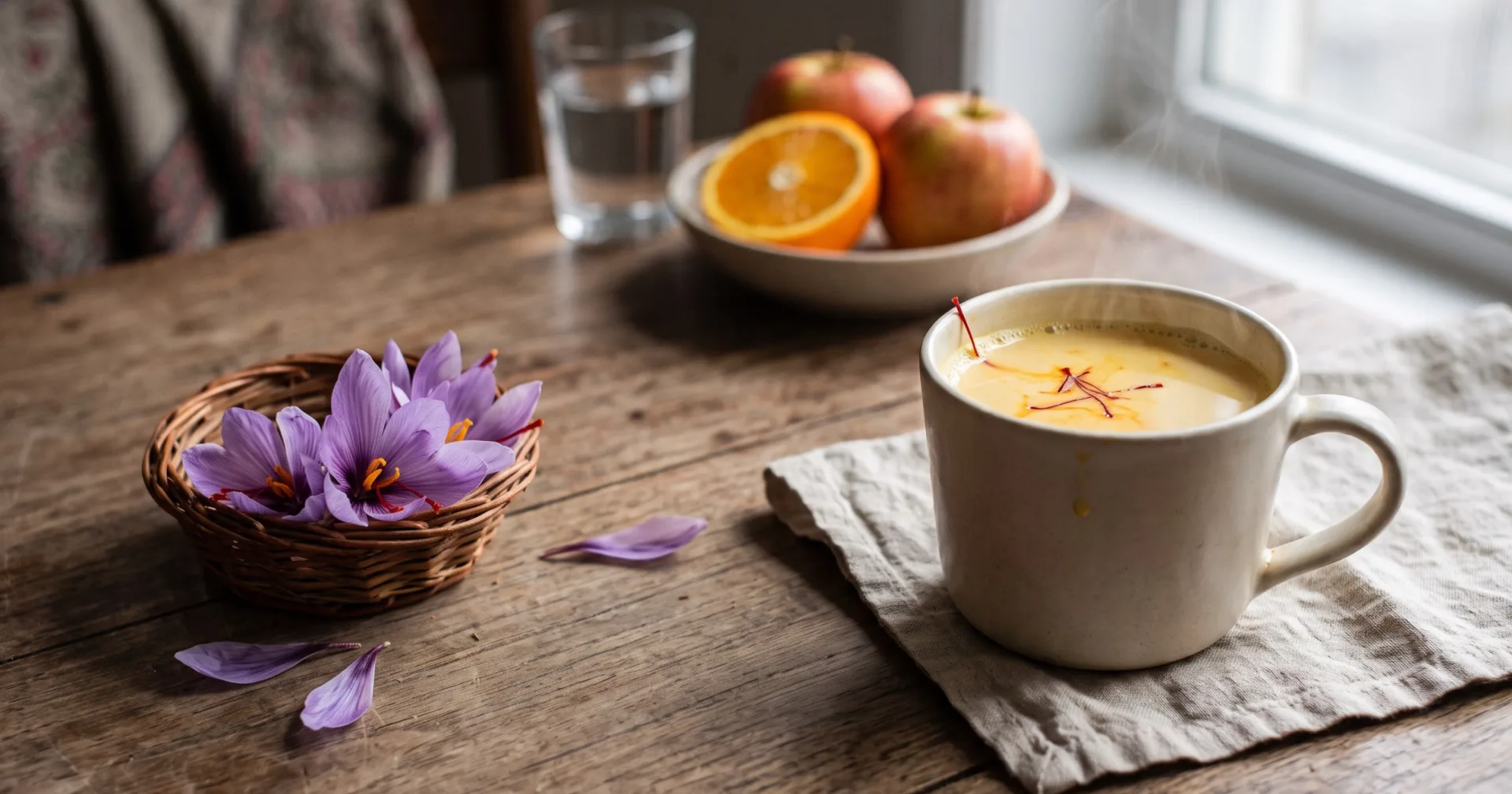
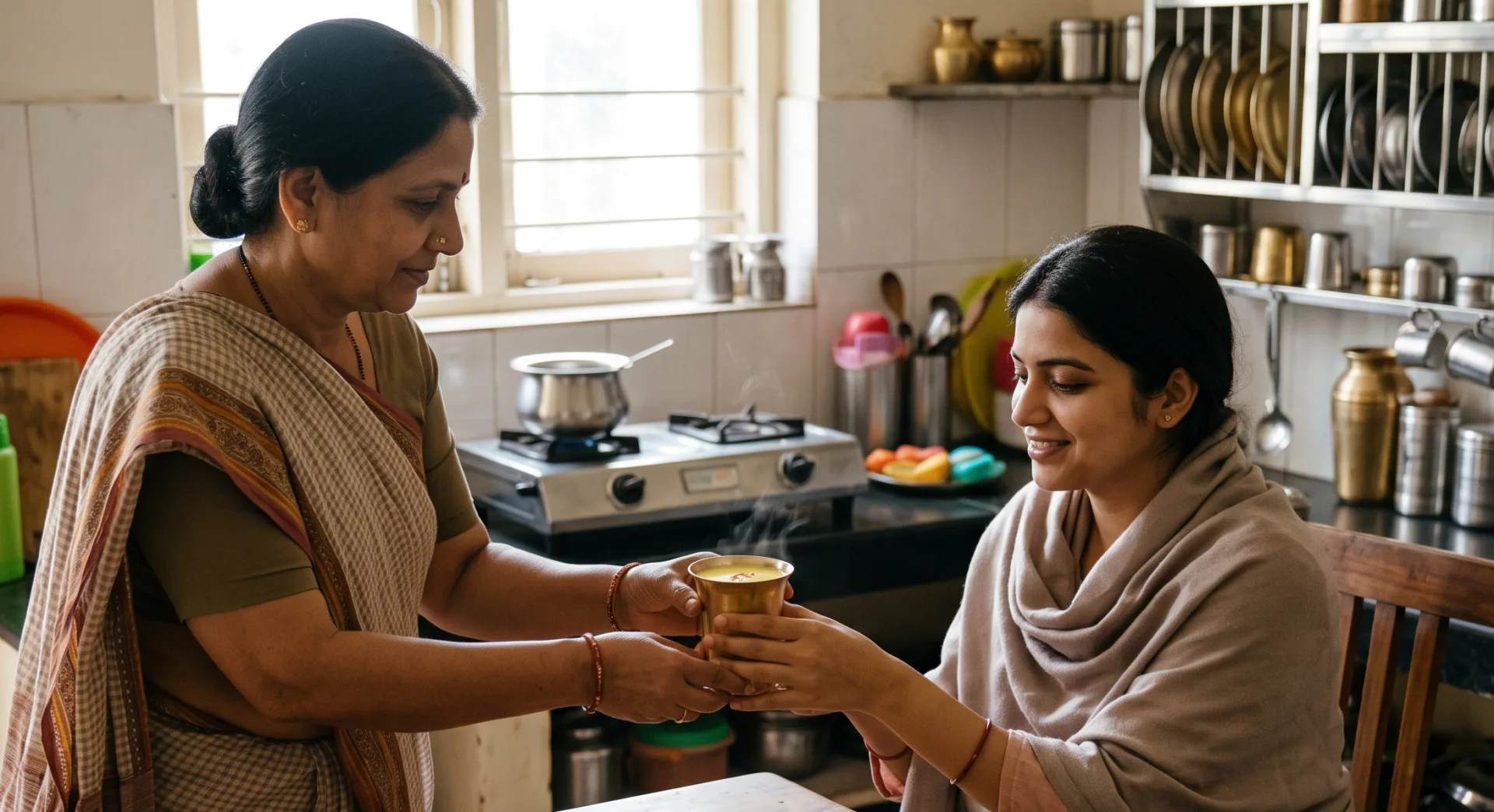
If you're curious about experiencing saffron's fragrance and traditional beauty applications yourself without buying a specific commercial product, simple traditional-style preparations remain accessible at home — a warm milk soak with saffron strands used as a facial rinse, or saffron incorporated into a simple homemade paste with ingredients like besan (gram flour) and milk, following traditional formats passed down across generations. These simple preparations let you experience saffron's genuine fragrance and traditional beauty use directly, using pure, verifiable saffron threads rather than a commercial product whose exact formulation and saffron content you can't independently confirm.
What to Know If You're Curious About Trying It
If you're interested in trying saffron in a traditional beauty context yourself — for example, a traditional-style face preparation — starting with genuine, pure culinary-grade saffron threads (rather than assuming a commercial "saffron cosmetic" product uses genuine extract) at least ensures you know exactly what you're using. Our Kashmiri Mogra saffron is sold in its pure, unadulterated form suited to this kind of traditional preparation, same as it is for cooking.
The Bottom Line
Saffron's use extends well beyond the kitchen into perfumery and cosmetics, drawing on both its genuinely distinctive fragrance profile and its long traditional reputation in beauty practices. As with saffron's culinary and health-related reputation, it's worth distinguishing between genuine natural ingredient use and marketing language, and between traditional practice and specific modern commercial product claims.