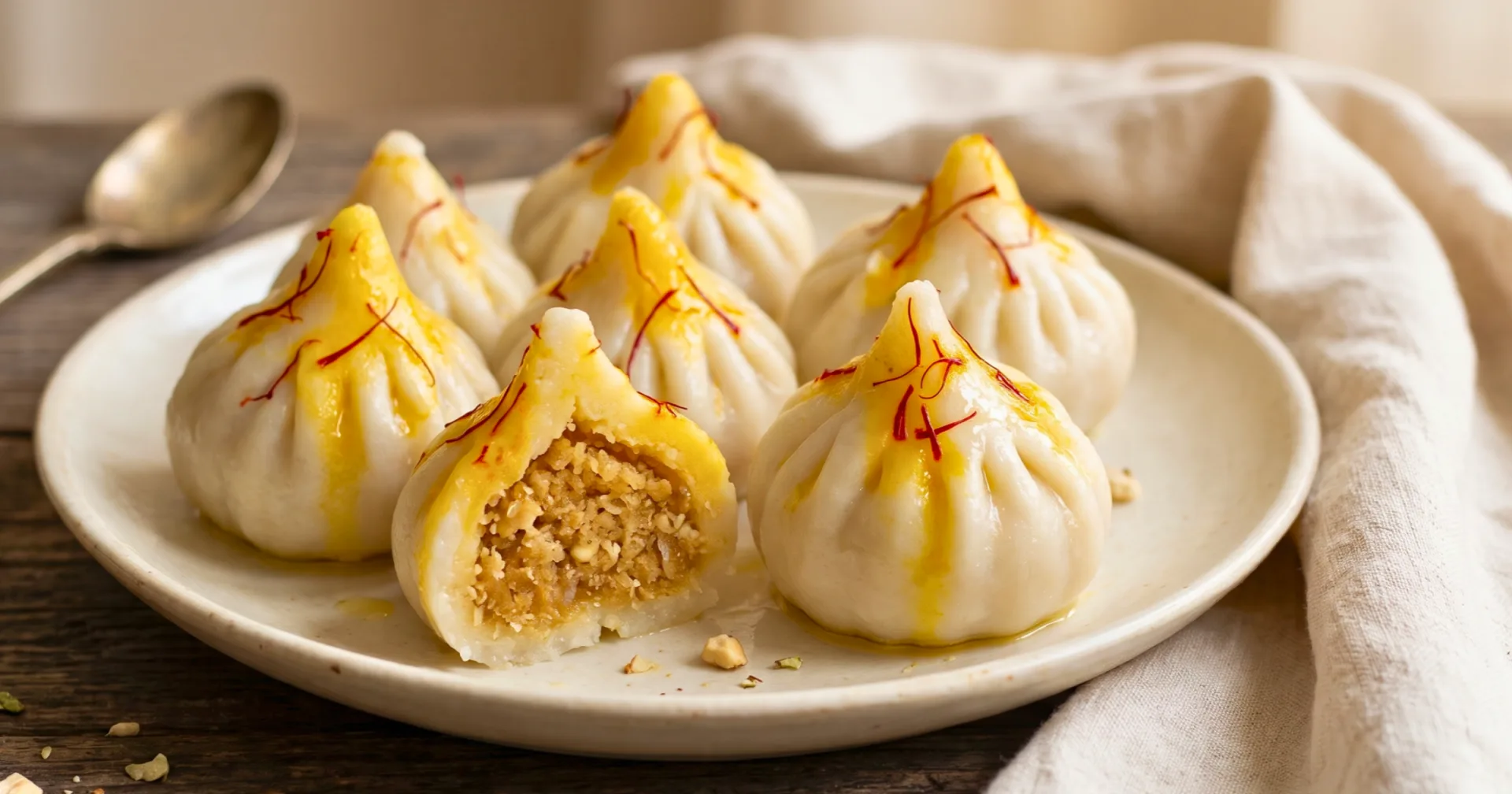
Modak is the one sweet that shows up on every Ganesh Chaturthi table, and the ukadiche version — steamed rice-flour dumplings with a coconut-jaggery centre — is the original, the one that came before the fried and mawa shortcuts. This kesar version keeps the classic shell and filling but blooms real Kashmiri saffron into the jaggery mix, which does more than tint it gold. The saffron cuts through the heavy sweetness of the jaggery and gives the filling a fragrance that plain cardamom alone doesn't quite manage.
The dough is the part people get nervous about, and fairly so — it has to be worked while hot, and it goes from pliable to cracked-and-stubborn within a few minutes once it cools. Keep a bowl of warm ghee nearby and work quickly once the dough is kneaded. The pleating takes a few tries to get even, but even a slightly uneven modak steams up fine and tastes exactly the same.
Ingredients
- 1 cup rice flour (fine ukad flour if you can get it)
- 1 cup water
- 1 tsp ghee, plus extra for greasing hands and the steamer plate
- A pinch of salt
- 1.5 cups fresh grated coconut
- 3/4 cup jaggery, grated or finely chopped
- 15 Kashmiri saffron strands
- 2 tbsp warm milk
- 1/4 tsp cardamom powder
- A small pinch of grated nutmeg
- 1 tbsp chopped cashews, lightly roasted in ghee
Instructions
- Warm the milk slightly and drop in the saffron strands. Set aside for 10 minutes so it turns deep orange.
- In a kadai, melt the jaggery over low heat with a tablespoon of water until it loosens into a syrup.
- Add the grated coconut and cook on medium-low, stirring constantly, until the mixture thickens and starts pulling away from the sides of the pan, about 7-8 minutes.
- Stir in the cardamom, nutmeg, roasted cashews, and the saffron milk. Cook for another minute, then take off the heat and let the filling cool completely.
- For the dough, bring the water to a boil with the ghee and salt. Turn off the heat, add the rice flour all at once, and stir briskly with a wooden spoon until it comes together.
- Cover the pan and let it sit for 5 minutes so the flour steams through fully.
- While still warm, grease your palms with ghee and knead the dough on a plate until smooth and pliable, with no dry cracks at the edges.
- Take a small lime-sized portion of dough and flatten it into a disc in your greased palm, working the edges thinner than the centre.
- Pinch the rim into 7 to 9 pleats going around, then shape it into a cup.
- Fill with a spoonful of the cooled coconut-jaggery mixture, then bring the pleats together at the top and gently twist to seal into a pointed teardrop.
- Arrange the modak on a greased steamer plate lined with a damp muslin cloth, leaving space between each one.
- Steam over boiling water for 10-12 minutes, until the modak turn glossy and slightly translucent at the pleats.
- Rest for 2 minutes before lifting off the plate, then serve warm with a little ghee drizzled over.
Tips for Best Results
Never let the filling go into the dough while it's still warm — it softens the rice flour cup and the pleats collapse before you get to seal them. Cool it fully, even in the fridge for 10 minutes if you're short on time. If the dough starts cracking while you shape it, that's usually a sign it's cooled too much; cover the unused portion with a damp cloth the whole time you're working and re-knead it with a drop of hot water if it stiffens up. For the saffron, warm milk works better than hot — boiling milk can mute the colour slightly compared to milk that's just warm enough to steep the strands.
Serving Suggestions
Modak are traditionally offered first and eaten warm, straight off the steamer, with a spoon of ghee over the top. They don't need anything alongside, though a lot of households serve them next to a simple coconut-jaggery payasam on the same plate during the festival.