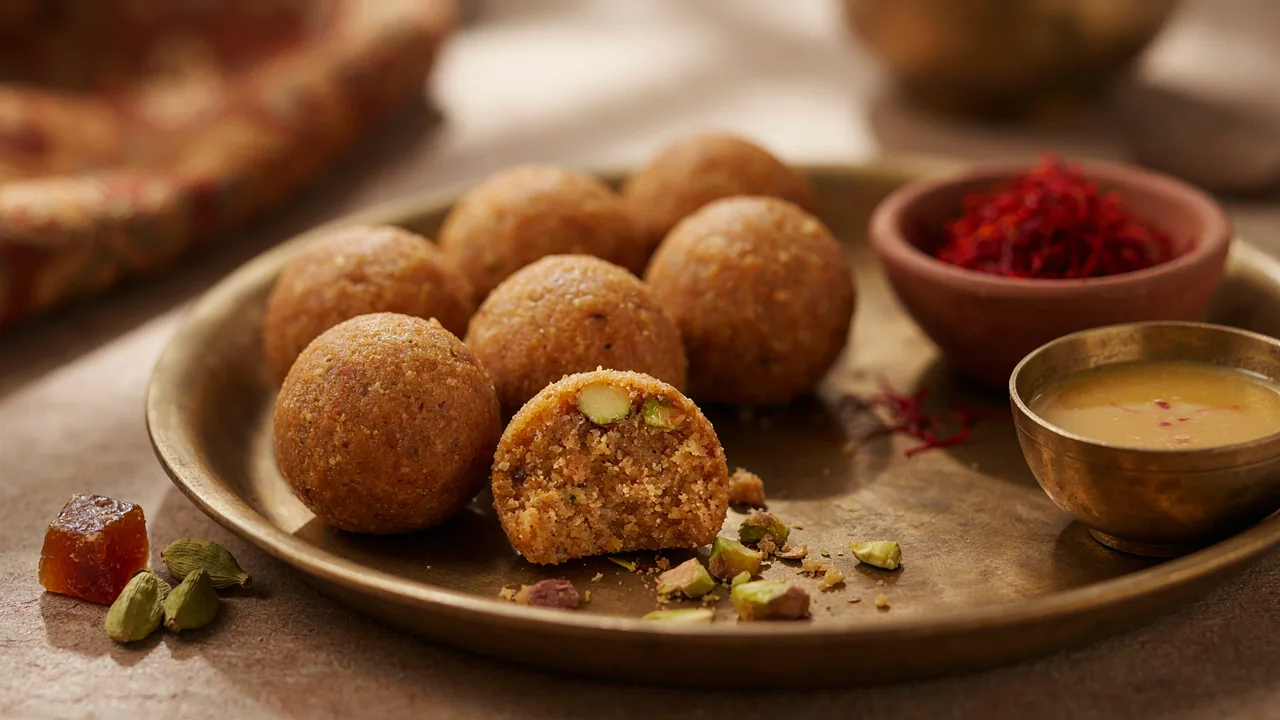
Besan ladoo is one of those sweets every household makes slightly differently, and most of the difference comes down to how long someone's patient enough to roast the gram flour. Add bloomed saffron to the mix and you get a ladoo with a warm golden tint and an aroma that hits you before the sugar does. This isn't a recipe where saffron sits on top for looks. It gets worked into the besan itself, so the flavor is in every bite.
The whole dish rests on one step: roasting the besan low and slow until it's properly cooked. Rush it and you end up with a ladoo that tastes raw and slightly bitter, no matter how much saffron or sugar you throw at it.
Ingredients
- 2 cups besan (gram flour), sieved
- 3/4 cup ghee, melted
- 1 cup powdered sugar
- 20-25 Kashmiri saffron strands
- 2 tablespoons warm milk
- 1/2 teaspoon green cardamom powder
- 2 tablespoons chopped pistachios
- 1 tablespoon chopped almonds
- A pinch of nutmeg powder (optional)
Instructions
- Warm the milk slightly and drop in the saffron strands. Rub them between your fingers for a few seconds first to help release color faster, then set the cup aside to steep while you start the besan.
- Heat the ghee in a heavy kadai or wide pan on low flame. Add the sieved besan and start stirring immediately so it doesn't catch at the bottom.
- Keep roasting on low heat for 18-20 minutes, stirring almost constantly. The besan will first turn into a loose, sandy paste, then start smelling nutty, and finally turn a shade darker with a faint sheen as the ghee separates slightly. This is the point you want.
- Take the pan off the heat and let the mixture cool for about 5 minutes, stirring occasionally so it doesn't cool unevenly at the edges.
- Pour in the saffron milk and cardamom powder, and mix well until the color is even throughout.
- Once the mixture is lukewarm (not hot, not fully cold), add the powdered sugar and chopped nuts, and mix thoroughly. Adding sugar too early melts it into the ghee and gives you a sticky, greasy ladoo instead of a crumbly one.
- Take small portions in your palm and press firmly to shape into round ladoos. If the mixture feels too dry to bind, add a teaspoon of warm ghee and try again.
- Press a pistachio sliver on top of each ladoo and let them firm up at room temperature for an hour before storing.
Tips for Best Results
The roasting time matters more than any other variable here. Besan that smells raw or tastes slightly soapy hasn't been cooked long enough — keep going until the color deepens and the aroma turns nutty, even if that takes a few minutes longer than you expect. Shaping is temperature-sensitive too: too hot and the ladoo won't hold its shape, too cold and it crumbles apart in your hand. Lukewarm, the kind of warmth you can hold comfortably, is the window you're aiming for. If your ladoos keep breaking, it's almost always a moisture or ghee problem rather than a sugar problem — add warm ghee a teaspoon at a time rather than more sugar.
Serving Suggestions
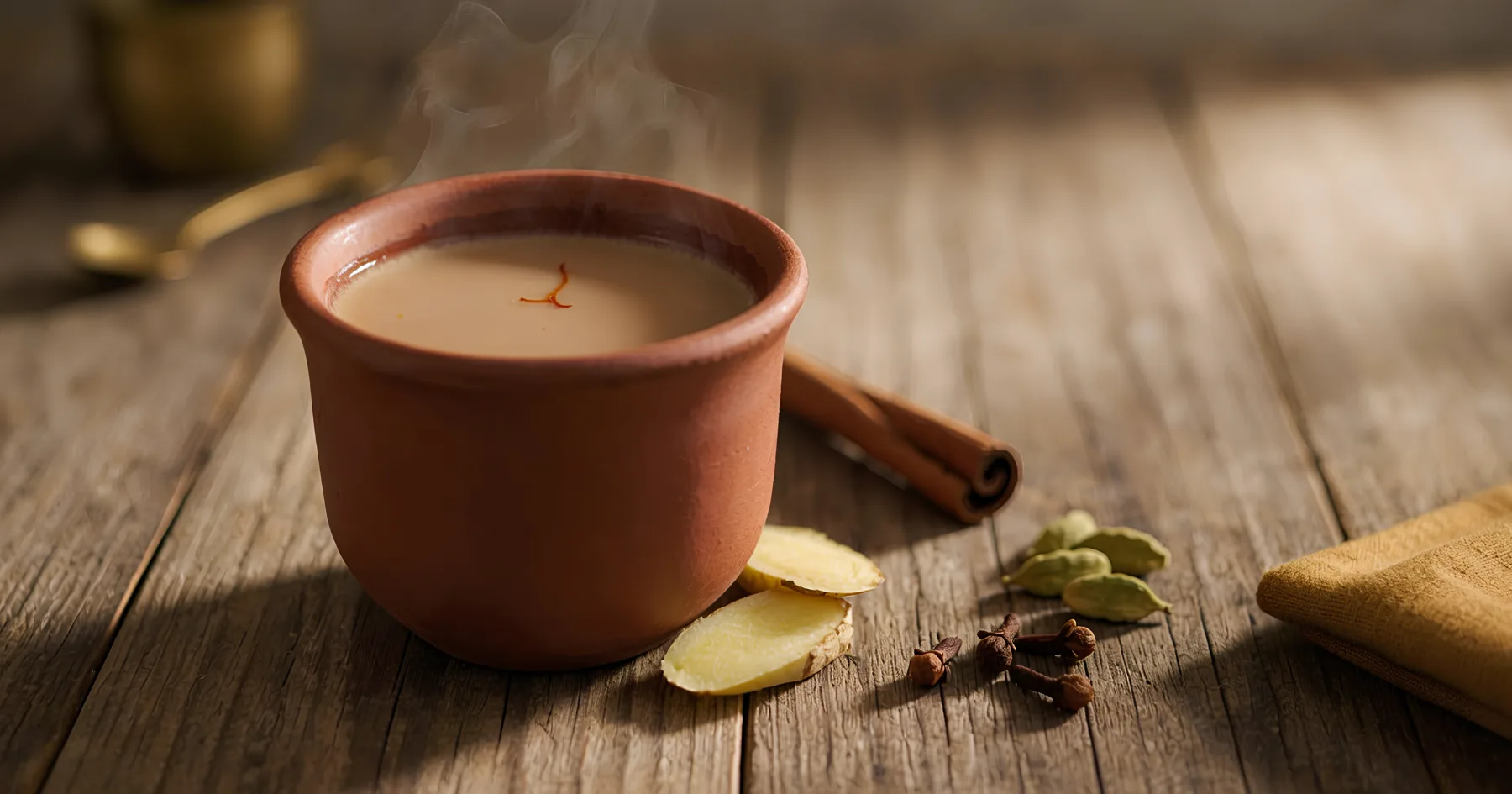
Besan ladoo keeps well and travels well, which is why it shows up so often around Diwali and at weddings. Serve it at room temperature alongside chai, or box a few up as a gift — the saffron version holds its color and smell for days, longer than a plain besan ladoo typically does.