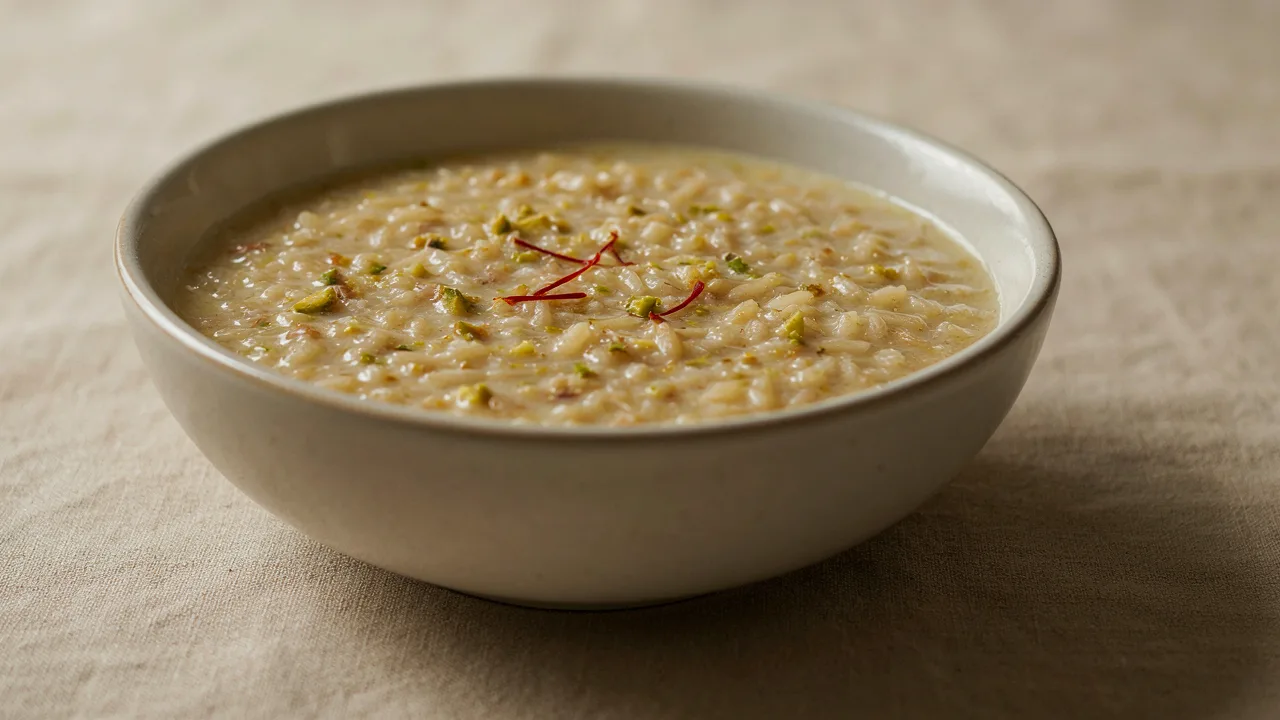
There's a real difference between kheer and phirni, even though both start with rice and milk and end up tasting vaguely similar on paper. Phirni uses rice ground into a coarse paste, which gives it that smooth, almost custard-like set. Kheer keeps the rice whole, simmered gently until each grain softens but still holds its shape, so you get texture in every spoonful instead of a uniform pudding. Kesar kheer is that same whole-grain kheer with saffron bloomed into the milk, giving it a pale gold color and a fragrance that plain kheer doesn't have.
It's a patient dish more than a difficult one. The milk needs to reduce properly and the rice needs time to cook through without turning mushy, and most of what can go wrong here comes down to rushing one of those two things.
Ingredients
- 1 liter full-fat milk
- 1/4 cup basmati rice (short-grain or broken basmati works well)
- 1/2 cup sugar, adjust to taste
- 15-20 Kashmiri saffron strands
- 2 tablespoons warm milk (for blooming saffron)
- 4 green cardamom pods, lightly crushed
- 2 tablespoons chopped almonds
- 2 tablespoons chopped pistachios
- 1 tablespoon raisins (optional)
Instructions
- Rinse the rice twice and soak it in water for 20 minutes. Drain well before using — soaked rice cooks faster and more evenly in the milk.
- Soak the saffron strands in 2 tablespoons of warm milk and set aside.
- Pour the milk into a heavy-bottomed pan and bring it to a boil on medium heat, then lower the flame.
- Let the milk simmer uncovered for 10-12 minutes, stirring every couple of minutes and scraping the sides of the pan so a skin doesn't build up and go to waste.
- Add the drained rice and crushed cardamom pods. Stir, then let it simmer on low heat for 20-25 minutes, stirring every few minutes.
- Keep checking the rice. You're looking for grains that are fully soft but still separate and visible, not broken down into a paste. If the kheer thickens faster than the rice cooks, add a splash of hot milk and continue.
- Once the rice is done, add the sugar and stir until dissolved, about 2 minutes.
- Pour in the saffron milk and stir through until the color spreads evenly.
- Simmer for another 5 minutes, then take off the heat. The kheer will thicken a bit more as it cools, so stop while it's still slightly looser than you want the final texture to be.
- Garnish with chopped almonds, pistachios, and raisins. Serve warm or chilled.
Tips for Best Results
Use a heavy-bottomed pan, not a thin one — milk scorches fast on a thin pan and even a little burnt milk at the bottom ruins the whole pot. Stir more often than you think you need to, especially once the rice goes in, because that's when the milk starts sticking to the pan. If you want a richer kheer, stir in a tablespoon or two of khoya (dried whole milk solids) along with the sugar, but it's genuinely optional and the kheer works fine without it.
Serving Suggestions
Kesar kheer is served both warm and chilled depending on the season and the household — warm after a winter meal, chilled during summer festivals. It's a common dish on Eid, Diwali, and at weddings, usually served in small bowls after the main meal rather than alongside it.