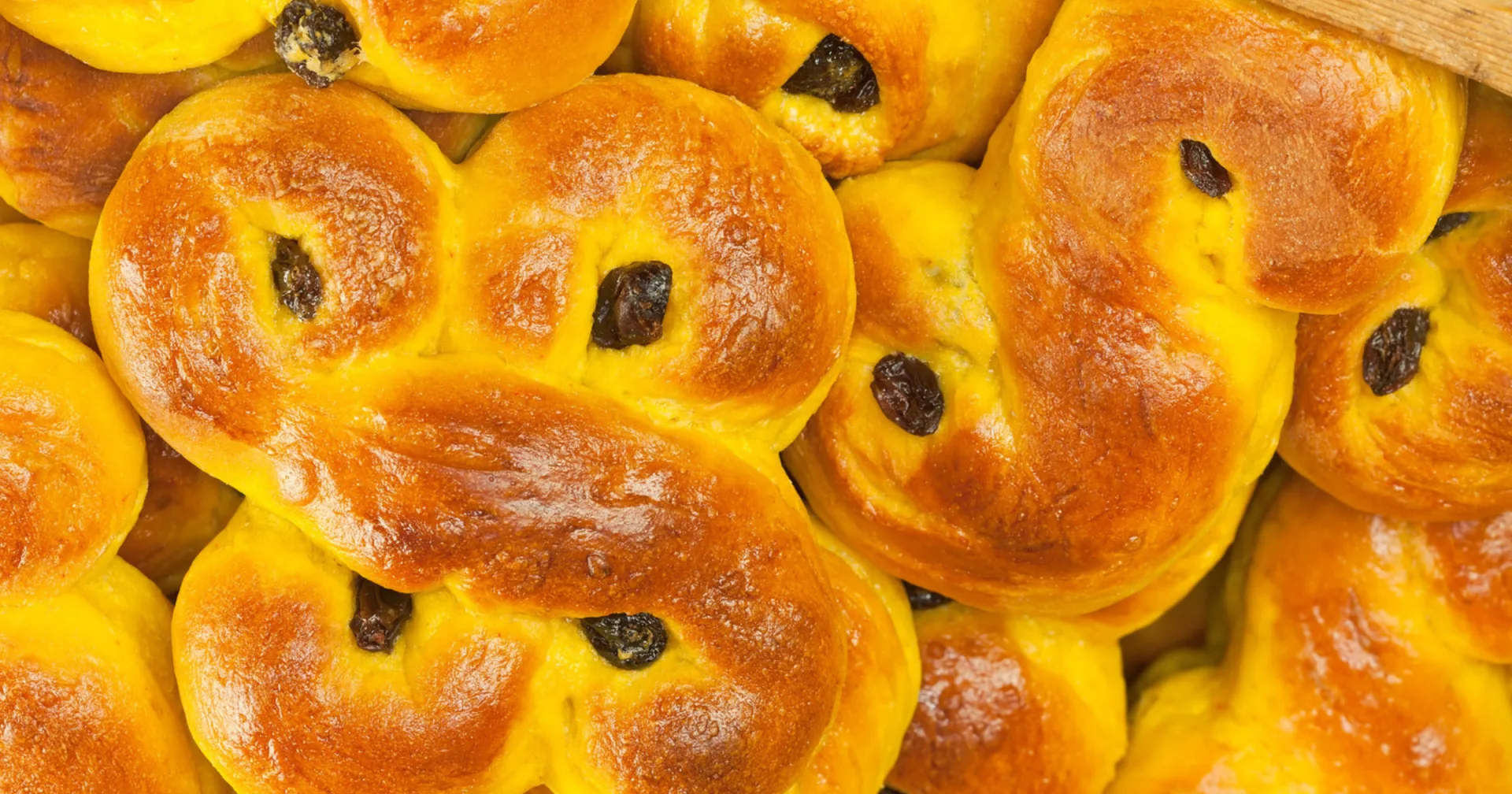
Lussekatter — literally "Lucia cats" — are the traditional S-shaped saffron buns baked across Sweden for St. Lucia's Day and the Christmas season. Saffron is a genuine, centuries-old part of Scandinavian holiday baking, not a modern twist, and these buns are one of the clearest examples of saffron used in a completely different culinary tradition from Indian or Middle Eastern cooking.
Ingredients
- 1/2 cup warm milk
- 2 1/4 teaspoons active dry yeast
- 1/3 cup sugar
- 8-10 strands Kashmiri Mongra saffron
- 1/2 cup unsalted butter, softened
- 1 egg
- 3.5 cups all-purpose flour
- 1/4 teaspoon salt
- Raisins, for decoration
- 1 egg, beaten, for egg wash
Instructions
- Warm the milk slightly (not hot, which can kill the yeast) and steep the saffron strands in it for 15-20 minutes.
- Sprinkle the yeast over the saffron milk along with a pinch of the sugar, and let it sit for 5-10 minutes until foamy — if it doesn't foam, the yeast may be inactive and it's worth starting over with fresh yeast.
- In a large bowl, cream the butter and remaining sugar together, then beat in the egg.
- Add the saffron milk-yeast mixture and mix well.
- Gradually add the flour and salt, mixing until a soft dough forms.
- Knead for 8-10 minutes until smooth and elastic. Cover and let rise in a warm place for 1-1.5 hours, until doubled in size.
- Divide the dough into 16 pieces and roll each into a rope, then curl into an "S" shape or figure-eight.
- Place a raisin in the center of each curl. Cover and let rise again for 30-45 minutes.
- Preheat the oven to 200°C (400°F). Brush the buns with egg wash and bake for 12-15 minutes until golden.
Tips for Best Results
Steeping the saffron for a full 15-20 minutes in warm milk matters more here than in most recipes, since this dough doesn't get a second, more concentrated infusion step the way some other saffron recipes do — the colour and aroma both come entirely from this one step.
Serving Suggestions
Traditionally served warm with coffee or mulled wine (glögg) during the holiday season. They're also good the next day, lightly toasted.
Storage
Keeps in an airtight container at room temperature for 2 days, or freeze for up to a month. Reheat briefly in the oven to refresh before serving.
The flavour of this dish depends on the saffron, so use real threads. Our lab-tested Kashmiri Mogra saffron comes in packs from 1 gram.