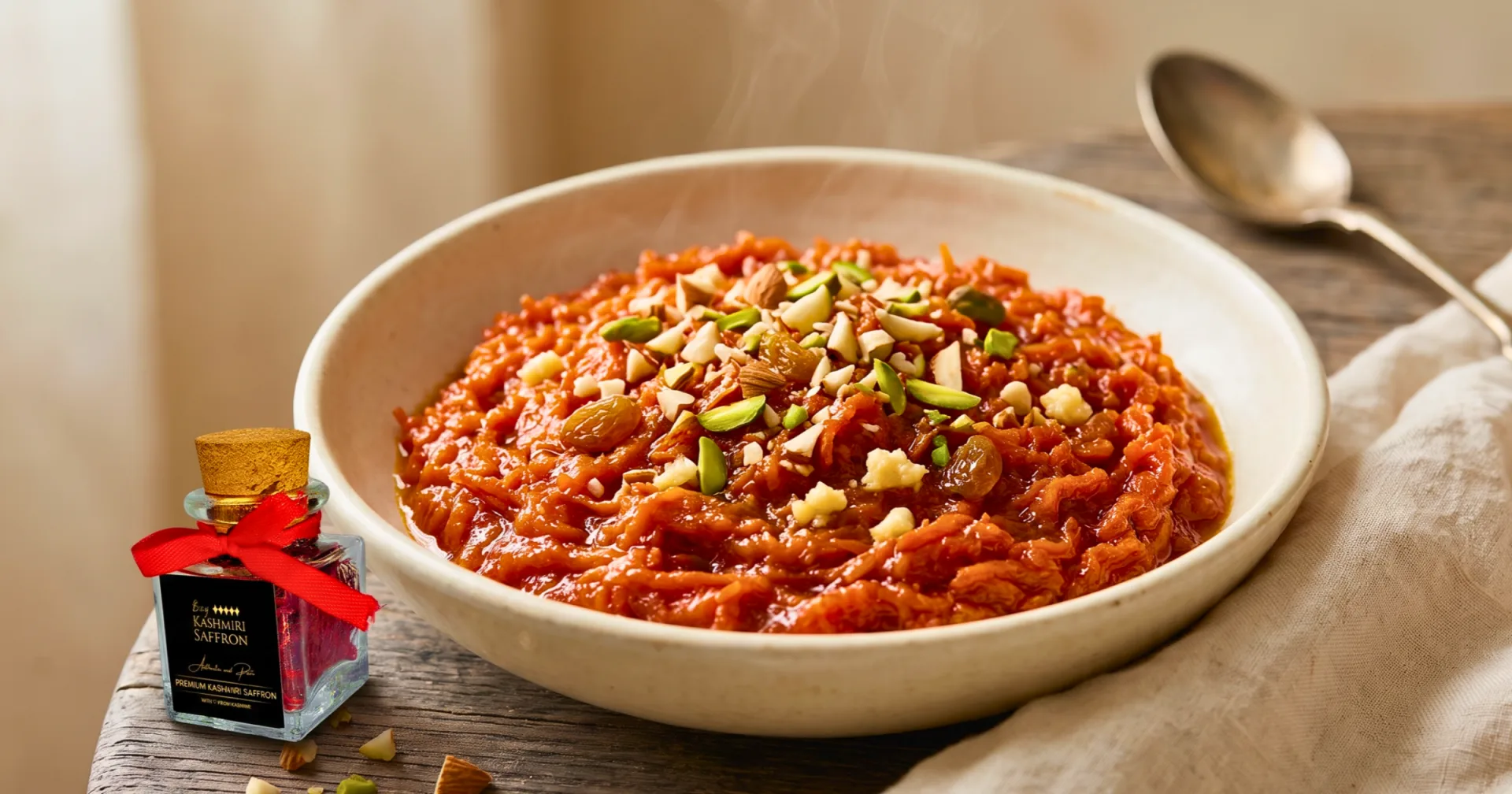
Gajar halwa made properly — with full-fat milk reduced down slowly, not condensed milk shortcuts — takes close to an hour, and that hour is what gives it the deep, slightly caramelised flavour that a quick version never gets close to. Kashmiri saffron bloomed into warm milk and stirred in near the end adds a layer that cardamom alone can't; it rounds off the sweetness of the khoya and sugar instead of just sitting on top as a garnish colour.
Use carrots that aren't too watery — the deep red Delhi carrots sold through winter are ideal, but any firm, not-too-juicy carrot works if you give the reduction enough time. The biggest mistake people make is adding sugar too early, which pulls moisture out of the carrot and resets the clock on reduction. Patience here pays off directly in texture.
Ingredients
- 1 kg carrots, washed, peeled, and grated
- 1 litre full-fat milk
- 1/2 cup khoya (mawa), grated or crumbled
- 1/3 cup sugar, or to taste
- 3 tbsp ghee
- 20 Kashmiri saffron strands
- 2 tbsp warm milk
- 1/2 tsp cardamom powder
- 2 tbsp chopped almonds
- 2 tbsp chopped pistachios
- 1 tbsp raisins
Instructions
- Soak the saffron strands in the warm milk and set aside for 10 minutes.
- Heat 1 tablespoon of ghee in a heavy-bottomed kadai and sauté the grated carrot on medium heat for 8-10 minutes, until the raw smell is gone and the carrot softens slightly.
- Pour in the milk and bring to a gentle boil, then lower the heat and let it simmer, stirring every few minutes so it doesn't catch at the bottom.
- Keep cooking until the milk reduces almost completely and the carrot looks dry and glossy, which takes 35-40 minutes.
- Add the sugar and stir it in — the mixture will loosen again as the sugar draws out moisture, so keep cooking for another 8-10 minutes until it thickens back up.
- Add the grated khoya and mix well, cooking for 5 minutes until it melts into the halwa and there are no lumps left.
- Stir in the saffron milk and cardamom powder, mixing thoroughly.
- In a small pan, heat the remaining ghee and lightly fry the almonds, pistachios, and raisins for a minute.
- Fold most of the nuts into the halwa, finish with the remaining ghee stirred through, and garnish with the rest of the nuts on top.
- Serve warm, or at room temperature if you prefer it firmer.
Tips for Best Results
Grate the carrots rather than chopping and blending them — a fine grater gives a texture that breaks down evenly during the long simmer, while chopped-and-blended carrot tends to turn mushy at the edges while staying fibrous in the middle. If your khoya is dry and crumbly, warm it slightly in a dry pan before adding so it melts in smoothly instead of leaving grainy bits. And don't skip sautéing the carrot in ghee before the milk goes in — that step is what keeps the halwa from tasting flat and vegetal.
Serving Suggestions
Gajar halwa is usually served warm with a scoop of vanilla ice cream on top, especially in winter when the carrots are at their best. It also holds up well cold straight from the fridge, cut into squares, for a quicker everyday version of the sweet.