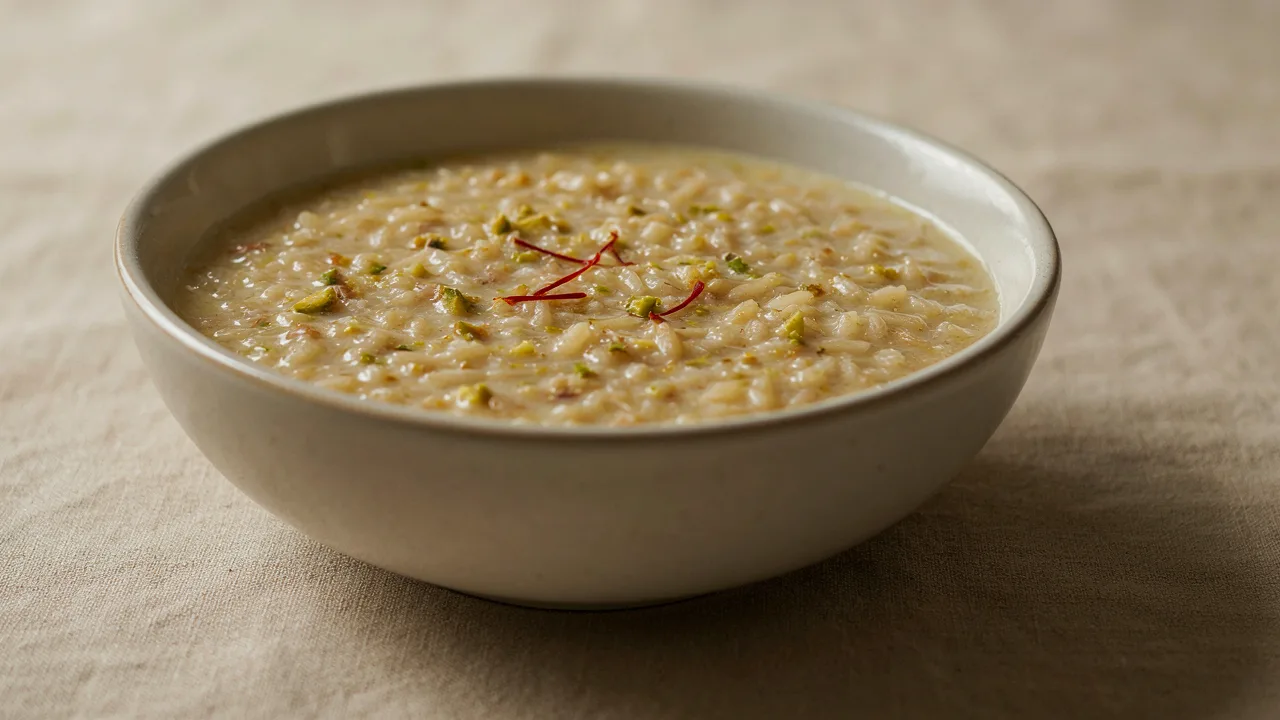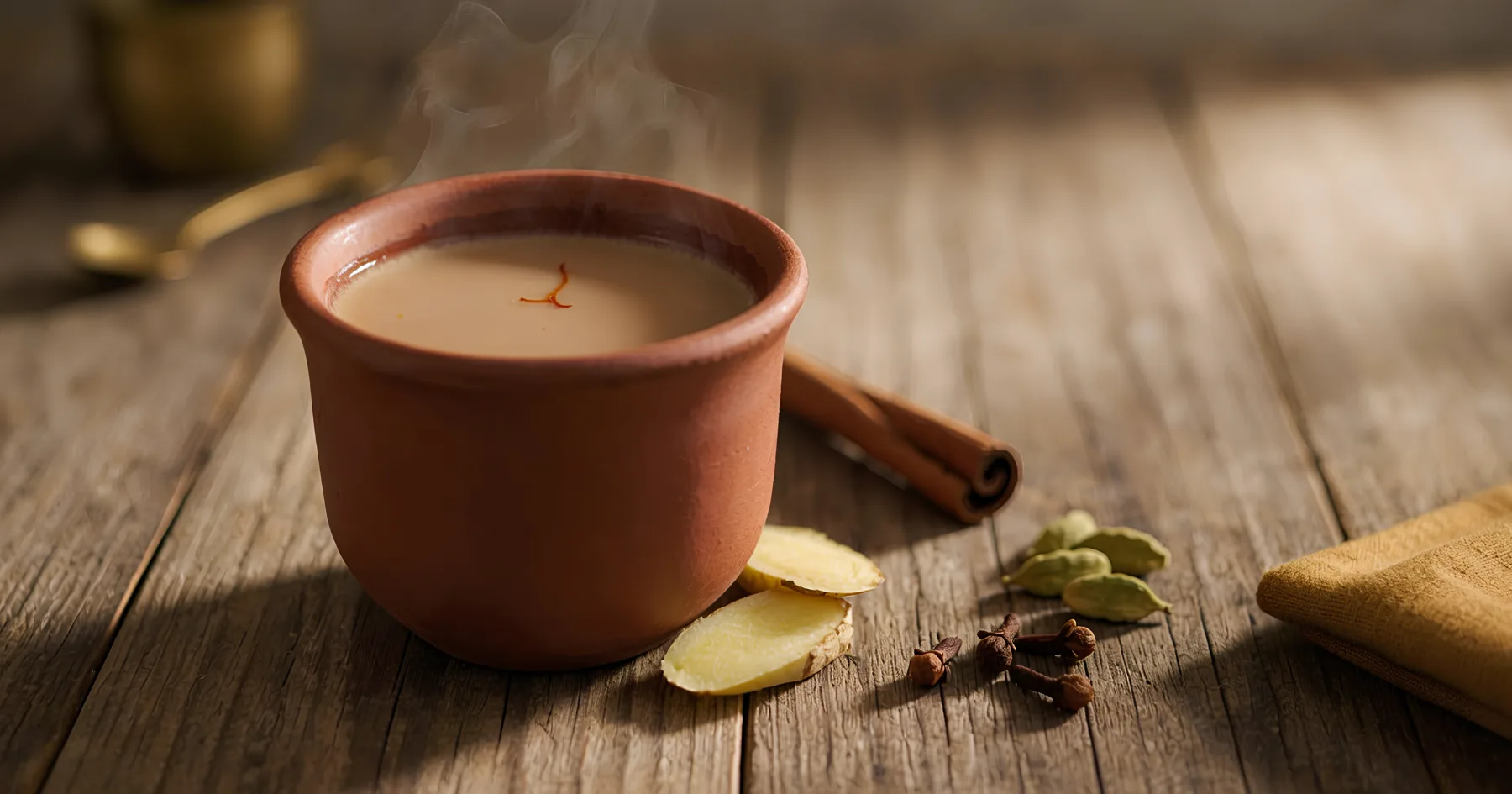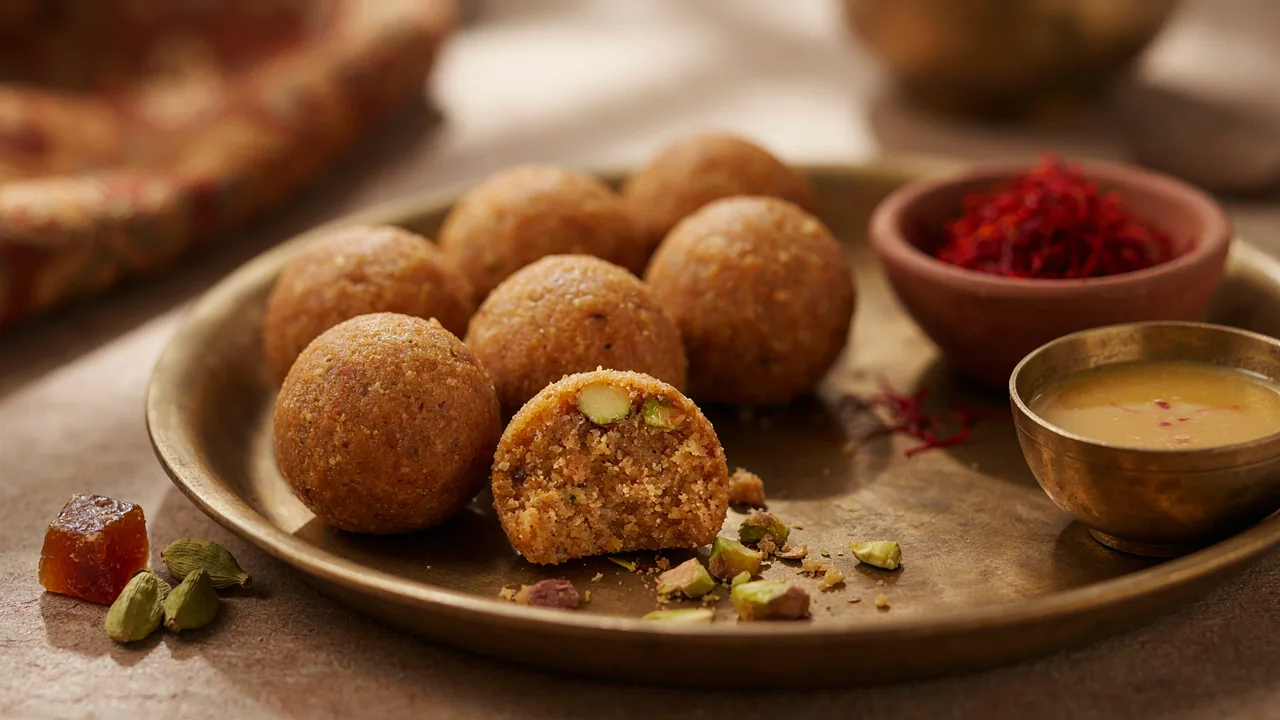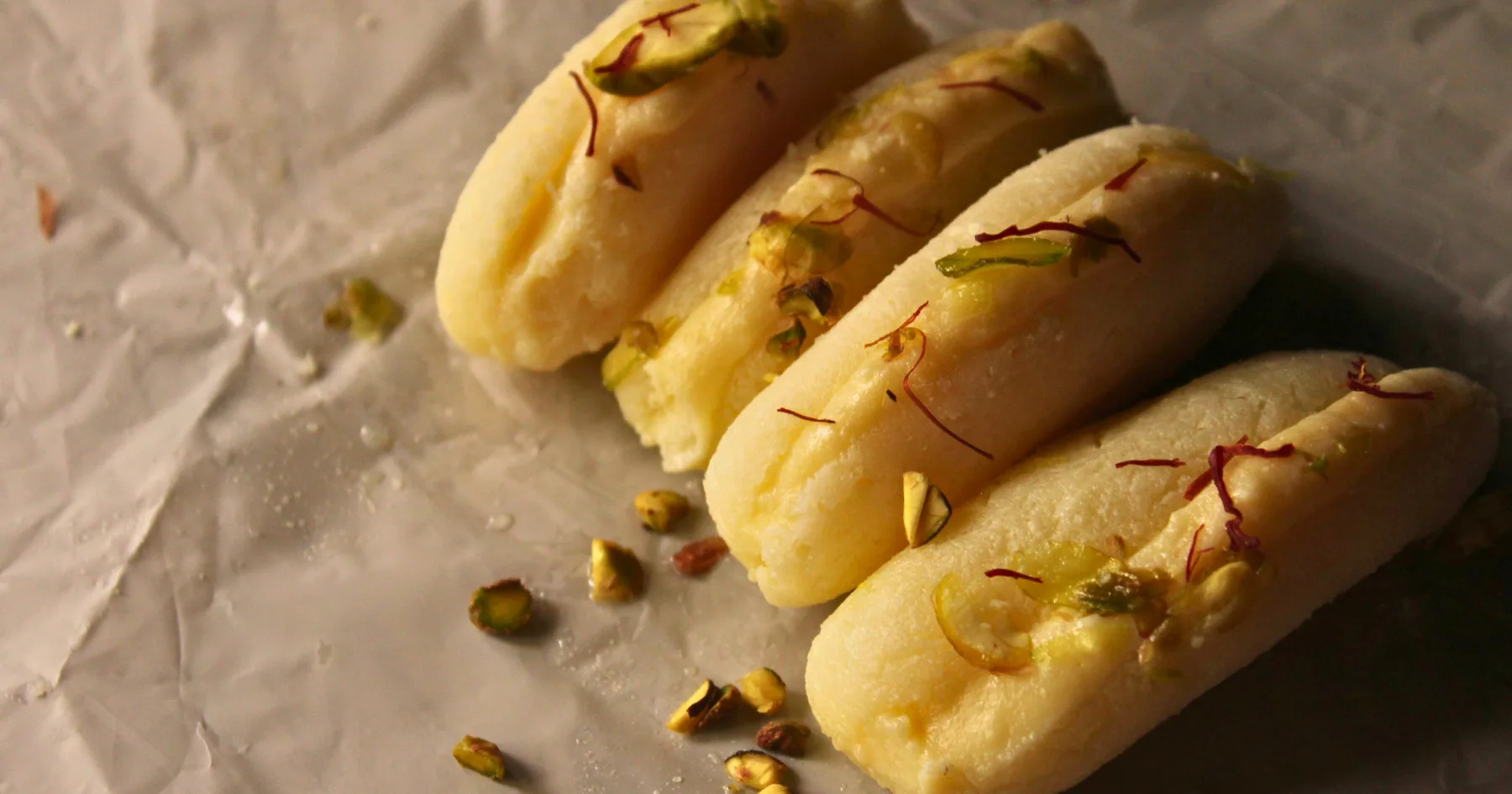
Sandesh is one of those sweets that looks simple and punishes you quietly if you rush it. It's just paneer, sugar, and a little cooking, but the whole thing hinges on how well you knead the chhena before it ever touches heat. Skip or shorten that step and you get a sandesh with a slightly gritty bite instead of the smooth, almost fudgy texture it's supposed to have. Saffron goes in near the end here, bloomed in warm milk, so it colors the sandesh a pale gold without being cooked long enough to dull its flavor.
This version uses homemade chhena rather than store-bought paneer, because store-bought paneer is usually pressed too firm and doesn't knead into the same smooth paste.
Ingredients
- 1 liter full-fat milk
- 2-3 tablespoons lemon juice or vinegar, mixed with equal water
- 1/2 cup powdered sugar, adjust to taste
- 15-20 Kashmiri saffron strands
- 1 tablespoon warm milk (for blooming saffron)
- 1/4 teaspoon green cardamom powder (optional)
- 1 tablespoon finely chopped pistachios, for garnish
Instructions
- Bring the milk to a boil in a heavy pan. Lower the heat and add the lemon juice-water mixture a little at a time, stirring gently, until the milk curdles fully and the whey turns clear and greenish.
- Pour the curdled milk through a muslin cloth set over a colander. Rinse the chhena under cold running water for a few seconds to wash away the sourness, then gather the cloth and squeeze out excess water gently, leaving the chhena slightly moist, not bone dry.
- Hang the cloth for about 20-30 minutes to drain further, then tip the chhena onto a clean plate or flat surface.
- Knead the chhena with the heel of your hand for 6-8 minutes, until it turns smooth and slightly oily to the touch, with no graininess left. This step decides the final texture, so don't cut it short.
- Soak the saffron in warm milk while you knead.
- Transfer the kneaded chhena to a non-stick pan along with the powdered sugar. Cook on low heat, stirring continuously, for 3-4 minutes, just until the mixture comes together into a soft, slightly glossy mass that pulls away from the pan.
- Take the pan off the heat immediately — overcooking even by a minute turns the sandesh chewy and rubbery instead of soft.
- Mix in the saffron milk and cardamom powder while the mixture is still warm, kneading briefly by hand once it's cool enough to touch, until the color is even.
- Shape into small discs or balls, or press into sandesh molds for a decorative finish. Top each with a sliver of pistachio.
- Refrigerate for 30 minutes before serving to help them firm up slightly.
Tips for Best Results
Test the chhena before you start kneading by rolling a small piece between your fingers — if it feels grainy, keep kneading, because no amount of cooking afterward will smooth it out. On the stove, the moment the mixture starts pulling cleanly away from the sides of the pan is your cue to stop, even if it looks slightly underdone; it firms up a bit more as it cools. If your chhena feels too wet after draining, hang it a little longer rather than squeezing it hard, which can push out fat along with the water and make the sandesh dry.
Serving Suggestions
Sandesh is typically served chilled or at room temperature, often alongside other Bengali sweets like rasgulla or mishti doi at festive meals. It doesn't need any accompaniment, though a few extra strands of saffron pressed on top just before serving make it look as good as it tastes.