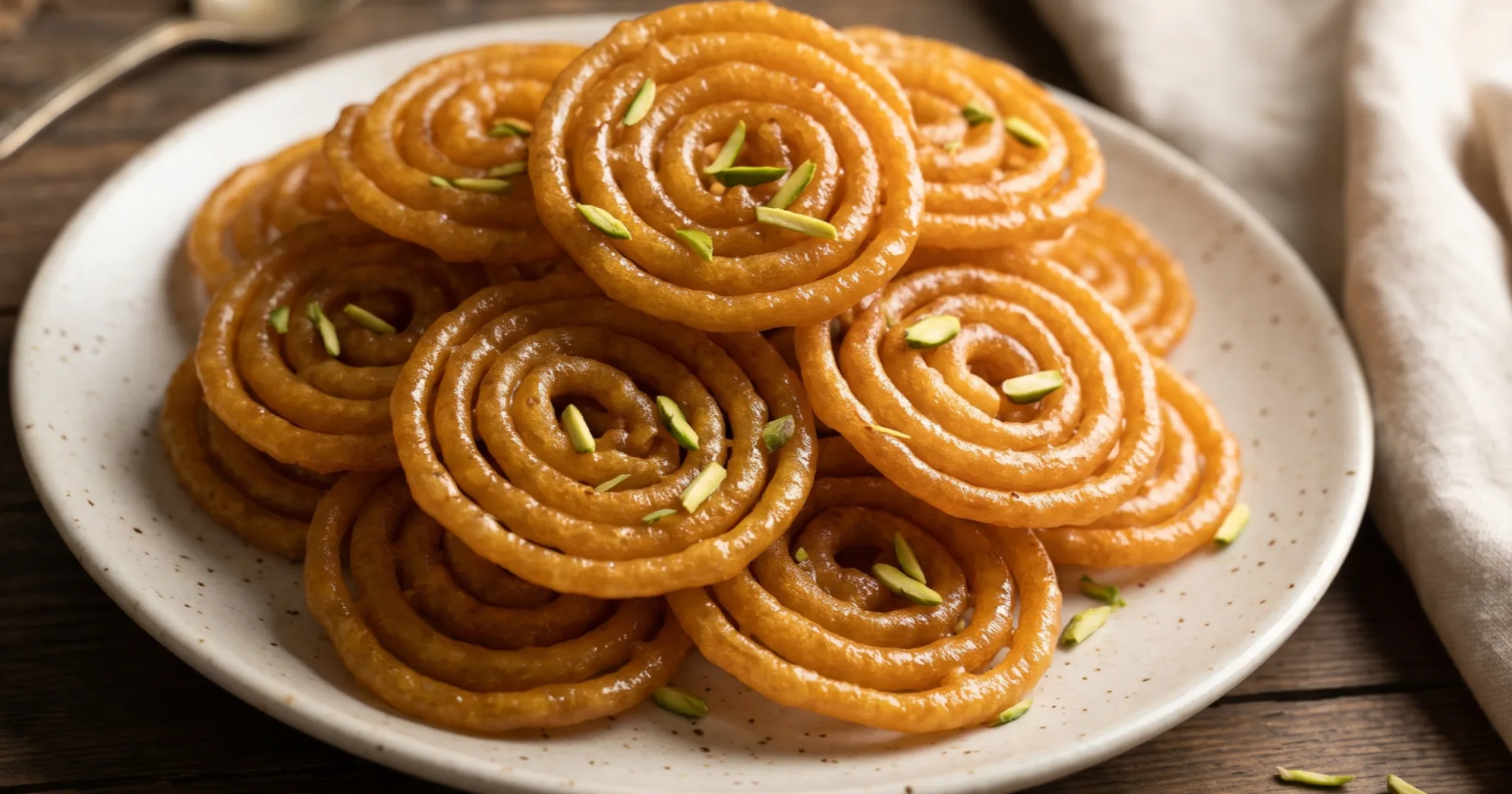
Jalebi lives and dies on two things: a properly fermented batter and getting the syrup dunk time right. Everything else - the piping, the frying - is technique you pick up after a few tries. The saffron version swaps the usual plain or lightly colored syrup for one built around bloomed saffron and crushed cardamom, which gives the jalebi a rounder, less one-note sweetness than sugar syrup alone.
A lot of jalebi you see at shops gets its orange color from food dye added to the batter. This recipe skips that entirely - the color here comes from deep frying and the saffron syrup soak, which is a different, more muted gold-orange than the bright artificial version, but the flavor more than makes up for it.
Ingredients
For the batter
- 1 cup maida (plain flour)
- 2 tbsp besan (gram flour)
- 2 tbsp thick yogurt
- 1/4 tsp baking soda
- about 3/4 cup water, added gradually
- ghee or oil, for deep frying
For the syrup
- 2 cups sugar
- 1 cup water
- 25 Kashmiri saffron strands
- 2 tbsp warm milk, for soaking the saffron
- 4 green cardamom pods, crushed
- 1/4 tsp lemon juice
Instructions
- Whisk the maida, besan, and yogurt together with the water until you get a smooth, lump-free batter - aim for the consistency of a thick pancake batter, slightly thinner than idli batter.
- Cover the bowl and leave it in a warm spot for 8-12 hours, or overnight. You're looking for a slightly tangy smell and small bubbles forming on the surface, which tells you the fermentation has actually happened and isn't just sitting there.
- About 20 minutes before you plan to fry, soak the saffron strands in the warm milk so it's ready in time.
- Right before frying - not earlier - whisk the baking soda into the fermented batter. This is what gives jalebi its light, airy crunch, and the fizz it creates doesn't last, so adding it too soon means you lose the effect by the time you're actually frying.
- Make the syrup: boil the sugar and water together for 5-6 minutes until it reaches one-string consistency - a drop pressed and pulled between two fingers should form a single thin thread rather than breaking apart or forming multiple threads. Stir in the saffron milk, crushed cardamom, and lemon juice, then keep it warm over the lowest possible flame.
- Heat ghee or oil in a wide, flat pan (a kadai works, but wide and shallow gives you more room to maneuver) on medium flame. Transfer the batter to a piping bag, a squeeze bottle, or a cloth cone with a small hole snipped in the corner.
- Pipe tight, concentric spirals straight into the hot oil, starting from the outside and working in, two or three at a time depending on how much room your pan has.
- Fry for 45-60 seconds per side, until the edges go crisp and turn a deep orange-gold, then flip gently using a skewer or chopstick.
- Lift the jalebi straight from the oil into the warm syrup and submerge fully for 30-40 seconds - no longer. Any more time in the syrup and they go soft and soggy instead of staying crisp with just a juicy centre.
- Lift out onto a wire rack or a plate and serve within the hour, while they're still at their crunchiest.
Tips for Best Results
Batter consistency decides a lot here. Too thick, and the jalebi coils up fat and doughy, with a soft, undercooked middle even after frying. Too thin, and the spirals break apart in the oil instead of holding their shape. If your first couple of attempts fall apart, thin the batter very slightly with a tablespoon of water at a time rather than guessing at a big adjustment. And don't skip the one-string syrup test - syrup that's too thin won't coat the jalebi properly, and syrup that's gone past one-string (toward hard-ball stage) will crystallize on the surface instead of soaking in.
Serving Suggestions
Jalebi with rabri is the classic combination - the cold, thick, lightly sweetened reduced milk is a direct contrast to the warm, crisp jalebi. In Gujarat it's often eaten alongside fafda for breakfast, sweet and savory on the same plate. Either way, these are at their best eaten fresh and warm, not stored and reheated later.