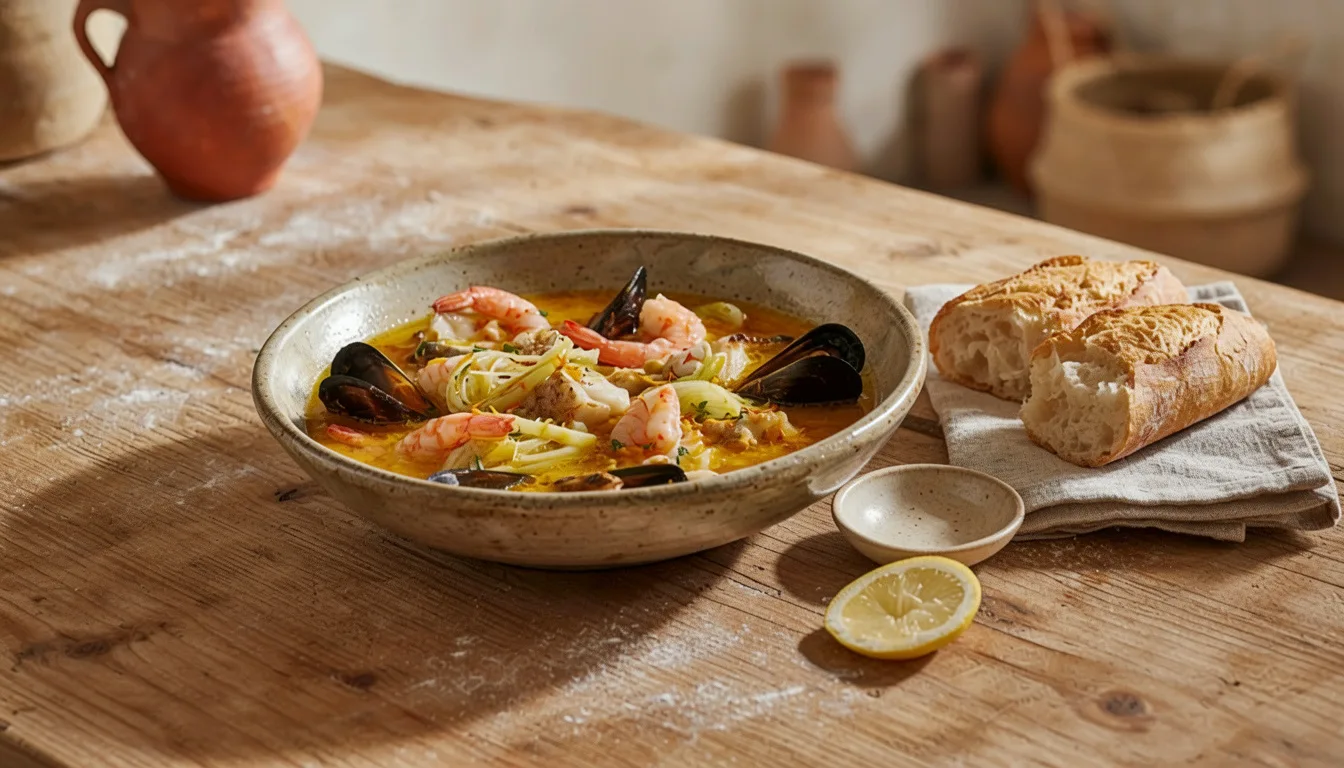
Bouillabaisse is a traditional Provençal fish stew, and saffron is a genuinely authentic ingredient here — not a modern addition, but part of the dish's actual history, alongside fennel and orange zest, both of which give the broth its distinctive character. This version keeps things approachable while staying true to the real technique: build a proper aromatic broth first, then add seafood in stages so nothing overcooks.
Ingredients
- 600g mixed firm fish and shellfish (white fish, shrimp, mussels)
- 3 tablespoons olive oil
- 1 onion, diced
- 1 fennel bulb, thinly sliced
- 3 garlic cloves, minced
- 2 tomatoes, chopped (or 1 cup canned)
- 4 cups fish or vegetable stock
- 1/2 cup dry white wine (optional)
- 6-7 strands Kashmiri Mongra saffron
- 2 tablespoons warm water, for the saffron infusion
- 1 strip orange zest
- Salt and pepper, to taste
- Crusty bread, to serve
Instructions
- Warm the water and soak the saffron strands in it for about 10 minutes.
- Heat the olive oil in a large pot and sauté the onion and fennel for 5-6 minutes until softened.
- Add the garlic and cook for another minute, until fragrant.
- Add the tomatoes and cook for 3-4 minutes until they start to break down.
- Pour in the stock and white wine, if using, add the orange zest, and bring to a simmer.
- Stir in the saffron infusion and let the broth simmer for 15 minutes to let the flavours develop — this step matters, the broth is really the heart of the dish.
- Add the firmer seafood (mussels, firm white fish) first, simmer for 5 minutes, then add shrimp or more delicate seafood and cook a further 3-4 minutes until everything is just cooked through.
- Season with salt and pepper, remove the orange zest strip, and serve hot with crusty bread.
Tips for Best Results
Adding seafood in stages (firmest and longest-cooking first) is the real technique here — dumping everything in at once means some pieces overcook while others are still raw. Don't skip the orange zest; it's a small addition but a genuinely traditional and distinctive part of the flavour.
Serving Suggestions
Traditionally served with crusty bread and sometimes a garlicky rouille sauce on the side. A simple green salad rounds out the meal without competing with the broth.
Storage
Best eaten fresh — like most seafood dishes, the texture suffers on reheating. If you must store leftovers, keep for no more than a day and reheat very gently.