Honest answer: there is no robust clinical trial evidence that saffron grows hair or reverses hair loss in humans. The specific statistics circulating online — "thickens hair by 15%," "40% less hair fall in 8 weeks" — do not trace back to any published clinical study we could find. What does exist is a plausible antioxidant mechanism and a long tradition of topical use, which is a real but much more modest claim than what's often marketed.
What's Actually Being Claimed Online
Search for "saffron hair growth" and you'll find specific numbers repeated across wellness blogs and product marketing: hair thickened by a stated percentage after three months, hair fall reduced by a stated percentage after eight weeks. These numbers show up on multiple sites, phrased almost identically, with no citation to an actual clinical trial. That pattern — specific statistics with no traceable source, repeated across marketing content — is worth being skeptical of, and it's why we're not repeating those numbers here.
What Real Research Actually Exists
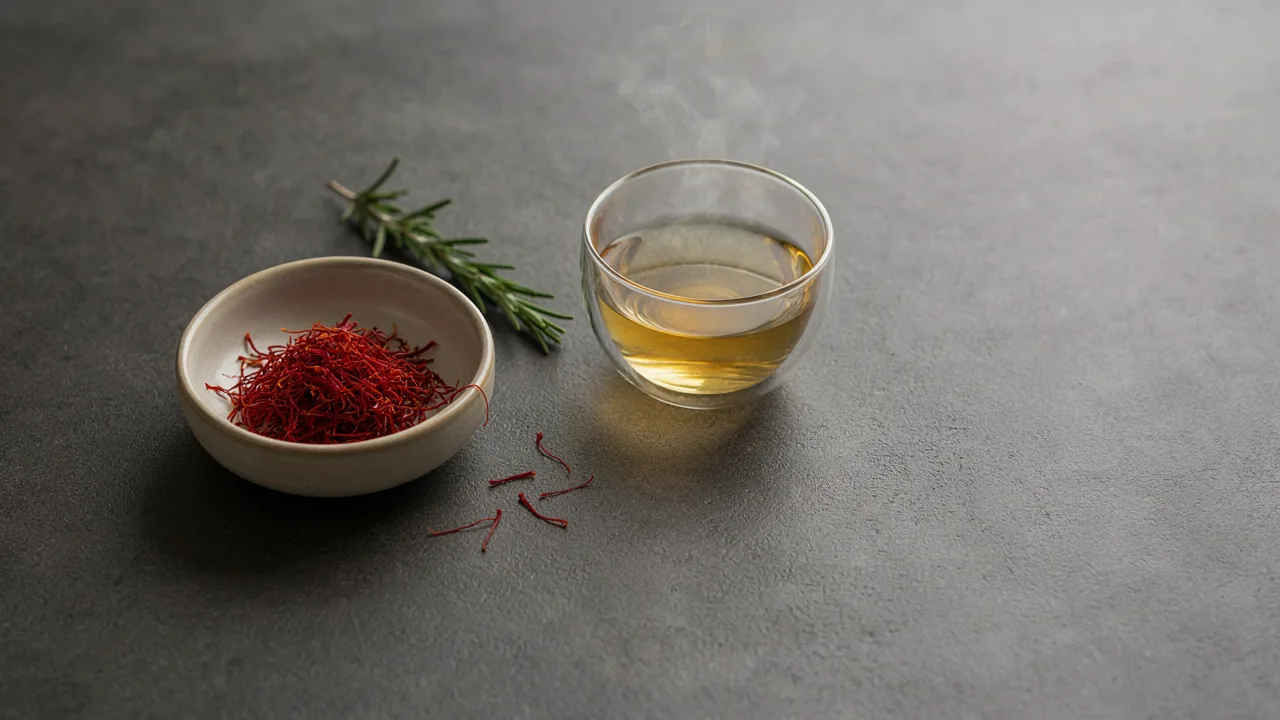
Saffron's compounds — crocin, crocetin, and safranal — are genuine, well-documented antioxidants; that part is real chemistry, confirmed in lab settings. Oxidative stress is one of several factors implicated in hair follicle ageing and hair loss in general, which is why an antioxidant-rich ingredient is a plausible candidate for hair benefits. But plausible mechanism is not the same as proven outcome. We looked for human clinical trials specifically testing saffron (as an oil, extract, or topical treatment) against a placebo for hair growth or hair loss, and did not find a robust one — the research that does exist on saffron and antioxidants tends to focus on other areas entirely, like eye health (saffron in ocular disease, a genuine area of real clinical study), not hair.
This puts saffron in a different category from some of its other claimed benefits. For comparison, saffron's effect on mood and sexual function has multiple real randomized controlled trials behind it, even if results are mixed. Hair growth simply doesn't have that same evidence base yet.
Why People Use It Anyway
Saffron has a long history of traditional topical use across South Asian and Middle Eastern beauty practices, usually for skin brightening and general complexion, with hair benefits sometimes mentioned as a secondary claim. Traditional use over centuries is a real thing worth acknowledging — it's just a different kind of evidence than a clinical trial, and it doesn't tell you the specific mechanism or how much of an effect (if any) to expect.
Is Using Saffron on Hair Safe, Even Without Proof It Works?
Generally, yes, for most people — saffron applied topically (in a hair mask or oil) doesn't carry known significant risks, similar to its safety profile as a food. As with anything new applied to skin or scalp, patch-test a small area first. If you want to try it, there's little real downside beyond the cost and the possibility that it simply doesn't do much for you.
If You Want to Try It Anyway
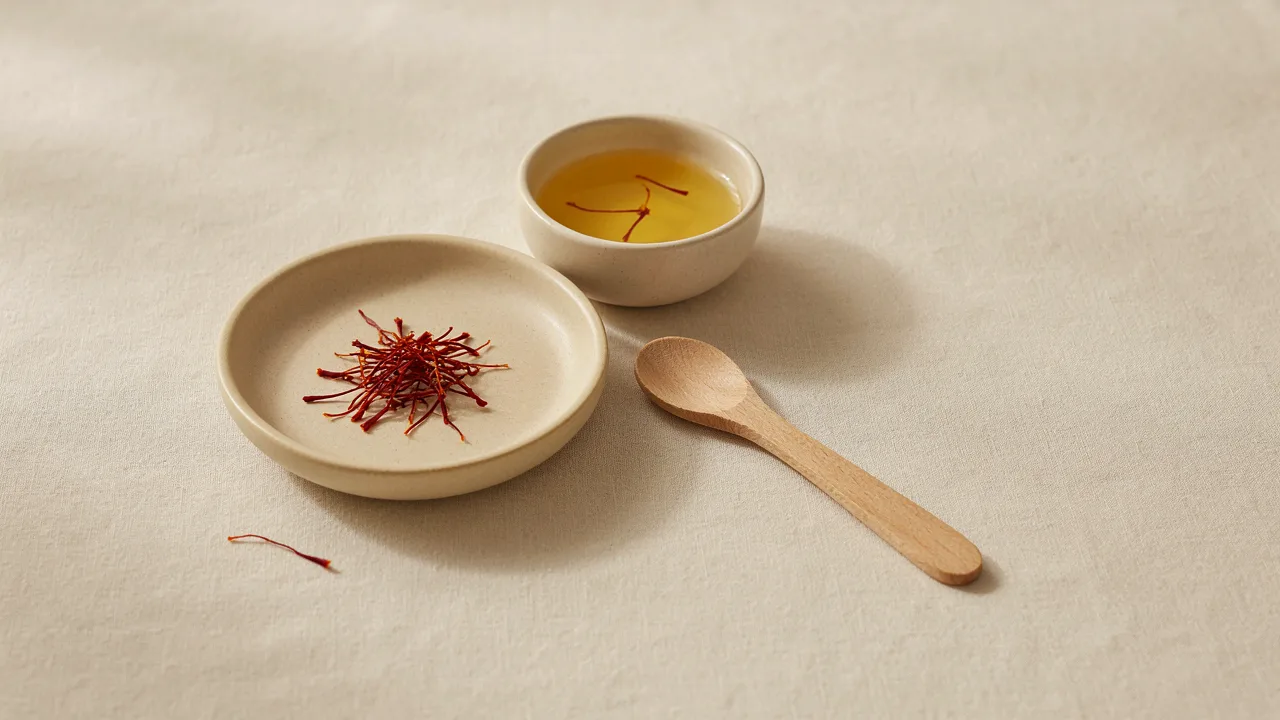
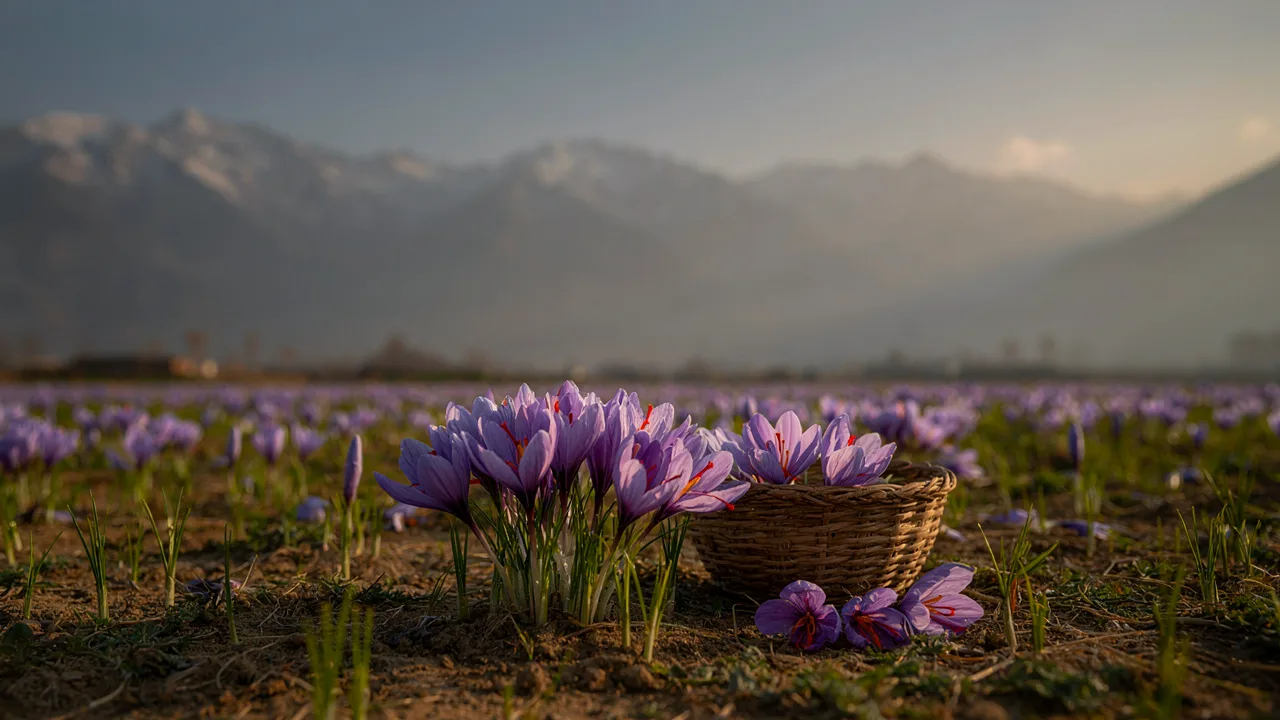
A simple, low-risk approach: soak a few strands of genuine Kashmiri saffron in a carrier oil (like coconut or almond oil) for a few days to let the compounds infuse, then apply sparingly to the scalp. This isn't a claim that it will regrow hair — it's a reasonable way to try a traditional remedy without overpaying for a "clinically proven" product making claims the research doesn't support.
What to Actually Expect
If you're trying saffron for hair, go in with realistic expectations: it's an antioxidant-rich, traditionally-used ingredient with a plausible but unproven mechanism for hair health, not a research-backed hair growth treatment. If genuine hair loss is a concern, that's worth discussing with a dermatologist, who can identify the actual cause (which saffron, proven or not, wouldn't address if the cause is hormonal, genetic, or a deficiency).
How Saffron Compares to Other Traditional Hair Ingredients
Saffron isn't the only traditional ingredient claimed to help hair, and it's worth a bit of perspective on where it sits. Ingredients like amla (Indian gooseberry) and bhringraj have a longer history of specific traditional use for hair in Ayurvedic practice, and some (amla in particular) have at least some published research on hair-relevant properties like antioxidant content, though robust clinical trials are limited across this entire category, not just saffron. None of these traditional ingredients — saffron included — currently have the kind of clinical trial evidence that exists for, say, minoxidil, which is the actual clinically-proven topical treatment for hair loss. If genuine hair loss (not just general hair health) is your concern, that distinction matters.
A Simple, Low-Risk Way to Try It
If you'd like to try saffron on your hair despite the limited evidence, here's a simple approach that doesn't overcomplicate things or make claims it can't back up:
- Take a small pinch (6-8 strands) of genuine Kashmiri saffron and soak it in 2-3 tablespoons of a carrier oil — coconut or almond oil both work.
- Let it infuse for 2-3 days in a dark place, occasionally shaking gently.
- Warm slightly (not hot) and massage into the scalp, leaving it on for 30-60 minutes before washing out.
- Use once or twice a week if you want to continue, patch-testing first if you have sensitive skin.
This is a traditional-style preparation, not a clinical protocol — there's no specific published study behind this exact recipe. It's offered as a reasonable, low-cost way to try a traditional remedy, not as a guaranteed result.
Why the Marketing Claims Spread So Easily
It's worth understanding why specific, confident-sounding statistics spread so easily for a product like saffron hair oil: a number like "40% less hair fall" sounds authoritative and is easy to repeat, and once one site publishes it, it gets picked up and rephrased by others without anyone re-checking the original source — a pattern common across wellness marketing generally, not unique to saffron. Genuine clinical trials, when they exist, are usually citable by name, journal, and year; when a claim can't be traced back to one, that absence is itself informative, and it's the reason we've chosen not to repeat those specific figures here even though including them would probably make this article rank better for some searches.
What Actually Drives Hair Health
If hair thinning or loss is a real concern, it's worth knowing that the biggest, best-evidenced factors are usually genetics, hormonal changes, nutritional deficiencies (iron, protein, vitamin D, biotin in some cases), and certain medical conditions — not the absence of any single topical ingredient. A topical addition like saffron oil, even if it turns out to have some benefit, is unlikely to outweigh these underlying factors on its own. A dermatologist can identify the actual cause, which is a more productive starting point than trying ingredient after ingredient hoping one works.
Scalp Health: A More Defensible Angle
One area where saffron's antioxidant and mild anti-inflammatory properties are more plausibly relevant is general scalp health rather than hair growth specifically — a calmer, less irritated scalp is a genuinely reasonable precondition for healthy hair, even if it's a less exciting claim than "grows hair." If you already deal with a dry or occasionally irritated scalp, a gentle saffron-infused oil is a low-risk thing to try as part of a broader routine, alongside things with more established scalp benefits like regular gentle massage (which does have some research support for improving hair thickness via mechanical stimulation, independent of any specific ingredient).
The Honest Takeaway
We'd rather tell you plainly that the evidence isn't there yet than repeat marketing statistics with no real source — especially since it's easy to check, and the gap between what's claimed and what's proven is exactly the kind of thing that erodes trust once someone looks closer. If real clinical research on saffron and hair growth is published in the future, we'll update this page. For now: plausible, traditionally used, probably harmless to try — not proven, and not a substitute for addressing the actual underlying cause if you're dealing with real hair loss.