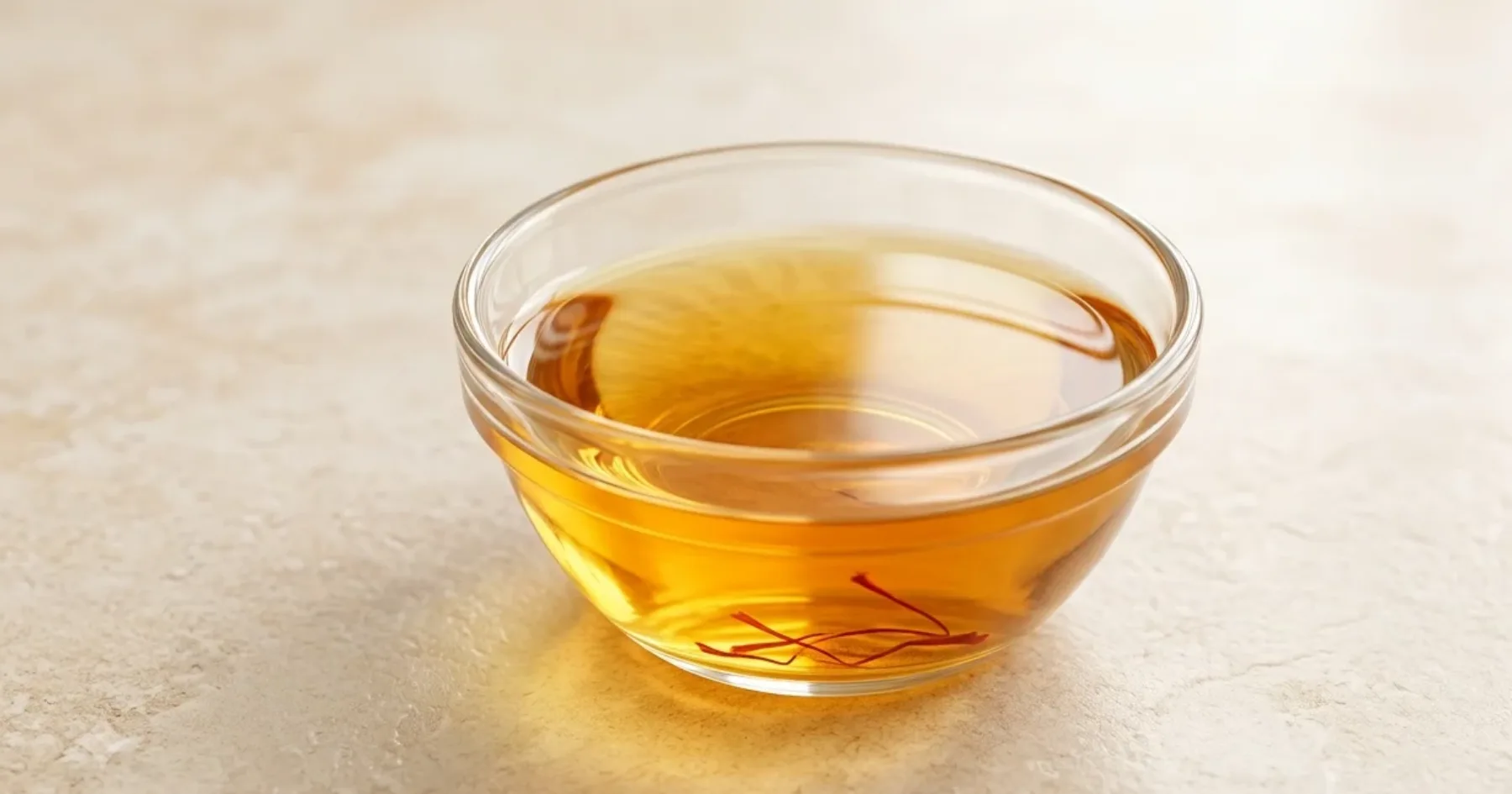
If you're wondering why won't my saffron dissolve, there's a good chance the real answer is that it's not supposed to, not fully anyway. This trips up a lot of people the first time they use real saffron, especially if they're used to things like sugar or salt that disappear completely into liquid. Saffron threads release their colour and flavor compounds into whatever you soak them in, but the physical thread itself stays put. You'll still see strands floating in your rice or broth after cooking, and that's completely normal, not a sign anything went wrong.
First, the Misconception: Saffron Isn't Meant to Dissolve
Sugar dissolves because its molecules break apart and disperse evenly into water at a molecular level. Saffron threads are plant fiber, dried stigma from the crocus flower, and plant fiber doesn't break down that way in water or milk, even with heat. What happens instead is that the colour compounds (mainly crocin) and flavor compounds (picrocrocin and safranal) leach out of the thread into the liquid, while the fibrous structure of the thread remains intact, just softened. So if you're soaking saffron and still seeing threads sitting at the bottom of the cup twenty minutes later, that's exactly what's meant to happen. The threads did their job; they just didn't disappear doing it.
If Release Feels Too Slow: Crush the Threads First
That said, there's a real difference between "normal, threads remain visible" and "barely any colour or aroma came out at all." If you want faster, stronger release, lightly crush or grind the threads before soaking. The back of a spoon against a small bowl works fine; you don't need a mortar and pestle. Crushing breaks open more of the thread's surface and speeds up how quickly the compounds move into the liquid. Many professional kitchens do this as a default step rather than soaking whole threads, specifically because it's faster and more consistent.
Liquid Temperature Still Matters Here
Just like with the colour release itself, temperature affects how readily saffron's compounds move into liquid. Warm milk, warm water, or warm butter works noticeably better than cold liquid, where the release slows down a lot, or boiling liquid, which can cook off some of the more delicate aromatic compounds before they've had a chance to fully infuse. If your saffron seems sluggish to release anything, check that your liquid is warm rather than cold or scalding before assuming something's wrong with the saffron itself.
When Clumping Means Something Different: Moisture, Not Chemistry
There's a separate issue that sometimes gets confused with "won't dissolve," and that's threads clumping together in the jar rather than in liquid. Dry saffron threads should move around loosely, almost like dried herbs. If you open your jar and find the threads stuck together in a clump, or feeling slightly damp or tacky rather than dry and brittle, that's a sign the saffron has absorbed humidity from the air, usually from being stored somewhere not fully airtight, or in a kitchen with a lot of ambient moisture. This isn't a dissolving problem at all, it's a storage problem, and it's worth taking seriously. Check clumped saffron for any grey, white, or green fuzzy spots, or a musty smell instead of saffron's usual honeyed scent. Either of those is a sign of mould, and that batch should be thrown out rather than used, regardless of how much it cost.
Fixing the Storage Problem Going Forward
Keep saffron in a sealed, airtight container. A small glass jar with a tight lid works better than the bag or tin it sometimes comes in, away from direct light and away from the stove or anywhere steam collects. Stored this way, saffron stays dry and loose for a long time rather than clumping. If you've been storing yours in a humid kitchen near the kettle, that's worth fixing regardless of what's in the jar right now.
The Short Version
Threads remaining visible after soaking is normal; that's not a malfunction, saffron simply doesn't dissolve the way sugar does. Slow colour or flavor release usually comes down to whole, uncrushed threads or liquid that's too cold. Clumping is a different issue entirely, tied to humidity and storage, and it's worth checking for mould before using saffron that's clumped and smells off. If you're starting fresh, our Kashmiri saffron comes in loose, dry threads that should behave the way described above from the first use.