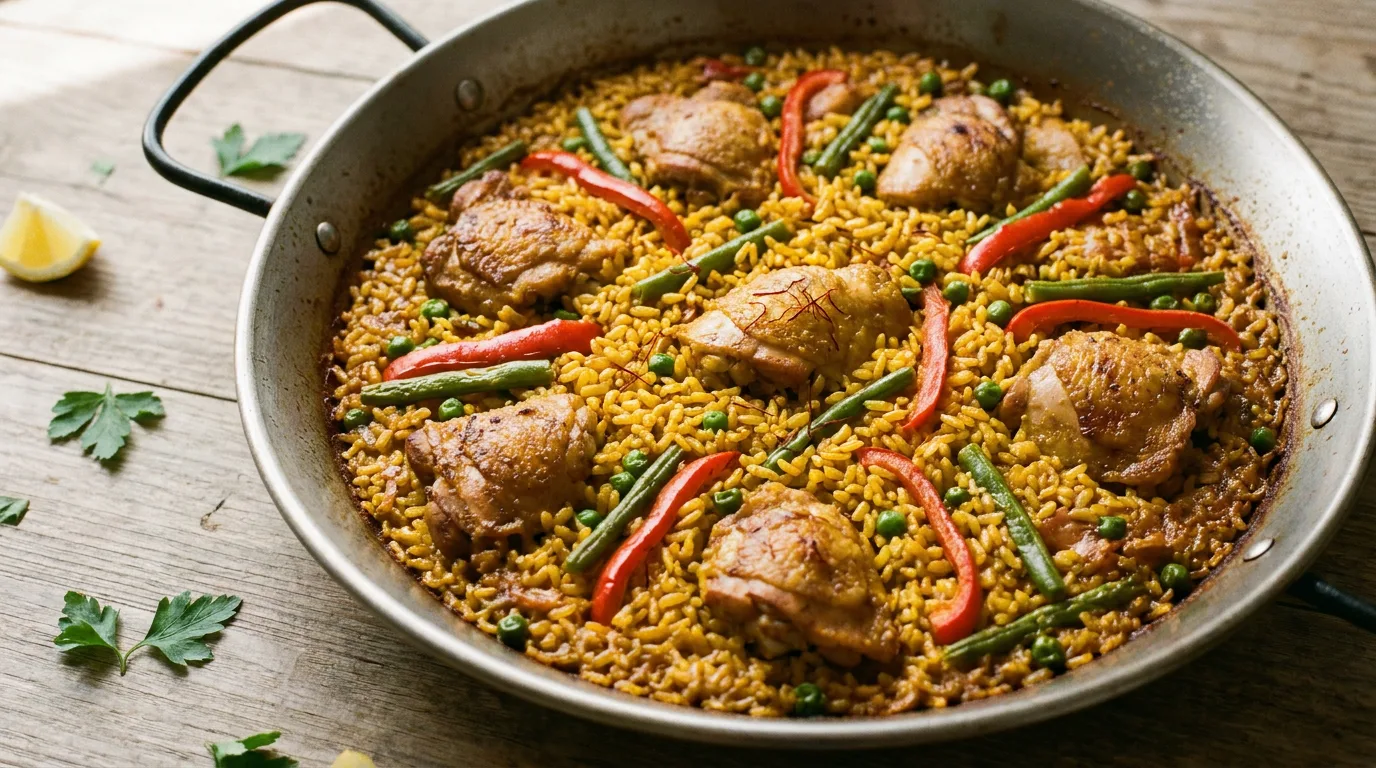
Real paella is a one-pan dish that lives and dies on its saffron and its socarrat — the crisp, slightly caramelised layer of rice that forms at the bottom of the pan. This version uses chicken and vegetables, cooked the traditional way: no stirring once the rice goes in.
Why You'll Love This Recipe
- One Pan, Real Technique: The same not-stirring method used in Valencia, so you actually get a socarrat crust.
- Saffron Does the Heavy Lifting: There's no need for a long spice list — saffron carries the colour and most of the aroma.
- Feeds a Table: Easy to double for guests.
Ingredients
Serves 4
- 2 tablespoons olive oil
- 1 onion, diced
- 2 garlic cloves, minced
- 1 red bell pepper, sliced
- 2 tomatoes, diced
- 1.5 cups paella or other short-grain rice
- A generous pinch of Kashmiri saffron strands
- 3 cups warm chicken or vegetable stock
- 200g boneless chicken thighs, cut into pieces
- 1/2 cup green beans, trimmed
- Salt and pepper, to taste
- Lemon wedges and chopped parsley, to garnish
Instructions
- Bloom the saffron: Soak the saffron strands in the warm stock for 10 minutes.
- Sear the chicken: Heat the olive oil in a wide paella pan or large skillet. Sear the chicken until browned on all sides, then set aside.
- Build the base: In the same pan, sauté the onion, garlic, and bell pepper until softened, about 5 minutes.
- Add tomatoes: Add the tomatoes and cook until they break down, 3-4 minutes.
- Toast the rice: Stir in the rice, coating it in the oil and vegetables for 1-2 minutes.
- Add stock: Pour in the saffron stock, return the chicken to the pan, add the green beans, and season.
- Simmer without stirring: Bring to a boil, then reduce to a simmer. From here, don't stir the pan.
- Develop the crust: Simmer uncovered for 18-20 minutes until the liquid is absorbed and a crust forms on the bottom.
- Rest: Remove from heat and rest, covered with a clean towel, for 5 minutes.
- Serve: Garnish with lemon wedges and parsley.
Tip: Resist the urge to stir once the rice is simmering — that's the only way the socarrat crust forms. If you hear a faint crackling near the end of cooking, that's a good sign, not a mistake.