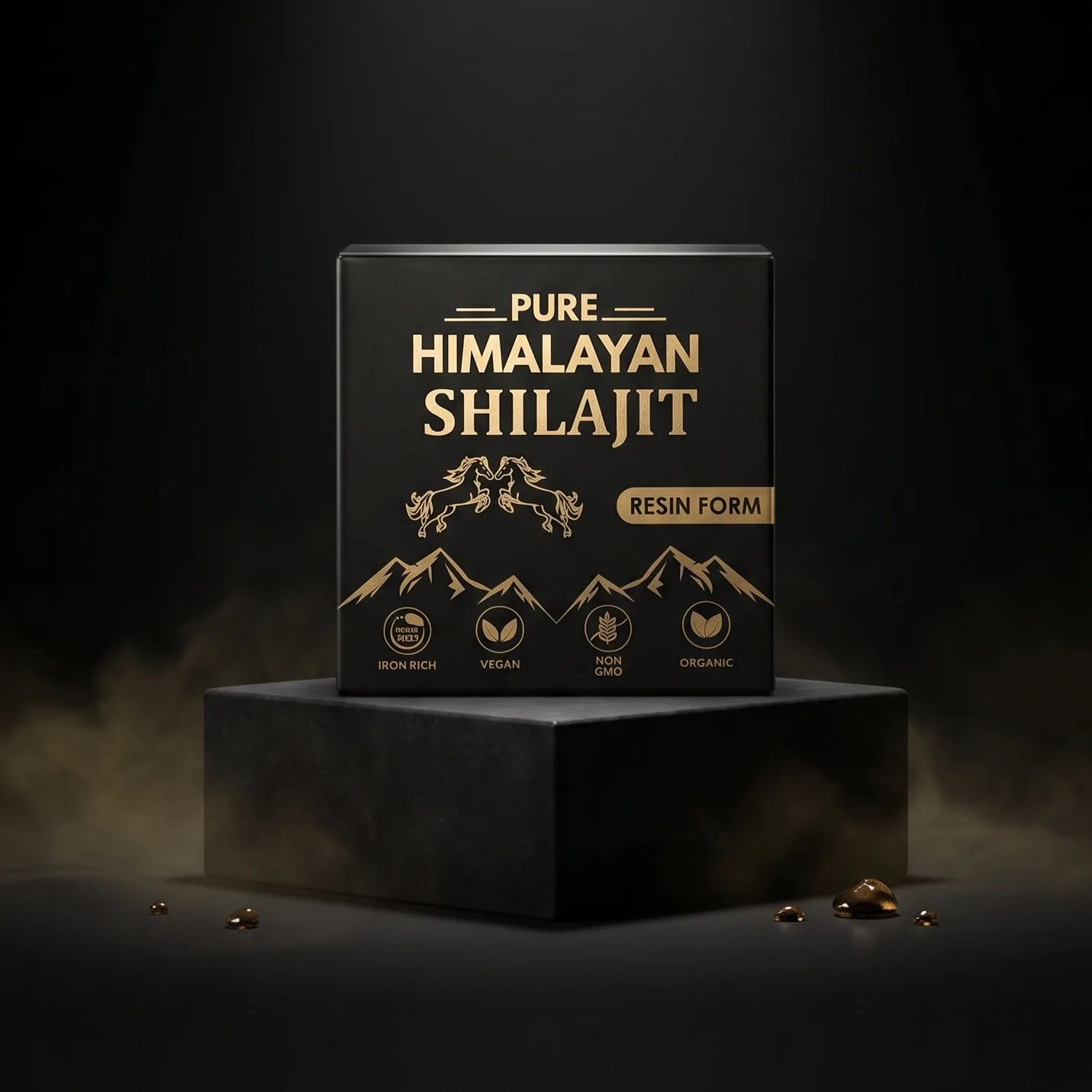
Pure Himalayan Shilajit 10gm — What It Is and How to Use It
Shilajit is a mineral-rich resin that forms naturally over centuries in the high-altitude rock layers of the Himalayas, as plant and microbial matter slowly decomposes under immense pressure and is gradually pushed out through cracks in the rock during the warmer summer months. It has been used in traditional Ayurvedic medicine for generations, valued for its concentrated fulvic acid content and the broad spectrum of trace minerals it picks up from the mineral-rich rock it forms within. We've added it to our range as a natural extension of what we already do with saffron — sourcing a single, genuine, high-altitude product and selling it without dilution, fillers, or shortcuts.
What Is Shilajit, Exactly?
In its purest form, Shilajit is a thick, tar-like resin — dark brown to black in colour, dense, slightly sticky, and carrying a strong, earthy, distinctly mineral smell that's unlike anything else sold as a supplement. It's collected by hand from rock faces at high altitude, typically during the summer when rising temperatures soften the resin enough for it to be scraped from crevices. What's collected at this stage is still mixed with rock debris, plant fibre, and other impurities, so it goes through a purification process — traditionally involving repeated dissolving, filtering, and slow evaporation — before it's concentrated into the sticky, water-soluble resin sold as a finished product. Ayurveda classifies Shilajit as a "rasayana," a category of substance traditionally used to support rejuvenation, vitality, and the body's natural resilience over time, rather than to treat any single, specific ailment.
Where the Value in Genuine Shilajit Actually Comes From
The compound most closely associated with Shilajit's traditional reputation is fulvic acid — a naturally occurring organic acid formed during the same slow decomposition process that creates the resin itself. Ayurvedic tradition associates fulvic acid with helping the body absorb nutrients and minerals more effectively, alongside the resin's own naturally occurring mineral content, which can include trace amounts of iron, zinc, copper, and other minerals depending on the specific rock formation it was sourced from. This is also exactly why sourcing altitude and purity matter so much — Shilajit collected from lower elevations or heavily diluted during processing carries a much weaker concentration of both fulvic acid and trace minerals, even though it may look similar to the eye.
Traditional Uses in Ayurveda
- Traditionally used to support natural energy levels and help reduce everyday fatigue
- Valued in Ayurvedic practice for supporting stamina and physical endurance
- Used as part of traditional wellness and recovery routines, particularly for supporting the body's resilience during physically demanding periods
- Associated in Ayurvedic tradition with supporting healthy nutrient absorption, largely attributed to its naturally occurring fulvic acid content
- Used traditionally to support general vitality as part of a long-term wellness routine, rather than as a short-term fix
These are traditional uses recognised within Ayurvedic practice, not clinical or medical claims. Shilajit is sold here as a dietary supplement, not a medicine, and it has not been evaluated for treating, curing, or preventing any specific condition. If you are pregnant, nursing, on regular medication, or managing an existing health condition, please speak with a doctor before adding any new supplement — including this one — to your routine.
How Much to Take and How to Take It
The traditional serving size is small — roughly a pea-sized portion, which typically works out to somewhere between 300mg and 500mg. Dissolve this in a cup of warm (not boiling) water or warm milk and drink it once daily, traditionally first thing in the morning on an empty stomach, though some people prefer taking it in the evening depending on their routine. Shilajit dissolves slowly compared to something like honey — stir it well and let the cup sit for a minute before drinking, as undissolved resin can sink and cling to the bottom of the cup. If you're using Shilajit for the first time, start with a smaller portion than the standard serving and observe how your body responds over the first few days before working up to a full serving.
Why Purity Is Harder to Verify Than It Sounds
Shilajit has become popular enough online that a meaningful share of what's sold under the name isn't genuine high-altitude resin at all — some products are heavily diluted with binding agents, some are sourced from lower-altitude deposits that never had the mineral concentration genuine Himalayan Shilajit is known for, and some are sold as capsules or powders that have been processed in ways that reduce the resin's natural potency. Because there's no easy visual test a customer can run at home, sourcing reputation matters more here than with almost any other product we sell. Ours is sourced and purified as pure resin, without synthetic fillers, artificial binding agents, or shortcuts taken to speed up the traditional purification process — you're getting the resin in its natural, concentrated form rather than a diluted or reconstituted blend.
Correct Storage for Long-Term Use
Keep the container tightly sealed in a cool, dry place, away from direct sunlight and away from the stove or any other heat source. Genuine resin-form Shilajit naturally softens slightly in warm weather and firms back up in cooler temperatures — this is a normal characteristic of the resin and isn't a sign of poor quality or spoilage. Always use a clean, dry spoon to remove a portion; introducing moisture during storage can affect the resin's texture and shelf life over time. With correct storage and usage, resin-form Shilajit has a long shelf life.
Why We Added Shilajit to Our Range
We built our name on sourcing genuine, GI-tagged Kashmiri saffron directly rather than reselling a generic supply chain product, and this pure Himalayan Shilajit 10gm pack follows the same principle — a single, high-altitude Himalayan product, sold in its pure form, without cutting corners on how it's collected or purified. If you have questions about sourcing, purity, or the right way to start using it before you order, reach out to our team on WhatsApp or by email — we're glad to walk you through it rather than have you guess.
Simple Ways to Get a Sense of Quality at Home
While no home test replaces proper lab analysis, genuine resin-form Shilajit does behave in fairly recognisable ways. It should soften noticeably when warmed slightly between the fingers, rather than staying hard and unyielding like a stone or crumbling into a dry powder. When dropped into warm water, it should dissolve gradually over a few minutes, forming a brownish solution, rather than either sinking as an inert lump or dissolving instantly the way a processed powder blend often does. It should never feel gritty with visible sand or rock particles, which would indicate poor filtering during purification. None of this replaces a lab certificate, but it's a useful sense check for anyone comparing Shilajit products from different sellers.
Who Reaches for Shilajit
In our experience, people come to Shilajit from a few different directions — some are already familiar with it through Ayurvedic practice and are simply looking for a genuine, unadulterated source rather than a mass-market capsule brand. Others are active or physically demanding professionals looking for a traditional supplement to support stamina and recovery alongside their existing routine. And a growing number are simply curious after hearing about it and want to try the resin in its traditional form rather than a modern powder or capsule version, to judge for themselves whether it fits into their routine. Whichever direction you're coming from, the traditional serving method described above — a small pea-sized portion dissolved in warm milk or water once daily — is the same starting point.
A Long-Term Addition, Not a Quick Fix
Ayurvedic tradition frames Shilajit as a rasayana meant to be used consistently over time as part of a broader wellness routine, rather than something taken occasionally for an immediate effect. If you're trying it for the first time, we'd suggest using it consistently at the traditional serving size for several weeks before forming a view on whether it suits you, rather than judging it after a single use.
Pairing Shilajit With Saffron
If you're also interested in trying our Kashmiri saffron, our Saffron & Shilajit Gift Combo packages both together at a better combined price than buying them separately — a convenient way to try both traditional ingredients from one order.
Note: This product is owned, packed, and sold by a third-party brand and is listed on our website for purchase. Product-related queries regarding manufacturing, packaging, and quality should be directed to the respective brand.