For a pot of biryani feeding four to six people, you need about 15 to 20 saffron threads - a generous pinch, nothing fancier. That's the number I give most people who message the shop asking how much saffron for biryani before they've even placed an order. Biryani doesn't need a heavy hand with saffron. It needs the right amount, bloomed properly, and layered into the rice the way it's been done for generations.
Why a Pinch Beats a Scale
Saffron threads are light enough that weighing out an exact gram for one pot is impractical unless you own a jeweller's scale, and most home cooks don't. A kitchen pinch - what you can hold between your thumb and two fingers - lands you around 15 to 20 threads, which is close enough for cooking purposes. You're not dosing medicine. A thread or two over or under isn't going to ruin dinner. If you want something more consistent than "a pinch" the first few times, count it out once: fifteen threads laid side by side on a plate run roughly the length of your index finger. Do that once, remember what that pile looks like gathered into a pinch, and your eye calibrates on its own after that.
Blooming the Saffron Before It Goes Near the Rice
This is the step people skip and regret. Warm, don't boil, two to three tablespoons of milk, drop in your pinch of saffron, and let it sit for 10 to 15 minutes. The milk should turn a deep orange-red and smell distinctly of saffron before you use it. Threads scattered dry straight onto hot rice give you patchy orange spots here and there, because most of their color and aroma never gets the chance to release.
Layering It In for the Dum
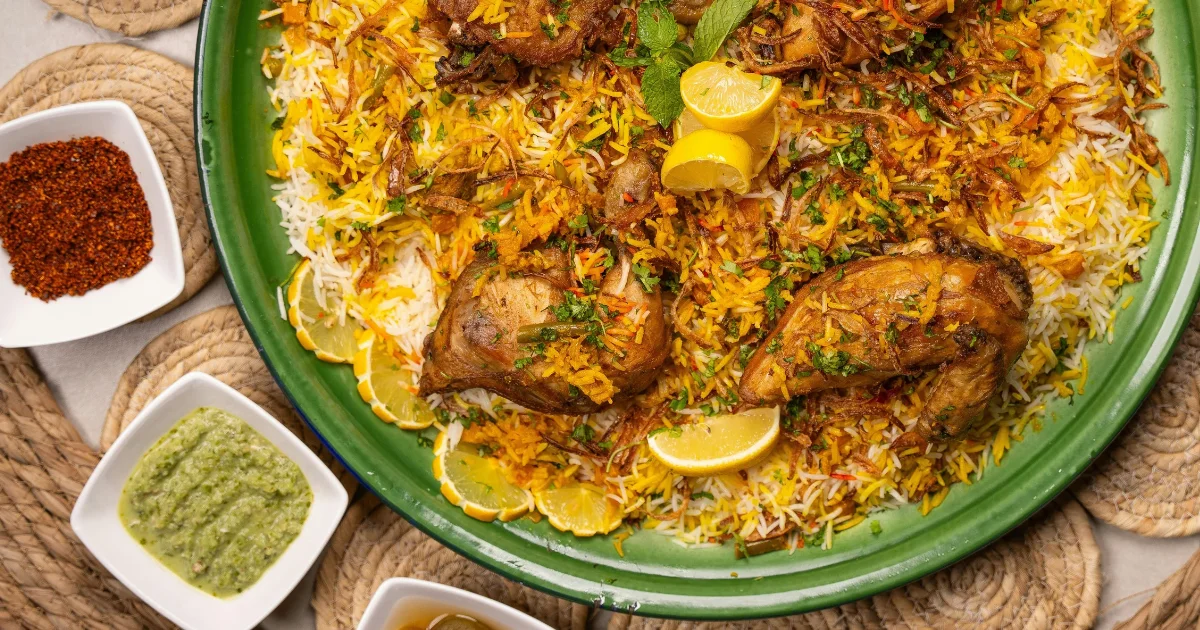
Once bloomed, drizzle the saffron milk unevenly over the top layer of rice before you seal the pot for dum - a few spoonfuls in the centre, a few along the edges, not stirred through. The whole point of dum cooking is that trapped steam carries color and fragrance through the rice gradually. Stir the saffron milk into the entire pot and you lose that gradient of pale-to-deep-orange grains a good biryani is supposed to have, and the flavor ends up flatter overall rather than layered.
Scaling Up Without Overdoing It
Here's where people get the math wrong. If a 4-6 serving pot takes 15-20 threads, a party-size pot for 20 people doesn't need four times that amount. Saffron's aroma and bitterness build up faster than its color does, so doubling or tripling a biryani recipe usually only calls for saffron increased by about 1.5 to 2 times, never a straight multiple. For a large dum pot serving 15-20, 30-35 threads bloomed in a slightly bigger quantity of milk is usually plenty. Taste a spoonful of the saffron milk on its own before adding it - if it already tastes bitter or medicinal instead of fragrant, you've gone far enough.
What Too Much Saffron Actually Does
Past a certain point, saffron doesn't make biryani taste more of anything good. It turns bitter, almost medicinal, and it starts overpowering the garam masala, fried onions, and meat or vegetables that are supposed to be doing the real flavor work. Biryani isn't a saffron-forward dish the way kesar doodh is. Saffron plays a supporting, aromatic role here, and the recipe falls apart a bit when it's asked to carry more than that.
Thread Quality Changes the Math Slightly
Not all saffron needs the same count to do its job. Genuine Kashmiri Mogra saffron - the deep maroon, all-stigma variety - releases color and aroma faster and more completely than lower grades or threads cut with pale yellow styles. If you're using ours, stay on the lower end of the range, closer to 15 threads than 20. Weaker or adulterated saffron sold elsewhere often needs a much bigger quantity just to get a visible result, and that's usually a sign of poor quality rather than a reason to buy more of it.
Kacchi, Pakki, and Pressure-Cooker Biryani Need Slightly Different Handling
The 15-20 thread range holds across styles, but how you use it shifts a little. In kacchi biryani, where raw marinated meat and rice go into the pot together, the saffron milk is usually layered in right at the start along with the fried onions and mint, since the whole thing cooks for longer over a slow dum. In pakki biryani, where rice and meat are cooked separately first, you add the saffron milk during the final layering, closer to serving, so it stays bright rather than cooking down for an hour. A pressure cooker or instant-pot version shortens the dum stage so much that saffron barely gets time to spread on its own - in that case, stir the bloomed milk through the top third of the rice by hand instead of just drizzling and leaving it, since there isn't enough steam time for it to travel.
If you're cooking biryani this weekend and want saffron you can trust to color and perfume the rice on the first try, our Kashmiri Saffron Mogra is the pack most of our biryani-cooking customers keep reordering. A 5-gram tin covers a lot of pots before you're back for more.