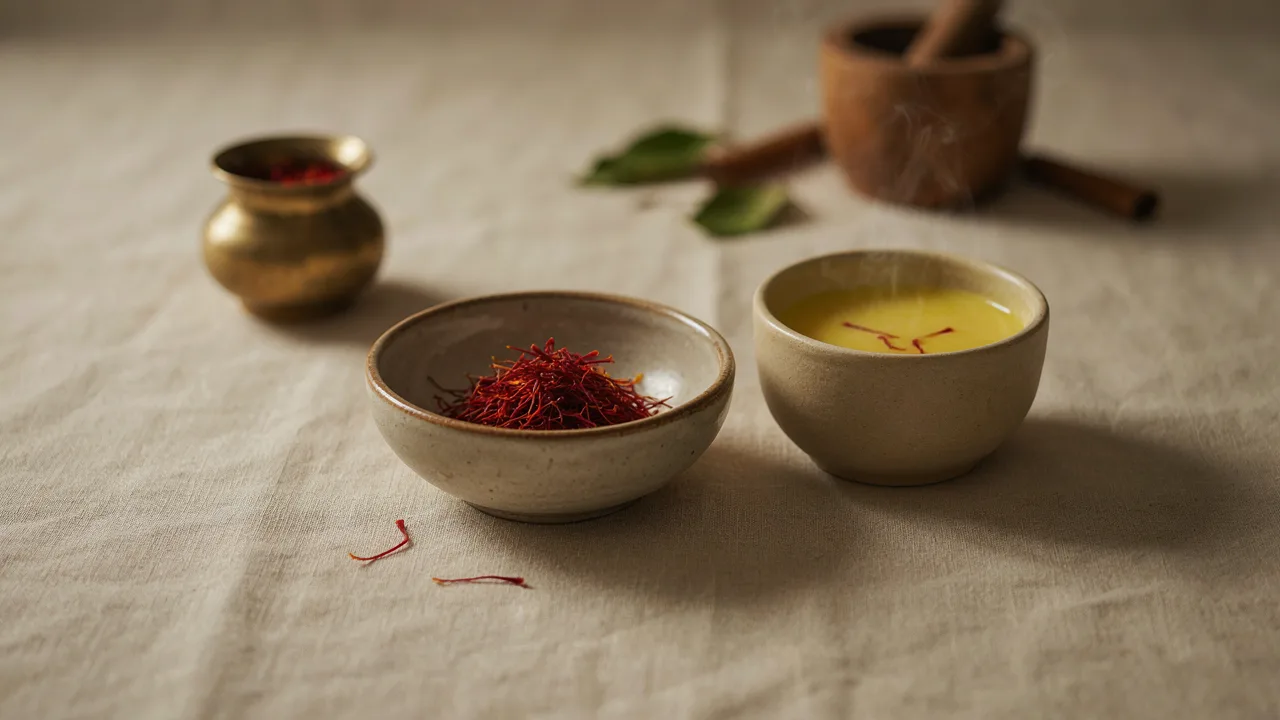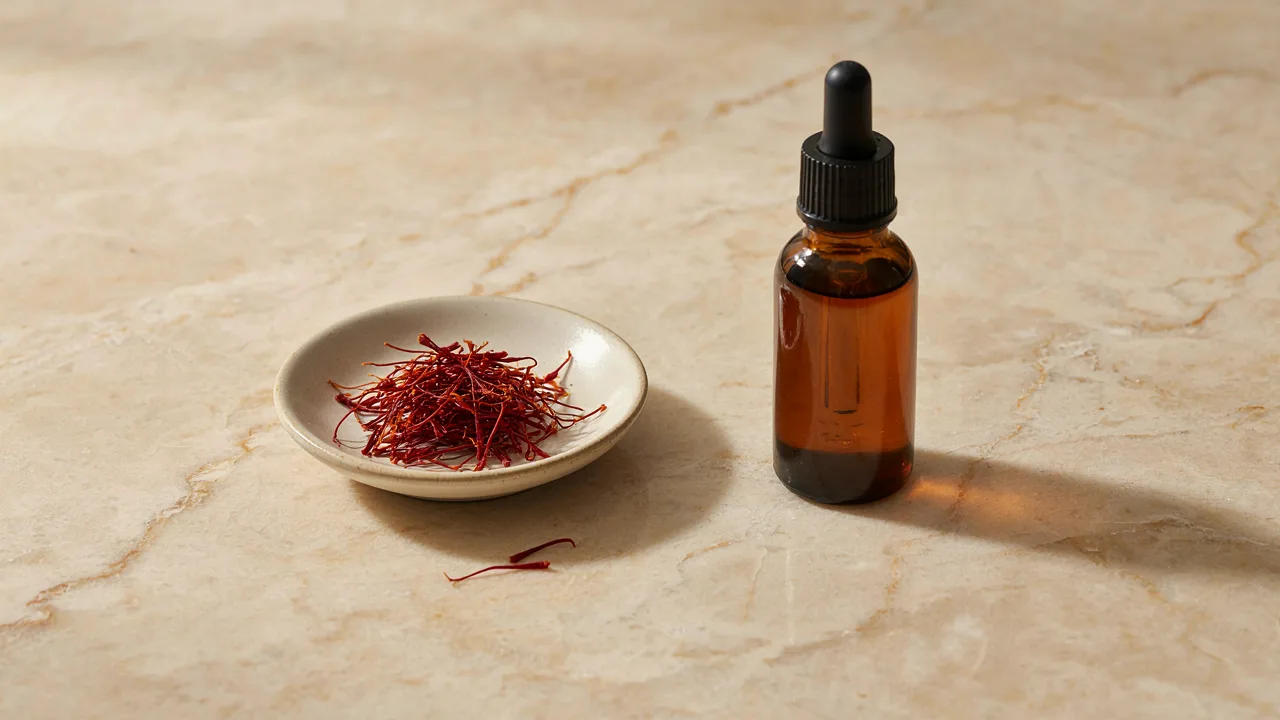
Saffron extract vs whole threads is a genuinely useful comparison to understand, since saffron is available in two quite different forms — whole dried threads and standardized extract, usually sold as capsules or liquid drops — and they aren't really substitutes for each other. This guide explains how they differ and which one actually makes sense depending on why you're buying saffron in the first place.
What Whole Saffron Threads Are
Whole threads are the dried stigmas of the Crocus sativus flower in their natural form — the traditional, recognisable red strands used in cooking for centuries. Their strength varies naturally by grade, harvest, and freshness, and their colour, aroma, and flavour can all be assessed visually and by smell before use.
What Saffron Extract Is
Saffron extract is a processed concentrate, typically standardized to contain a specific, measured percentage of key compounds like crocin, safranal, or picrocrocin. It's most commonly sold as capsules or liquid tinctures, marketed toward people seeking a specific, consistent dose of saffron's studied compounds — often for the kind of research-adjacent uses discussed in our articles on saffron and mood or saffron and blood sugar.
Key Differences at a Glance
| Factor | Whole Threads | Extract |
|---|---|---|
| Primary use | Cooking, traditional preparations | Standardized supplementation |
| Dose consistency | Variable, based on quantity used | Precisely measured per capsule/drop |
| Visual quality check | Possible (colour, style content) | Not possible — relies on labelling/certification |
| Delivers flavour/aroma to food | Yes | No — not designed for this |
Which One Should You Buy?
Buy whole threads if:
- You're cooking — biryani, kheer, saffron milk, or any traditional dish where saffron's flavour, aroma, and colour matter
- You want to visually assess quality yourself before and during use
- You're gifting saffron, where the traditional, recognisable form matters for presentation
Consider extract if:
- You're specifically interested in a standardized, measured dose of saffron's studied compounds, ideally under a doctor's guidance for a specific goal
- You want dose consistency that's difficult to achieve with casually measured whole threads
Quality Verification Is Harder With Extract
One real drawback of extract products is that you can't visually inspect them the way you can whole threads — there's no way to check for the presence of pale yellow style, off colours, or other visual quality markers once saffron has been processed into a capsule or tincture. This makes sourcing reputation and independent lab certification even more important when buying extract-based products, since you're relying entirely on the manufacturer's claims and any third-party testing they provide.
Our Position
We currently sell genuine, lab-certified whole thread Kashmiri Mogra saffron rather than extract products, because whole threads let you verify quality yourself and serve the traditional culinary and gifting purposes most of our customers are looking for. If you're specifically seeking standardized extract for a particular health goal, that's a distinct product category best discussed with a doctor or pharmacist who can guide you toward a properly tested, appropriately dosed option.
A Word on Extract Product Quality Control
Because extract products can't be visually assessed the way whole threads can, the manufacturing and testing standards behind a given extract brand matter enormously. Look for products that specify a standardized percentage of active compounds (rather than a vague "saffron extract" claim with no numbers attached), third-party lab testing, and a manufacturer willing to share that documentation on request. A saffron extract product that can't or won't provide this level of transparency deserves the same scepticism you'd apply to an unverified whole-thread seller making vague origin claims.
The Bottom Line
Whole threads and extract aren't competing products — they serve different purposes. For cooking, gifting, and traditional use, genuine whole threads remain the right choice. For standardized, measured supplementation, extract has a role, but demands even more care around sourcing and verification since visual quality checks aren't possible.