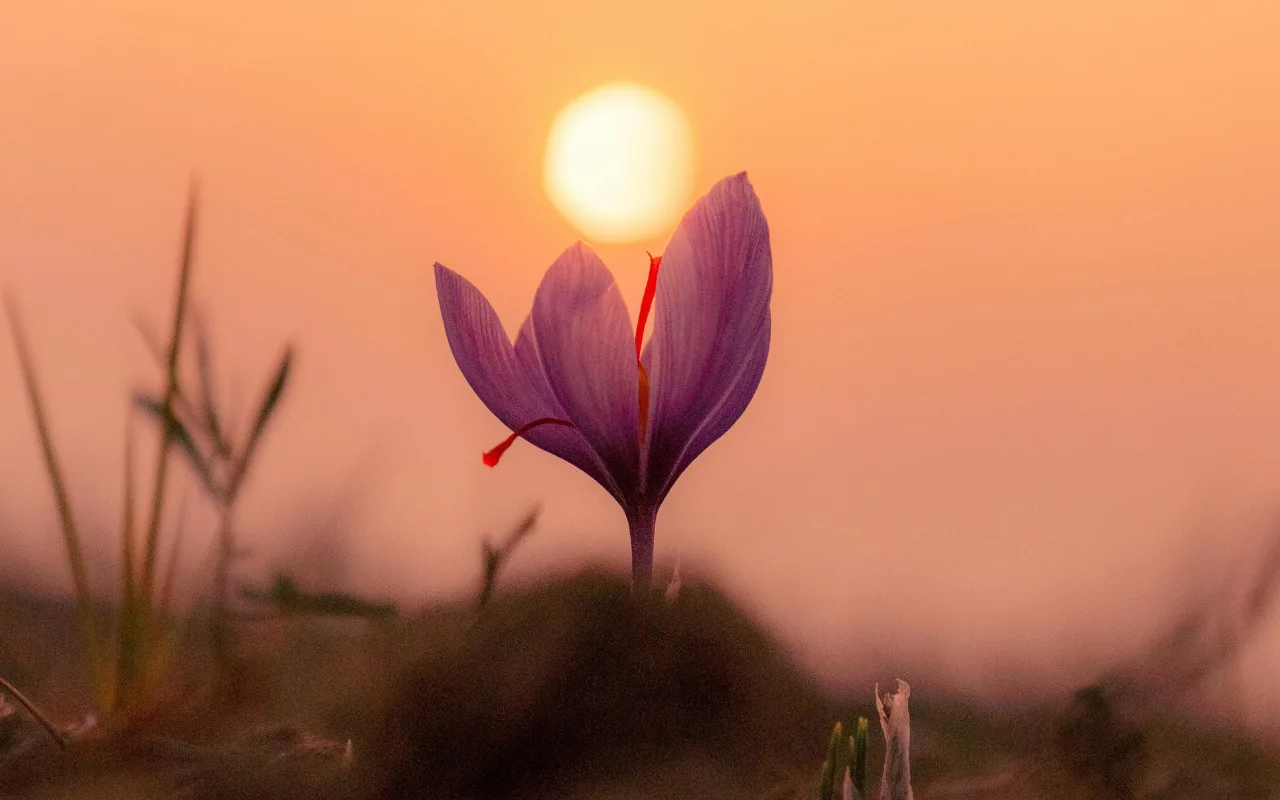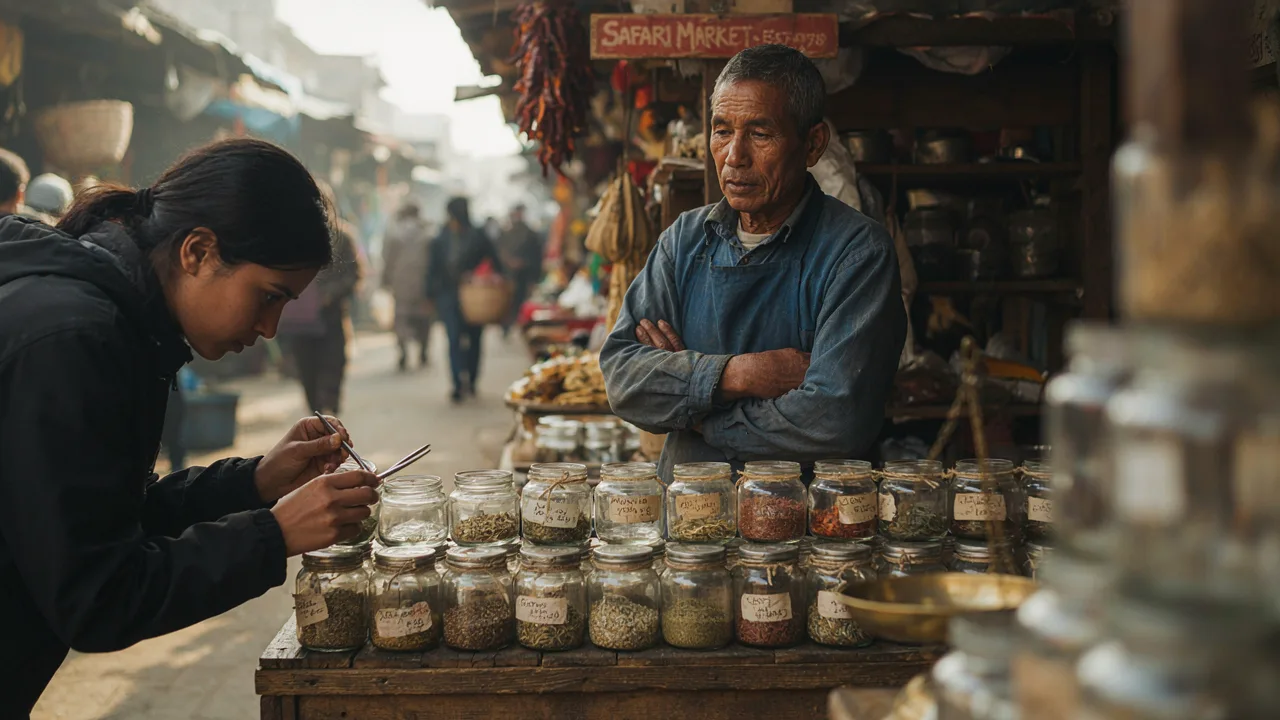
Saffron in Ayurveda — known there as Kesar — has a documented traditional role spanning many centuries, valued as a "rasayana," a category of substance associated with rejuvenation and supporting overall vitality. Understanding this traditional context is genuinely useful, provided it's kept distinct from modern clinical claims — this article explains what Ayurvedic tradition actually says about saffron, on its own terms.
Saffron's Place in the Ayurvedic Framework
Ayurveda is a traditional system of medicine that classifies substances according to properties like taste (rasa), potency (virya), and post-digestive effect (vipaka), and considers how these interact with an individual's constitutional balance (dosha). Within this framework, saffron has traditionally been described as having warming properties and has historically been included in formulations aimed at supporting digestion, circulation, and overall vitality.
Traditional Uses of Kesar in Ayurvedic Practice
- As a rasayana: A substance traditionally used to support rejuvenation and long-term vitality, taken consistently as part of a routine rather than as an occasional remedy
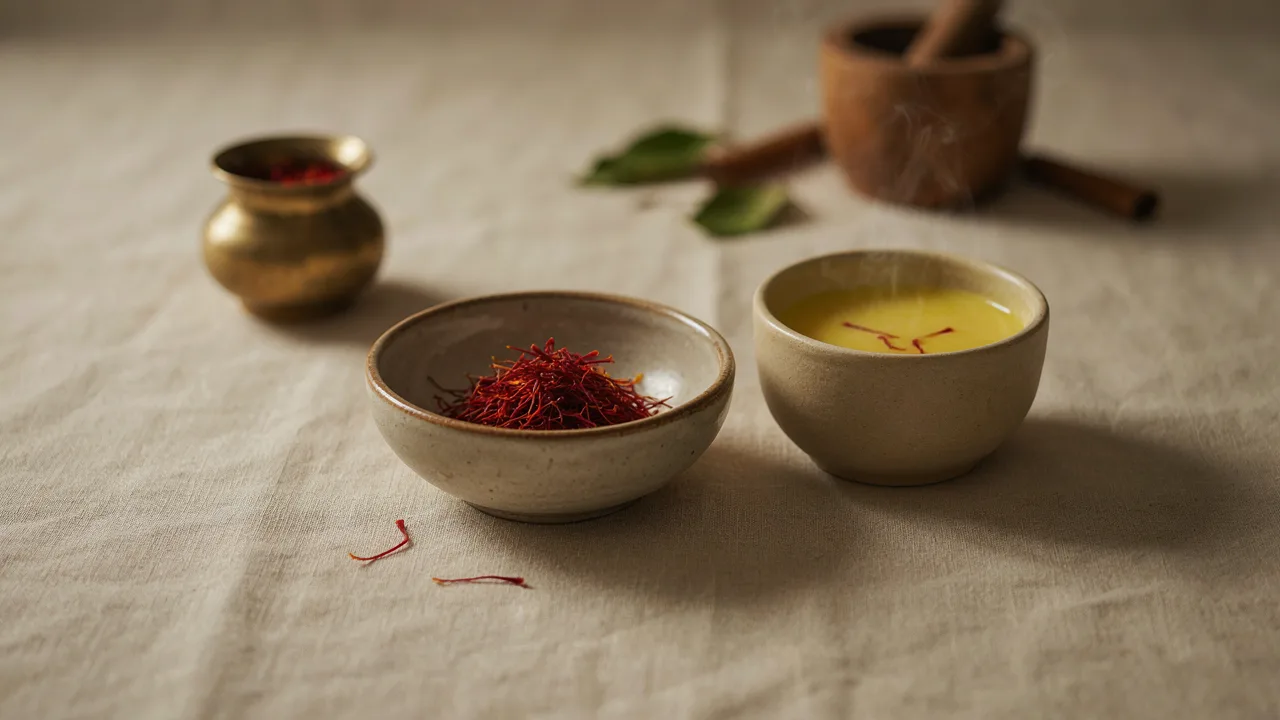
- In saffron milk: The most common and enduring traditional preparation, saffron strands soaked in warm milk, traditionally taken in the evening or given to support general wellness
- In compound formulations: Ayurvedic pharmacology has historically incorporated saffron into more complex herbal formulations alongside other traditional ingredients, rather than using it in isolation
- For skin, traditionally: Saffron has a long traditional association with supporting healthy-looking skin when used in traditional preparations — though modern framing of this should avoid the kind of "skin whitening" claims that don't reflect a genuinely diverse, evidence-appropriate understanding of skin health
Why Traditional Use and Clinical Evidence Are Different Things
It's important to be clear-eyed about this distinction. Ayurvedic tradition represents centuries of empirical observation and a coherent internal framework, developed and refined long before modern clinical trial methodology existed. That doesn't make it invalid, but it does mean traditional use shouldn't be presented as equivalent to modern clinical proof. Where modern research has specifically studied saffron — for example around mood or blood sugar — we've tried to present that research on its own terms, separately from traditional Ayurvedic claims, so readers can understand which kind of evidence they're looking at.
The Individualized Nature of Ayurvedic Recommendations
A genuine Ayurvedic approach doesn't treat any single ingredient, including saffron, as universally beneficial for everyone regardless of individual constitution. Traditional practice considers a person's specific dosha balance and current state before recommending saffron or any other substance, and in what preparation or combination. This is quite different from the way saffron is sometimes marketed today as a blanket "superfood" appropriate for everyone — a framing that doesn't actually reflect traditional Ayurvedic nuance.
How This Fits With Buying and Using Saffron Today
If you're drawn to saffron partly through an interest in Ayurvedic tradition, the most authentic approach is genuine, unadulterated saffron used the traditional way — a few strands in warm milk, taken consistently — rather than expecting a specific, immediate clinical effect. Our Kashmiri Mogra saffron is sold in its pure, traditional whole-thread form, suited to exactly this kind of traditional preparation. If you're interested in exploring other traditional Ayurvedic ingredients alongside saffron, our Saffron & Shilajit combo pairs it with another ingredient with a long-standing place in Ayurvedic practice.
For anything beyond traditional wellness use — particularly if you're managing a specific health condition — a consultation with a qualified Ayurvedic practitioner or your doctor is the appropriate path, rather than self-directing treatment based on general traditional descriptions.
The Bottom Line
Saffron's role in Ayurveda is genuine, well-documented, and centuries old — but it belongs to a traditional framework distinct from modern clinical evidence, and the two shouldn't be conflated. Understood on its own terms, Ayurvedic tradition offers a rich, individualized view of saffron that's worth appreciating for what it actually is.