How to grow saffron at home in India is a question more gardeners are asking, and it's genuinely achievable for those in the right climate — not a guaranteed shortcut to a meaningful saffron supply, but a rewarding way to connect with where this spice actually comes from. This guide walks through everything a beginner needs to know, honestly, including where it won't work well.
Understanding What You're Actually Growing
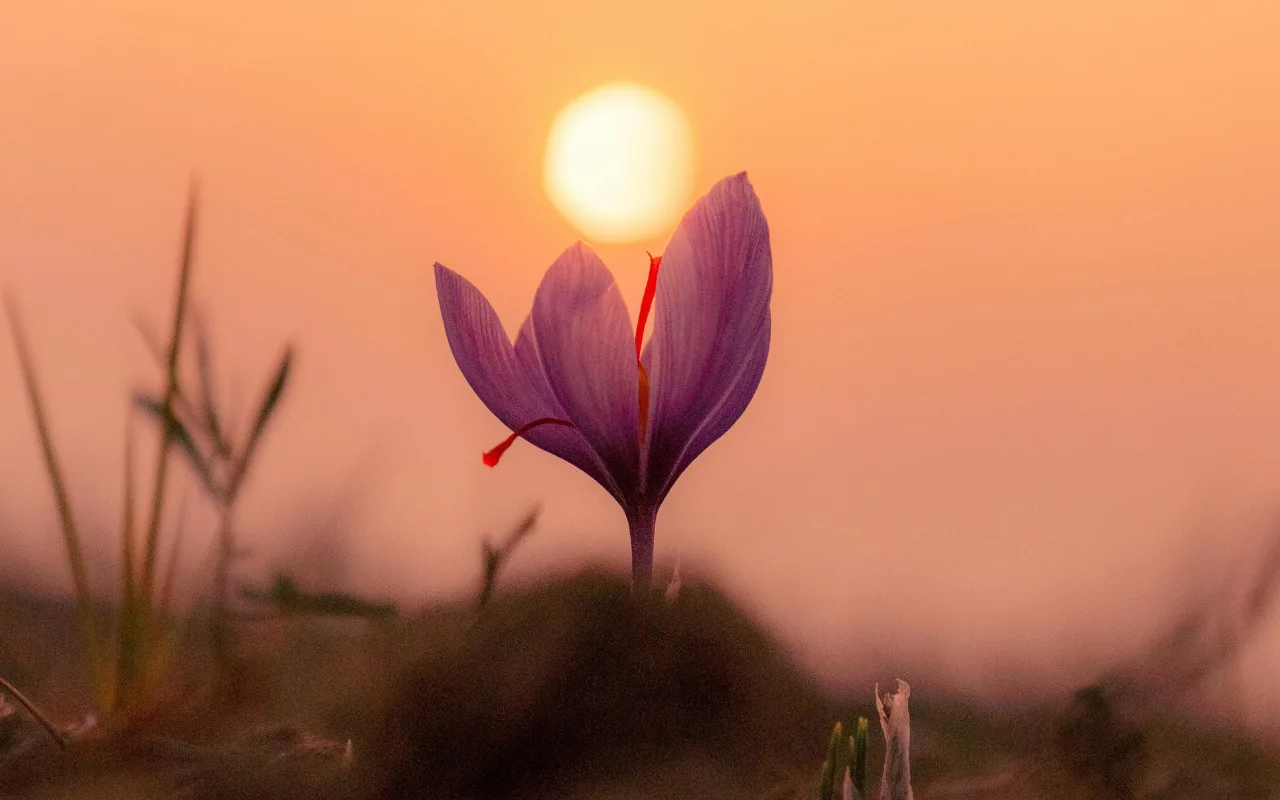
Saffron comes from Crocus sativus, a flowering plant grown from a corm — a solid underground stem, sometimes loosely called a "bulb." Each flower produces exactly three red stigmas, which are hand-picked and dried to become saffron. This is the same plant and process behind Kashmir's saffron industry, just at home-garden scale.
Step 1: Assess Your Climate Honestly
This is the single most important factor, and the one most home growers underestimate. Saffron crocus needs a distinct cold winter dormancy period to flower reliably — it's a plant adapted to temperate climates like Kashmir's, not to warm, humid, or tropical conditions. If you live somewhere with genuinely cool winters and well-draining soil — hill stations, higher-altitude regions, or northern parts of India with a real winter — you have a realistic chance of good results. In warm coastal or tropical parts of India, expect weaker flowering or none at all, regardless of how carefully you follow every other step.
Step 2: Source Genuine Corms
Not every "saffron bulb" sold online is a genuine, viable Crocus sativus corm capable of flowering — sourcing from a seller with a genuine connection to the saffron trade matters. Our own Kashmiri Saffron Bulbs (Corms) are sourced specifically for this purpose, available in packs from 5 to 50 corms depending on how much space you're planting.
Step 3: Choose the Right Planting Time
Plant corms between July and September, giving them time to establish roots before the autumn flowering window in October-November. Planting significantly outside this window reduces your chances of a strong first-season bloom.
Step 4: Prepare the Soil or Pot
- Use well-draining soil — saffron corms are prone to rot in waterlogged or heavy clay soil
- If using a pot, choose one at least 20-25cm deep with drainage holes, and use a light, well-draining potting mix
- Choose a spot with several hours of direct sunlight daily
Step 5: Plant Correctly
- Plant corms 7-10cm deep, pointed end facing upward
- Space corms 10-15cm apart to allow room for natural multiplication in future seasons
- Water moderately right after planting, then reduce — overwatering is a more common failure point than underwatering
Step 6: Ongoing Care
Once planted, saffron corms need relatively little intervention — avoid overwatering, keep the area weeded, and ensure good sun exposure. In climates with harsh winters, a light mulch layer can help protect corms, though in most of India's relevant growing regions this isn't necessary.
Step 7: Harvesting
When flowers open — typically for just a few days each — gently pull the three red stigmas from the centre of each bloom, ideally in the morning. Dry them in a cool, shaded, well-ventilated spot for a few days until brittle, then store sealed in a cool, dark place, exactly the way commercial saffron is handled.
Setting Realistic Expectations
Even under good conditions, a modest home planting will produce a genuinely small quantity of saffron — this is a rewarding hobby and educational experience, not a way to meaningfully replace your regular saffron purchases. Kashmir's entire saffron industry, producing a globally significant supply, still requires vast fields precisely because the yield per plant is so small. Treat home growing as a connection to that process, not a substitute for it.
The Bottom Line
Growing saffron at home in India is genuinely possible with the right climate, genuine corms, and correct timing — but it demands realistic expectations about both climate suitability and yield. For gardeners in a suitable climate, it's one of the more unusual and rewarding plants you can grow. For everyone else, buying genuine Kashmiri Mogra saffron directly remains the practical way to enjoy real saffron.