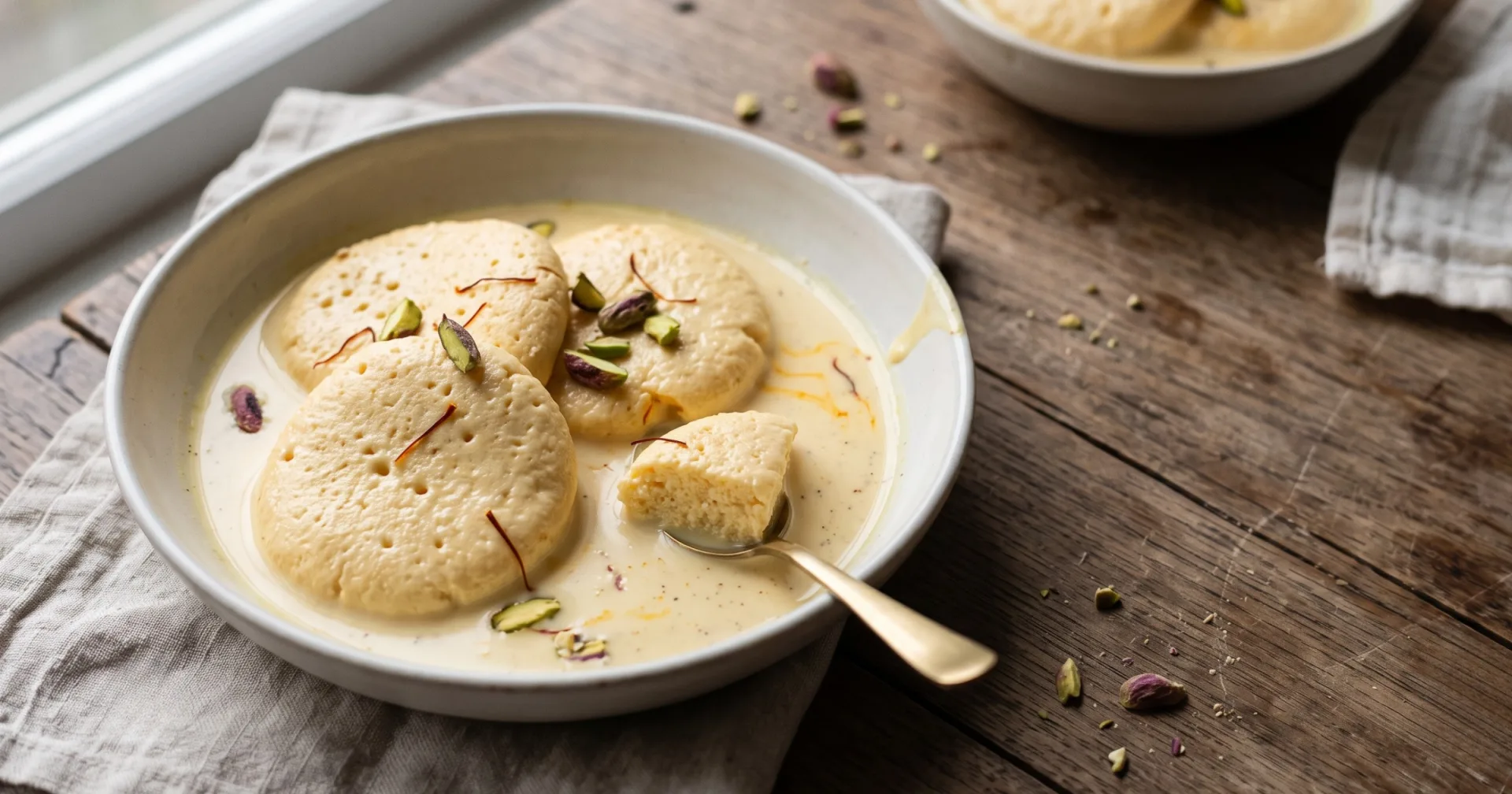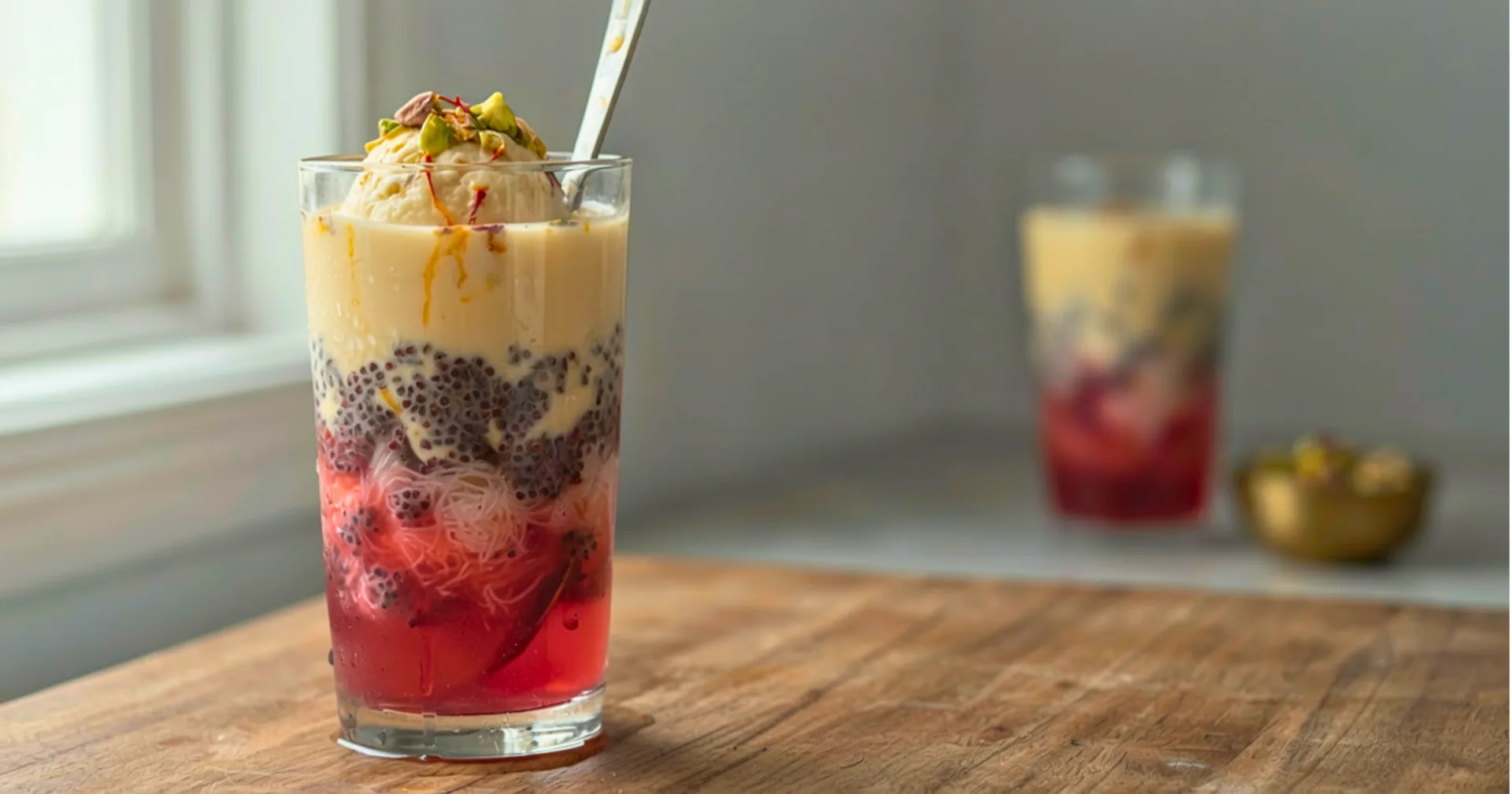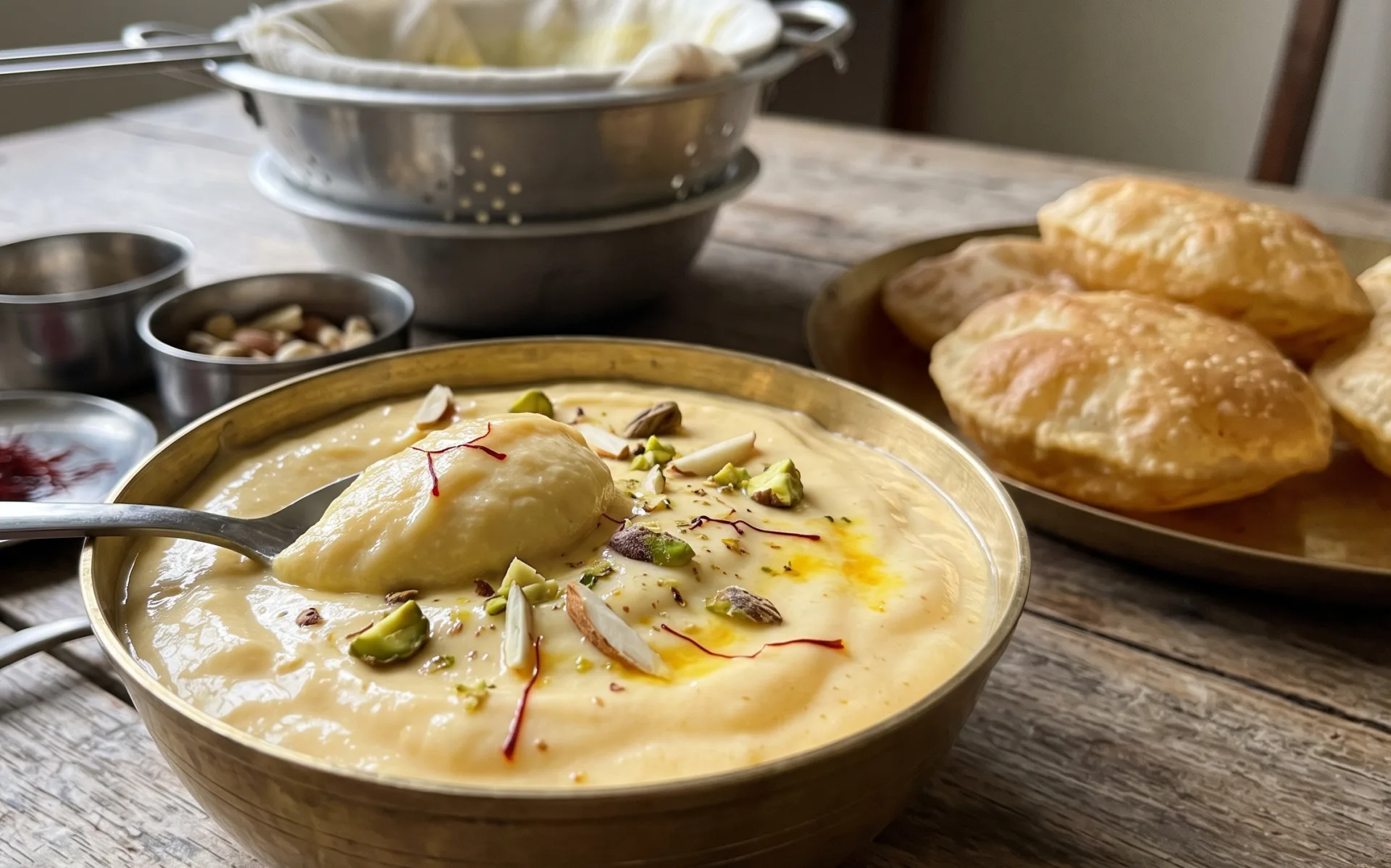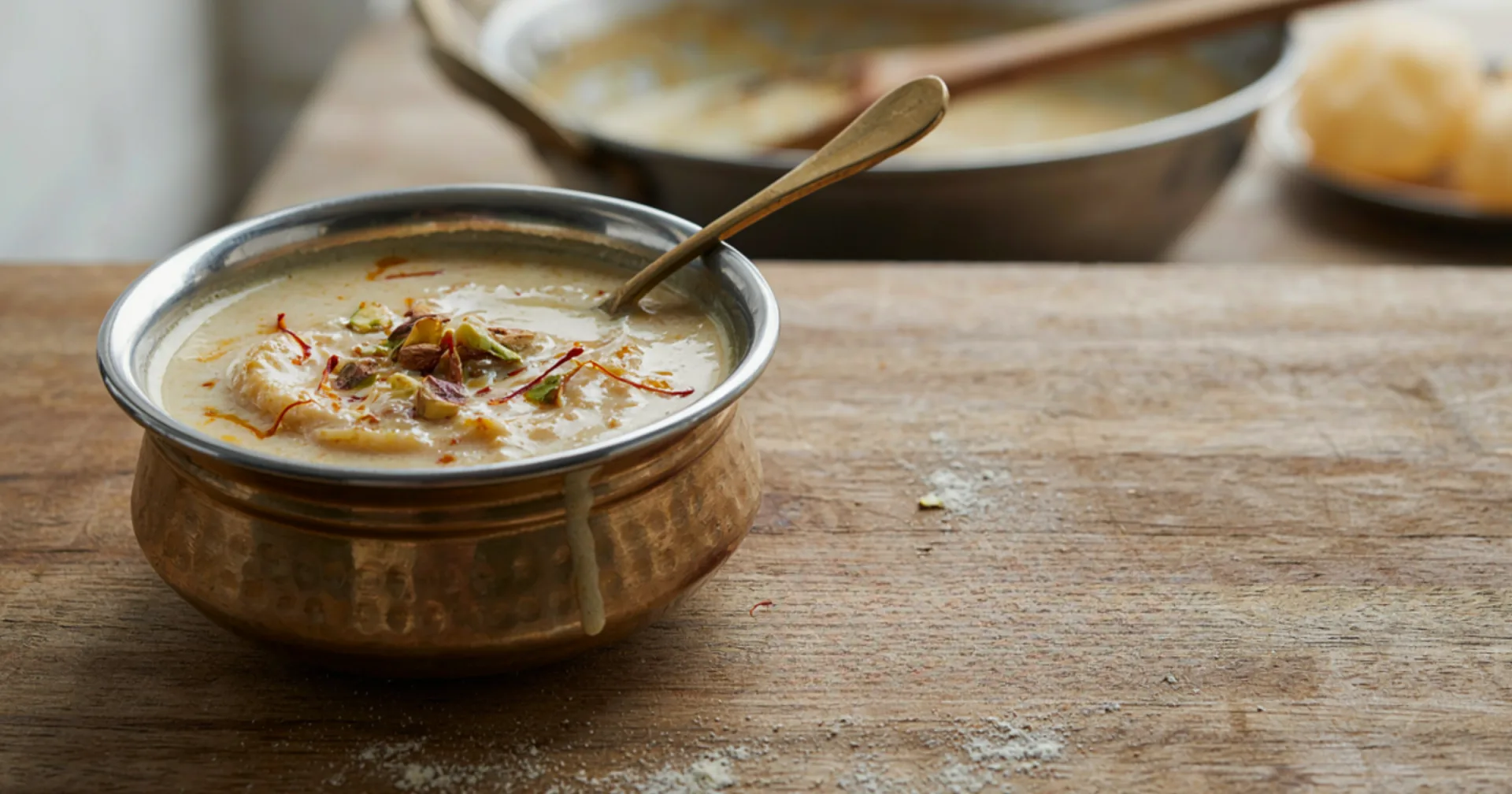
Basundi is a slow-reduced, sweetened milk dessert popular across Gujarat and Maharashtra — simpler in concept than rasmalai (no chenna discs involved), but built on the same core technique of patiently reducing milk until it thickens and concentrates in flavour. Saffron and cardamom are the traditional flavourings, with a scattering of nuts for texture.
The entire dessert comes down to one variable: how long and how patiently you reduce the milk. There's no shortcut ingredient that replicates what a slow simmer does to milk's texture and flavour — as the water content evaporates, the natural milk sugars concentrate and the proteins thicken, which is why rushing this step with higher heat tends to give a thinner, less rich result even if the total cooking time is the same.
Ingredients
- 1.5 liters full-fat milk
- 1/2 cup sugar
- 8-10 strands Kashmiri Mongra saffron
- 2 tablespoons warm milk, for the saffron infusion
- 1/4 teaspoon cardamom powder
- 2 tablespoons chopped almonds and pistachios
- 1 teaspoon chopped charoli or extra nuts, optional
Instructions
- Warm the milk and soak the saffron strands in it for about 10 minutes.
- Pour the 1.5 liters of milk into a wide, heavy-bottomed pan and bring to a boil, then reduce to a gentle simmer.
- Simmer, stirring frequently and scraping down the sides of the pan (where a milk skin builds up), for 35-40 minutes, until the milk reduces to about half its original volume and thickens noticeably.
- Add the sugar and stir until fully dissolved.
- Stir in the saffron infusion and cardamom powder, and simmer for another 3-4 minutes.
- Remove from heat, stir in half the chopped nuts, and let cool slightly.
- Chill for at least 2 hours before serving, garnished with the remaining nuts.
Tips for Best Results
A wide pan reduces milk much faster than a narrow, tall one — surface area matters here more than heat level. Scraping the sides regularly, where a skin tends to form and stick, keeps the reduction even and prevents scorched bits from ending up in the final dessert.
Serving Suggestions
Served chilled, often alongside puri or as a standalone dessert at the end of a meal. It also works well slightly warm in cooler weather.
Storage
Keeps refrigerated for up to 3 days. It thickens further on chilling — thin it with a splash of milk if it becomes too dense.