If you're staring at a glass of water with saffron threads sitting in it and nothing is happening, you're probably mid-recipe and starting to worry. Why isn't my saffron turning water yellow is one of the most common questions we get, and the good news is it's almost always one of four fixable things before you have to consider the fifth, less comfortable possibility. Work through these in order, because they're listed from most likely to least likely based on what actually causes this.
1. Check How Many Threads You're Actually Using
This is the number one cause, by far. Saffron's colour and flavor compounds are concentrated in a small amount of plant material, and a handful of threads in a large pot of water will look like almost nothing happened for a while simply because the ratio is off. A pinch, roughly 10 to 20 threads, is meant for a dish serving four to six people, not a full stockpot. If you tossed in three or four threads expecting a whole pan of rice to turn gold, that's very likely the whole problem. Add more.
2. Check Your Water Temperature
Saffron releases colour best in warm liquid, think the temperature of hot tap water or milk you'd drink comfortably, not ice-cold water and not a rolling boil. Cold water slows the release dramatically, sometimes to the point where you won't see much colour even after sitting for an hour. Boiling water, on the other hand, can degrade some of saffron's delicate aromatic compounds quickly, so while you might still get colour, you lose some of the flavor payoff. Aim for warm, not extreme in either direction.
3. Give It More Time Than You Think
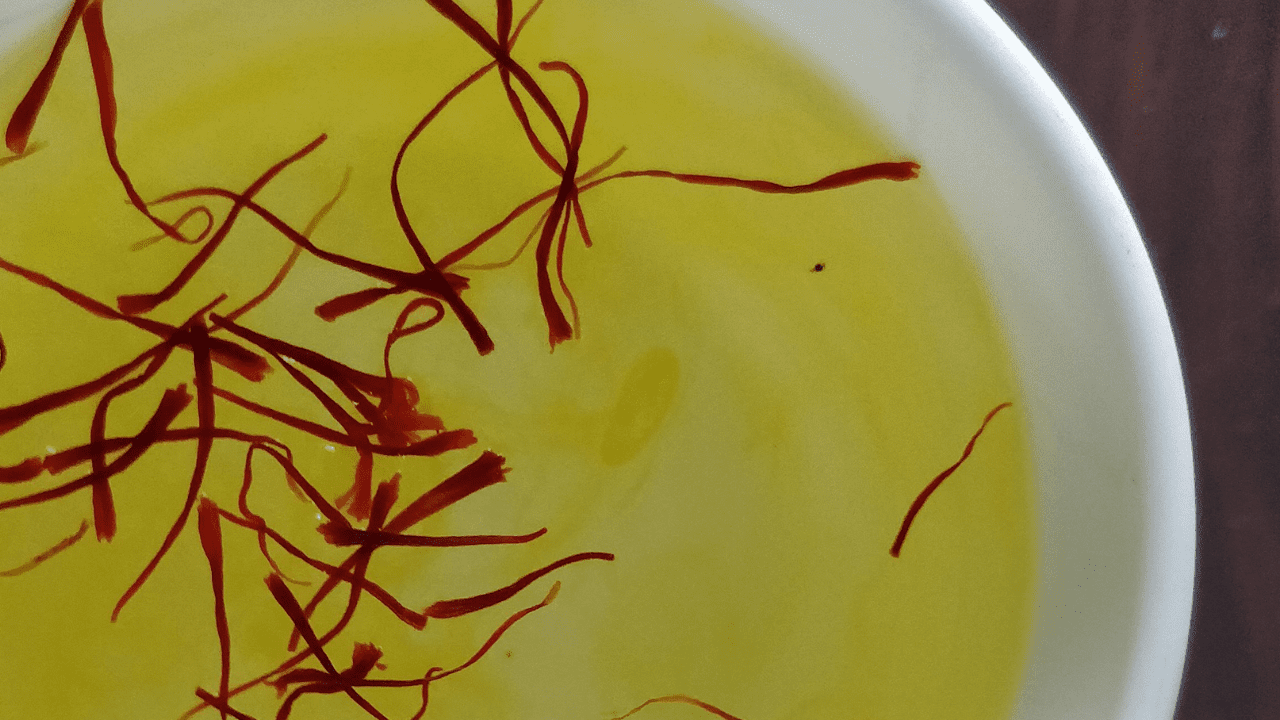
A lot of people check saffron water after two or three minutes and give up. Real saffron needs 10 to 20 minutes, sometimes longer, to fully bloom in warm liquid. The colour builds gradually rather than all at once, going from a faint gold tint in the first few minutes to a deep yellow-orange by the time you hit the 15-to-20-minute mark. If you're in a rush, crushing or lightly grinding the threads with the back of a spoon before soaking speeds this up noticeably, since it exposes more surface area to the water.
4. Consider Whether Your Saffron Has Lost Potency
Saffron doesn't last forever once opened, and even sealed, it slowly loses potency over one to two years, faster if it's been stored somewhere warm, humid, or exposed to light. Old saffron can still look like saffron, trumpet-shaped threads and all, while having lost most of its colouring power because the active compounds (crocin, mainly, for colour) have broken down. If your saffron is more than a year or two old, or you're not sure how it's been stored, this is a real possibility before you jump to the worst-case explanation. A quick way to sanity-check this: smell it. Saffron that's lost most of its potency usually smells faint or dusty instead of honeyed and slightly metallic, even if the threads still look intact.
5. The Uncomfortable Possibility: It Might Not Be Real Saffron
If you've checked the threads properly (a reasonable amount, not three strands), used warm water, waited the full 15 to 20 minutes, and your saffron is reasonably fresh, and you're still not seeing meaningful colour, it's worth considering that what you're holding isn't genuine saffron at all. This happens more often than people expect, especially with saffron bought from unverified sellers at a price that seemed like a good deal. The flip side of this test is actually reassuring once you know it: a weak or absent colour release after doing everything else right is one of the clearer signs of fake or heavily degraded saffron, which at least tells you what's going on.
Putting It Together
Run through these in order rather than jumping straight to "it's fake," because the first three causes account for the vast majority of cases we hear about. Use enough threads, use warm water, wait the full 15 to 20 minutes, and only then start questioning the saffron itself, first its age, then its authenticity. If you want a baseline to compare against, our Kashmiri saffron is a reasonable reference point for how strong the colour release should look with fresh, genuine threads.