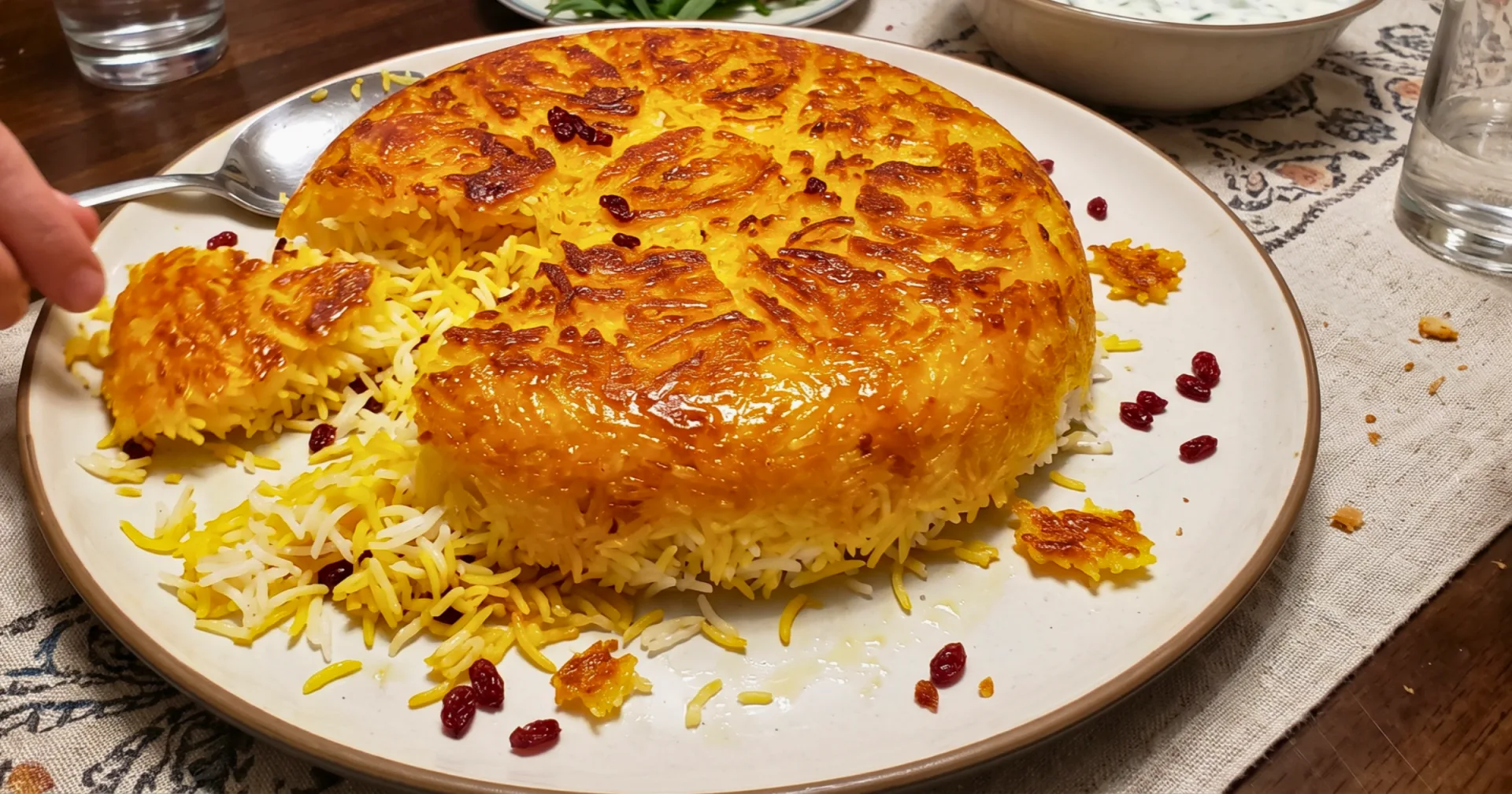
Tahdig — literally "bottom of the pot" — is the crispy, golden rice crust that forms at the base of the pot in traditional Persian rice cookery, and it's often considered the best part of the dish. This isn't a shortcut version of regular saffron rice; the yogurt-rice base layer and the low, slow, undisturbed cooking method are the actual technique that makes tahdig work, and skipping them just gives you regular rice.
Ingredients
- 2 cups basmati rice
- 4 tablespoons ghee or oil, divided
- 1/2 cup plain yogurt
- 8-10 strands Kashmiri Mongra saffron
- 3 tablespoons warm water, for the saffron infusion
- Salt, to taste
- Water, for boiling
Instructions
- Rinse the rice several times until the water runs mostly clear, then soak for 30 minutes and drain — this step matters for getting separate, non-mushy grains.
- Warm the water and soak the saffron strands for 15 minutes, then divide the infusion into two portions.
- Bring a large pot of well-salted water to a boil and par-boil the rice for 5-6 minutes, until just slightly undercooked. Drain.
- Mix a cup of the par-boiled rice with the yogurt, 2 tablespoons of ghee, and one portion of the saffron infusion — this becomes the crust layer.
- Heat the remaining ghee in a heavy, non-stick pot and spread the yogurt-rice mixture evenly across the bottom.
- Gently mound the remaining plain par-boiled rice on top in a pyramid shape, without pressing it down, which helps it steam evenly.
- Drizzle the second portion of saffron infusion over the top.
- Cover the pot lid with a clean kitchen towel to absorb steam, then cover tightly. Cook on low heat for 40-45 minutes without lifting the lid at any point.
- To serve, invert the pot onto a large plate so the crispy bottom crust ends up facing up.
Tips for Best Results
Resist the urge to check on it — lifting the lid partway through releases the steam this method depends on and can prevent the crust from forming properly. A heavy, good-quality non-stick pot makes a real difference here; the crust is much more likely to release cleanly than from a regular pot.
Serving Suggestions
Traditionally served as the base for a stew or kebab dish spooned over the top, with the crispy tahdig pieces served alongside or on top as the prized part of the dish.
Storage
Best eaten fresh — the crispy crust loses its texture once refrigerated and reheated. The soft rice portion reheats reasonably well on its own.