Saffron and mental health is a growing research area, with a number of small clinical trials exploring saffron's possible effects on mood alongside mild depressive symptoms and anxiety. The findings are genuinely interesting from a research perspective, but they come with real limitations that are important to understand before drawing conclusions — this article lays out both sides carefully.
Why Saffron Attracted Interest for Mood Research
Saffron contains crocin and safranal, compounds that have been studied for interactions with neurotransmitter pathways, including serotonin activity — one of the systems implicated in mood regulation and targeted by many conventional antidepressant medications. This mechanistic plausibility is what initially prompted researchers, particularly in Iran, to test saffron extract in small clinical trials involving people with mild-to-moderate depressive symptoms.
What the Research Has Found So Far
A number of small randomized controlled trials have compared standardized saffron extract (commonly around 30mg per day) against either a placebo or, in some studies, a low dose of a conventional antidepressant, over periods of six to eight weeks. Several of these trials reported improvements in depressive symptom scores in the saffron group comparable to or better than the comparison group. Other smaller studies have looked at anxiety-related symptoms with more mixed or preliminary results.
Why These Results Need to Be Read Carefully
- Small, short trials: Most studies involve modest sample sizes and run for only a matter of weeks, which limits confidence in both the size of the effect and its safety over longer use.
- Mild-to-moderate symptoms, not clinical diagnoses: Many of these trials focus on mild depressive symptoms rather than diagnosed major depressive disorder or clinical anxiety disorders, so the findings don't necessarily generalize to more severe conditions.
- Standardized extract, not casual use: The doses studied are specific, measured extracts — not the same as occasionally having saffron in your cooking or tea.
- Publication and research concentration: As with several other saffron health topics, a significant share of this research comes from a relatively small number of research groups, and broader independent replication is still developing.
What This Means If You're Dealing With Low Mood or Anxiety
If you're experiencing persistent low mood, anxiety, or symptoms of depression, the appropriate first step is speaking with a doctor or mental health professional — not self-treating with saffron or any other supplement. Mental health conditions deserve a proper diagnosis and an evidence-based treatment plan, which may or may not include complementary approaches depending on your specific situation and your doctor's guidance.
If you're already engaged with a treatment plan and are curious about saffron as a complementary interest, raise it directly with your doctor, particularly if you're on antidepressant medication — combining supplements with psychiatric medication without medical supervision carries real risks that shouldn't be taken lightly.
Saffron as Part of a Broader Wellness Routine
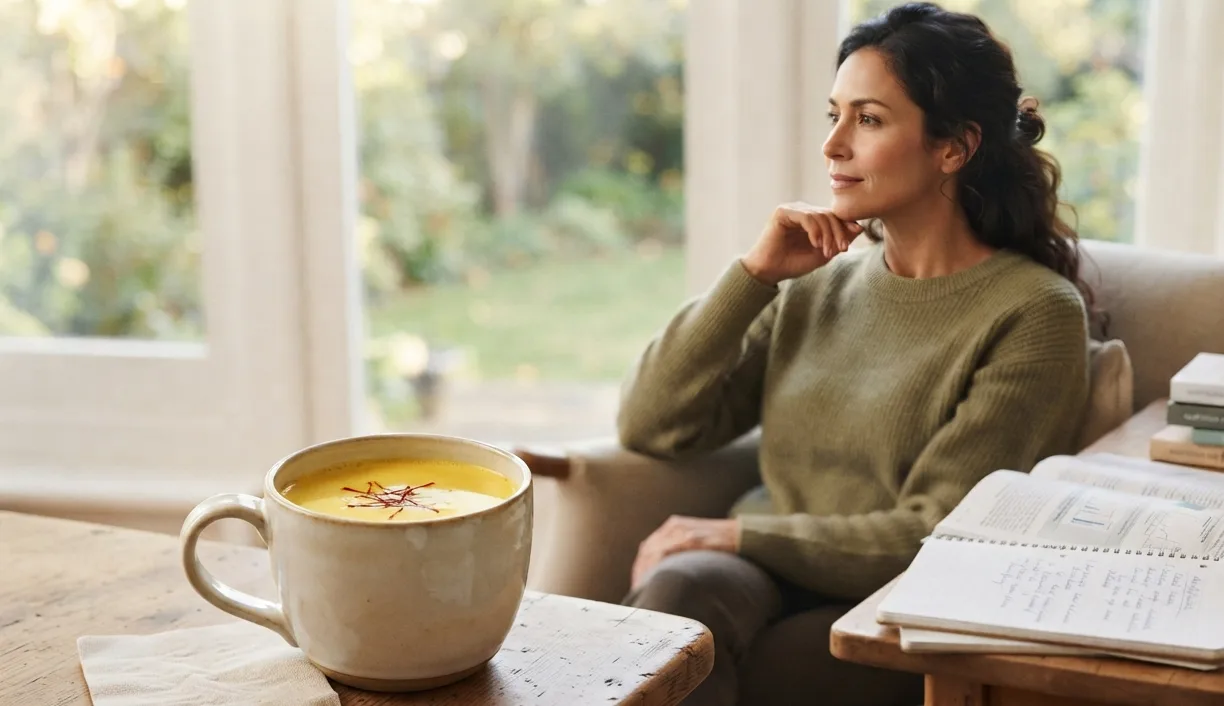
Separate from the clinical research, saffron has a long-standing place in traditional wellness practices as a calming, warming addition to milk or tea, often taken in the evening. This traditional use — a few strands in warm milk before bed — is a gentle, low-risk ritual regardless of what future research on clinical mood effects eventually shows, and pairs naturally with other traditional wellness ingredients like our Saffron & Shilajit combo.
The Bottom Line
Saffron and mental health is a genuinely active and interesting area of preliminary research, but it is not yet at the point of being a proven or approved treatment for depression or anxiety. Treat it as a topic worth watching rather than a reason to delay proper medical care for a mental health concern.
For further reading on this area of research, see the PubMed database of saffron and depression research.