Kashmiri Saffron Bulbs (Corms) — Grow Your Own Saffron at Home
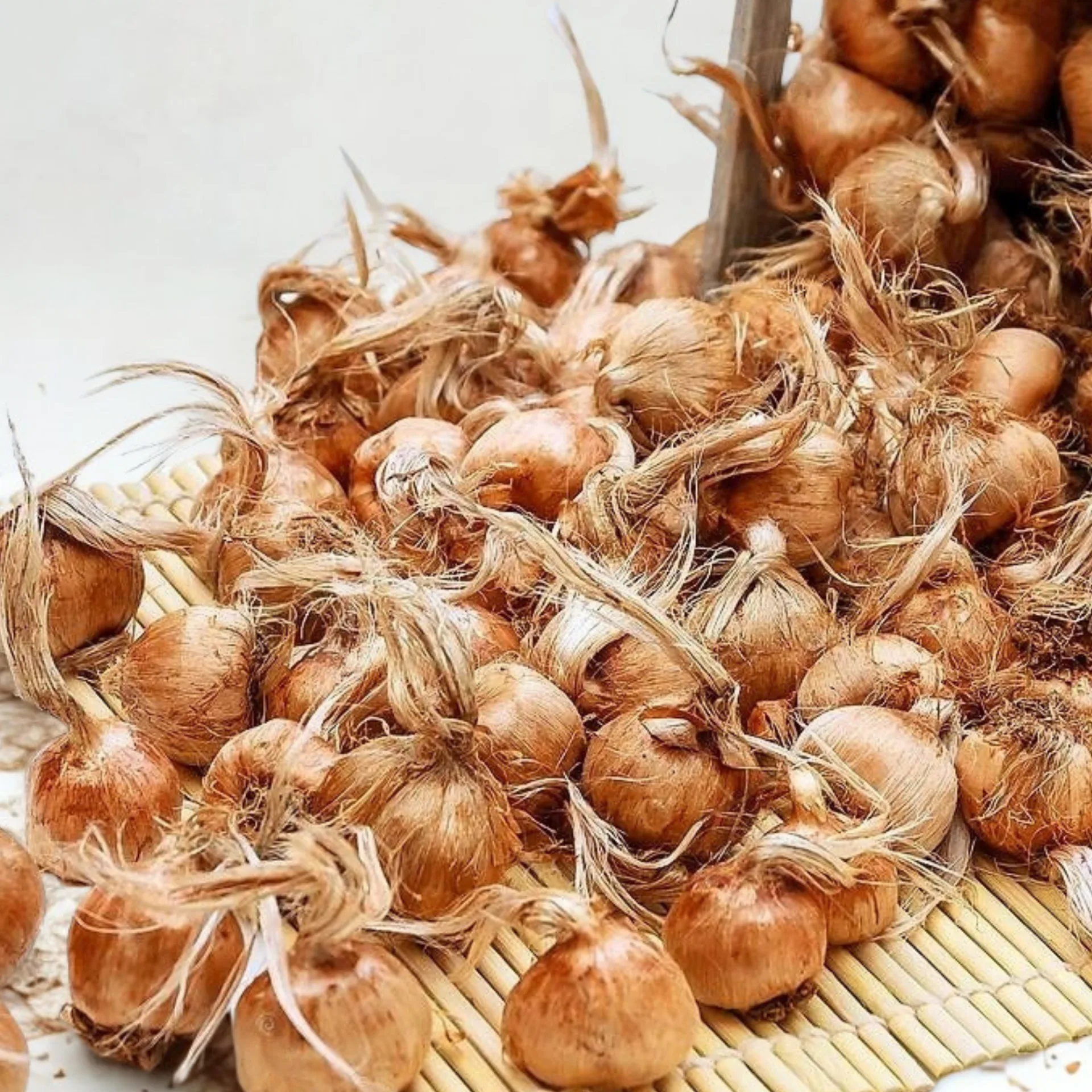
These are genuine Crocus sativus corms, sourced from Kashmir — the same plant behind the saffron threads we sell as a spice. Rather than buying the dried stigmas, this lets you grow the plant itself: plant these corms in the right season and climate, and you can harvest your own saffron strands from your own garden or a large pot. Available in packs of 5, 10, 12, 20, 25, and 50 corms, depending on how much space you want to plant.
What a Saffron Corm Actually Is
Despite being commonly called a "saffron bulb," what you're actually planting is a corm — a solid, compressed underground stem that stores energy for the plant, distinct from a true layered bulb like a tulip or onion. Each corm produces the Crocus sativus flower — a pale purple bloom with three vivid red stigmas at its centre. Those three stigmas, hand-picked and dried, are what becomes saffron. A single flower yields only three stigmas, which is the same fundamental reason saffron as a spice is expensive: there's no way to shortcut the plant's own biology.
Why Grow Your Own Instead of Just Buying the Spice
For most people, buying dried saffron strands remains the practical way to use saffron in cooking — growing your own corms won't replace that as your everyday supply. What it does offer is something different: understanding first-hand where saffron actually comes from, the satisfaction of harvesting your own stigmas even in a small quantity, and for gardening enthusiasts, the novelty of growing a genuinely valuable crop rather than an ornamental plant. If you eventually want more saffron than your corms can realistically produce, our Kashmiri Mongra saffron pack remains available at any time — growing corms and buying the spice aren't mutually exclusive.
Climate: Set Realistic Expectations First
Saffron crocus needs a distinct cold winter dormancy period and well-drained soil to flower reliably — this is exactly why Kashmir, with its cold winters and specific soil conditions, became one of the world's great saffron-growing regions in the first place. If you live somewhere with a genuinely cool winter and well-draining soil, you have a realistic chance of good flowering. In warm, humid, tropical, or coastal parts of India, results are typically weaker and less consistent, and corms may fail to flower at all without a cold dormancy period being artificially provided (for example, refrigerating corms for several weeks before planting, a technique some growers use in warmer climates with mixed success). We'd rather tell you this upfront than let you assume guaranteed flowers regardless of where you live.
When to Plant
Saffron corms are traditionally planted between July and September, giving them time to establish roots before flowering in October to November — the same autumn window Kashmir's saffron fields flower in. Planting significantly outside this window reduces your chances of a good first-season bloom, since the corm's internal growth cycle is tied to this seasonal timing.
How to Plant Them
- Plant corms about 7-10cm deep, pointed end facing upward
- Space corms roughly 10-15cm apart to give each one room to multiply over subsequent seasons
- Use well-draining soil — saffron corms are prone to rotting in waterlogged or heavy clay soil
- Choose a spot with good sun exposure; saffron crocus flowers best with several hours of direct sunlight
- Water moderately after planting, then reduce watering — overwatering is a more common cause of failure than underwatering
How Many Corms You'll Need
Given the 10-15cm spacing, a single large pot might comfortably hold 5 to 10 corms, a small raised garden bed might use 12 to 25, and a more serious hobbyist bed could use 50 or more. This is exactly why we've broken this Kashmiri Saffron Bulbs (Corms) listing into six pack sizes — from a 5-corm pack to try growing saffron for the first time, up to a 50-corm pack for a proper dedicated bed.
Corm Size and Why It Matters
Not all saffron corms are equal, even within the same species. Larger, more mature corms carry more stored energy and typically produce more flowers in their first season than smaller, younger corms, which may need a season or two to bulk up before flowering well. Commercial saffron growers in Kashmir select larger corms specifically for this reason — a bed planted with undersized corms can take noticeably longer to become productive. We select corms for this listing with flowering size in mind rather than simply the cheapest available stock.
Corms vs. Seeds: Why Corms Are the Only Practical Option
Unlike most garden plants, saffron crocus is not practically grown from seed — cultivated Crocus sativus is a sterile triploid hybrid, meaning it does not produce viable seeds at all. The only way saffron has ever been propagated, in Kashmir or anywhere else it's grown, is through corms dividing underground and being separated and replanted. This is worth knowing if you come across saffron "seeds" being sold online — genuine saffron cultivation starts and ends with corms.
A Note on Pets and Safety
Crocus corms and foliage, including autumn-flowering Crocus sativus, can cause stomach upset if chewed or eaten by cats, dogs, or small children — this is true of ornamental crocus varieties as well and isn't specific to saffron crocus. Plant corms in a spot that isn't easily accessible to curious pets, and keep unplanted corms stored well out of reach, the same way you'd handle any garden bulb with this characteristic.
Who This Is Genuinely Good For
This product suits gardening enthusiasts curious about growing an unusual, genuinely valuable plant; anyone who already grows saffron-related dishes and wants a deeper connection to the ingredient; and cooler-climate gardeners in the hills or higher-altitude parts of India with a real chance of good flowering. It's a poor fit for anyone expecting these corms to meaningfully replace their regular saffron purchases, or for warm, humid, low-altitude regions where the plant's cold-dormancy needs simply won't be met regardless of care.
What to Expect After Planting
In their first autumn, healthy corms typically produce one to three flowers each, with larger, more mature corms generally producing more. Each flower opens for only a few days, and the red stigmas should be picked as soon as the flower opens, ideally in the morning, before drying them the same way commercial saffron is processed. Over successive years, healthy corms multiply underground into clusters, which can mean more flowers per corm in following seasons — though this depends heavily on how well your local climate and soil suit the plant long-term.
Harvesting and Using What You Grow
Once your flowers bloom, gently pull out the three red stigmas from the centre of each flower and lay them out to dry in a cool, shaded, well-ventilated spot for a few days until fully dry and brittle. Store the dried strands the same way you'd store any saffron — sealed, in a cool, dark place. Given how few stigmas even a healthy pot of corms will realistically produce, this is best approached as a rewarding hobby and a genuine connection to where saffron comes from, rather than as a way to meaningfully offset your regular saffron use.
Correct Storage Before Planting
If you're not planting immediately, keep corms in a cool, dry, well-ventilated place for storage — a paper bag or a box with ventilation holes works better than a sealed plastic bag, which can trap moisture and encourage rot. Avoid storing corms somewhere warm, as heat can affect their ability to flower properly once planted, and normal usage guidelines apply regardless of which pack size you buy.
For the More Curious Grower
If you'd like to understand more about how saffron is grown at scale, including newer methods being explored beyond traditional field farming, our blog post on aeroponic saffron farming covers how growers are experimenting with year-round, soil-free cultivation — a useful read if home growing sparks a deeper interest in how saffron actually gets produced.
A Genuine Kashmiri Product, Sold Honestly
We're not going to oversell this as a guaranteed way to grow a meaningful saffron supply — flowering depends on your climate, soil, and care, and even under ideal conditions, corms produce a genuinely small yield per plant, exactly as they do in Kashmir's own fields. What we can promise is that these are genuine Crocus sativus corms sourced from Kashmir, not a substitute bulb sold under the saffron name.